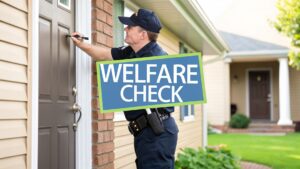
We’ve all had that nagging feeling. A friend goes quiet on social media, an elderly neighbour’s curtains stay drawn for days, or a relative who usually calls like clockwork suddenly stops. When you can’t get there yourself, that worry can quickly grow. This is where a welfare check – often called a ‘safe and well check’ – comes in.
It’s essentially a formal visit, usually by the police or sometimes social services, to check on someone when there's a real concern for their wellbeing. It’s not about being intrusive; it’s a crucial safety net for when you suspect something might be wrong.
Understanding the UK Welfare Check

Think of it as an official 'friendly knock'. It’s requested when family, friends, or neighbours are worried but can't pop round themselves, maybe because they live too far away or can’t get a response.
The goal is refreshingly simple: to make sure the person is okay and doesn’t need immediate help. It’s a direct response to a specific concern, not just a random spot check.
The Purpose Behind the Visit
At its heart, a welfare check is all about proactive care. It gives authorities a way to step in and check on someone based on a genuine worry, hopefully preventing a small problem from becoming a serious crisis. It’s about our communities looking out for one another.
For instance, imagine an older gentleman lives alone and his daughter, who lives a hundred miles away, hasn't been able to reach him by phone for two days. A welfare check request would send someone to his door to make sure he hasn't had a fall or become unwell.
A welfare check is fundamentally a measure of care. It bridges the gap when concern cannot be translated into a personal visit, offering peace of mind to loved ones and a protective presence for the individual.
This system is built to support the most vulnerable people in our society, triggered by a noticeable and worrying break in someone’s normal routine.
Who Can Request a Welfare Check?
There isn’t a strict list of who can and can’t request a check. What matters is the reason for the concern, not who is reporting it. If you have a legitimate reason to be worried, you can ask for one.
This often includes:
- Family Members: A son worried about his elderly mother after a spell of bad weather.
- Neighbours: Someone who notices post piling up on the doormat next door.
- Friends: A person who hasn’t heard back from a friend they know struggles with their mental health.
- Professionals: A doctor, community nurse, or even a postman who spots something unusual.
To get the ball rolling, you’ll need to contact the police on their non-emergency number. The most important thing is to give them clear, specific reasons for your concern, as this helps them judge the urgency of the situation.
For families wanting more consistent reassurance, arranging professional home care can provide that regular, scheduled contact and peace of mind.
When to Request a Welfare Check
Making the call to request a welfare check can feel like a really big deal. It’s completely normal to second-guess yourself, worrying you might be overreacting or intruding on someone's privacy. But more often than not, that gut feeling—that nagging sense that something isn't right—is worth listening to.
The real key isn't a single missed phone call or a one-off change of plans. It’s about noticing a genuine break in someone’s normal routine, a pattern of behaviour that’s out of character and suggests they could be in trouble.
For instance, if your elderly mum, who you speak with every day, suddenly becomes unreachable for 48 hours, that’s a red flag. The same goes for seeing a neighbour’s curtains stay drawn day and night for a full week when they're usually an early riser. These are concrete, observable changes, and that’s when a welfare check becomes a sensible, caring step.
Spotting the Signs That Something Is Wrong
Knowing when to act really comes down to paying attention to those shifts from the everyday. A sudden, uncharacteristic silence, changes in daily habits, or even subtle signs of neglect around someone's home can all be valid reasons to get help.
Some of the most common triggers include:
- Going silent: The person is usually active on the phone, via text, or on social media, but they've suddenly gone completely quiet and you can't get hold of them.
- Visible signs of neglect: You might notice post piling up inside their letterbox, milk bottles left on the step for days, or rubbish bins that haven't been put out.
- Strange activity (or lack of it): This could be anything from lights being left on at odd hours to pets seeming distressed or uncared for outside.
- Missed important appointments: You know they had a crucial hospital appointment or a regular social event they never miss, and they didn't show up without an explanation.
When you have a genuine concern based on things you've actually seen or experienced, calling 101 for a welfare check is the right and responsible thing to do. Your intervention could be the one thing that gets someone the help they desperately need.
To help you feel more confident in your decision, we've put together a few common scenarios. Think of this table as a practical guide to help you decide when a call is the right move.
Common Scenarios for Requesting a Welfare Check
| Situation or Concern | What It Could Mean | Recommended Action |
|---|---|---|
| Prolonged silence from a vulnerable or elderly person who lives alone. | Could indicate a fall, sudden illness, or other medical emergency. | Call the non-emergency police number 101 and clearly explain your concerns and why they are out of character. |
| Post, parcels, or newspapers piling up visibly at the property. | The person may be unable to leave their home, could be away unexpectedly, or may be unwell inside. | After trying to make contact yourself, a call to 101 is a sensible next step to request a check. |
| Curtains remaining drawn for several days, or lights on at unusual times. | This can suggest the person is not following their usual daily routine, possibly due to illness or distress. | Report your observations to the police on 101, providing the address and details of the unusual activity. |
| Expressions of concern from a person about their mental health, followed by silence. | Could be a sign of a mental health crisis where the person is unable or unwilling to seek help themselves. | This is a serious concern. Contact 101 immediately and share the context of their previous statements. |
Ultimately, these examples show that a welfare check is warranted when the situation points to a potential risk that the person can't handle on their own. Trust your judgement.
What Happens During a Police Welfare Check
It’s completely understandable to feel hesitant about calling the police, even for something as well-intentioned as a welfare check. You might worry about overreacting or causing unnecessary fuss. Let’s walk through what actually happens, so you can see it for the supportive, safety-focused action it truly is.
Once you’ve made the call, the police will typically use their dispatching features to get officers to the address as soon as possible. Their first step is always the simplest and least intrusive. They’ll give the door a firm knock and call out the person's name, listening carefully for any kind of response.
If the house remains quiet, they won't just give up. They’ll try other ways to get in touch, like phoning the person if a contact number is on file or checking for an unlocked back door or window. The whole approach is designed to be gradual, starting with the most straightforward methods first.
Gathering More Information
If there's still no answer, the officers switch into a more investigative mode. Think of it like putting together a puzzle. They need to build a clearer picture of what might be going on.
This often involves having a quiet word with neighbours. They’ll ask if anyone has seen the person recently or if anything has seemed out of the ordinary. They'll also take a good look at the outside of the property, searching for small but significant clues:
- A pile of unopened post stacking up on the doormat.
- Curtains that have been drawn for days on end.
- The garden looking unusually neglected.
- Lights being on or off at strange times.
Every detail helps them assess the risk and decide what to do next. It’s a careful, methodical process that ensures they only take more serious steps when it's genuinely justified. The simple flowchart below shows the thinking that leads to this point.

As you can see, calling the police is the final action after you've noticed worrying signs and determined the situation needs a professional response.
The Grounds for Forced Entry
Forcing their way into someone's home is the absolute last resort. It's a decision that is never taken lightly and only happens when officers have a real reason to believe someone's life is in immediate danger. Their power to do this, under legislation like the Police and Criminal Evidence Act 1984 (PACE), is strictly for saving life and limb.
Officers will only force entry if they have a strong reason to believe someone inside is seriously ill, injured, or deceased. This is a duty of care, not an enforcement action.
This is a judgement call based on everything they've learned so far: the original reason for the call, the silence from inside the property, and any troubling signs they've spotted themselves.
Outcomes of the Welfare Check
So, what happens at the end of it all? The outcome depends entirely on what the officers find.
- The Person is Safe and Well: If your loved one answers the door and is perfectly fine, the officers will simply explain why they are there. They’ll then contact the person who made the call to let them know everything is okay, which brings immense relief.
- The Person Needs Support: If, however, the officers find the person is unwell or in need of help, they will immediately get them the right support. This might mean calling an ambulance, contacting their GP, or making an urgent referral to adult social services.
Whatever the outcome, the primary goal is always the same: to make sure the person is safe and to connect them with the help they need.
Your Rights and Giving Consent
It's completely natural to have questions about privacy and your rights when a welfare check happens. Even though it's done with the best intentions, the idea of someone coming to your door unannounced can feel intrusive.
The whole process is a delicate balance. On one hand, there's a duty to make sure you're safe. On the other, there's your fundamental right to privacy and to make your own choices.
An adult who can make their own decisions has every right to refuse entry to the police. If there's no obvious, immediate danger and no sign of a crime, you can simply say "no, thank you" and close the door.
Understanding Mental Capacity
That right to say "no" all comes down to a legal idea called mental capacity. This isn't about being stubborn or difficult; it's about whether you can understand a situation and make a decision for yourself at that specific moment.
Under the UK's Mental Capacity Act 2005, the law presumes every adult has this capacity unless it's proven otherwise.
To have capacity, a person needs to be able to:
- Understand the information being given (for example, "The police are here because your family is worried you might be unwell").
- Remember that information for long enough to make a choice.
- Weigh up the pros and cons to reach a decision.
- Communicate their decision, whether by speaking, using sign language, or even just blinking.
Someone might lack capacity if they have dementia, are in the middle of a severe mental health crisis, have a brain injury, or are unconscious. It can be a temporary state or a permanent one.
When Others Must Act in Your Best Interests
The situation changes completely if an officer has a genuine, reasonable belief that the person inside lacks the mental capacity to decide about their own safety. At that point, their primary duty is to protect life.
If it's clear an individual can't grasp what's happening or make a rational choice, and there's a credible risk to their health, authorities can act in their 'best interests'. This might include entering the property to make sure they are safe and get them the medical or social care they need.
This is a serious step, and it's not taken lightly. It's reserved for situations where the risk of harm is high. For instance, if an officer sees someone through a window who looks distressed, confused, and isn't responding coherently, they may decide entry is essential to prevent harm. The goal is always to provide support, not to take control.
For families looking for a less official way to check in, knowing the different types of support available can make all the difference. Understanding how personal care differs from home help can help you arrange regular, non-intrusive support. This kind of proactive approach can often stop a situation from ever reaching the point where a welfare check is needed.
How to Request a Welfare Check for a Loved One
When you live far away, that sudden, uncharacteristic silence from a loved one can be terrifying. It’s a horrible feeling, that knot of worry tightening in your stomach. The welfare check system was created for exactly these moments. Taking action is more straightforward than you might think, and this guide will walk you through what to do.
If you have a genuine, immediate concern for someone’s safety, the most direct way to request a police welfare check is to call 101. This is the non-emergency number in the UK, used for situations that are urgent but don't require a 999 response.
Calling the Police on 101
When you get through to the call handler on 101, your job is to paint a clear picture for them. They need specifics to understand the urgency of the situation and decide how to respond. A vague "I'm worried" is much harder to act on than concrete facts.
To help them help you, try to have this information ready:
- Their Full Name and Address: This is the most crucial detail. Provide their complete address, including the postcode if you know it.
- A Clear Reason for Concern: Explain why you're worried. For example, "My elderly mum has diabetes and hasn't answered her phone in two days, which is completely out of character for her."
- Key Personal Details: Mention their age and any known health conditions or vulnerabilities that make the situation more serious.
- Last Known Contact: Tell them the last time you saw or spoke to the person.
The more context you can give, the better. Your detailed account gives the police a solid reason to act and helps them understand the potential risk.
Remember, you are never being a nuisance by making this call. You’re being a caring friend or family member. Your instincts are important, and that phone call could be the critical first step in getting someone the help they desperately need.
Once your report is logged, the police will assess its priority. It’s important to be patient here, as response times can vary depending on how high the risk is perceived to be and what other incidents they’re dealing with.
A Proactive Alternative: Professional Home Care
While a police check is a vital tool for a potential crisis, many families are looking for a more consistent and less alarming way to keep an eye on a loved one. This is where professional home care services, especially for those in areas like Stoke-on-Trent and Newcastle-under-Lyme, offer a powerful and reassuring alternative.
Instead of waiting for a problem to escalate, you can arrange for a professional caregiver to pop in regularly. It shifts the entire dynamic from being reactive to proactive. A familiar, friendly face can spot the subtle changes in a person’s health, mood, or home environment long before they spiral into an emergency.
These scheduled visits can be tailored to what your loved one needs, often including:
- Companionship: Just having a chat over a cup of tea can make a world of difference, warding off the loneliness that can be so damaging.
- Practical Help: A caregiver can help with preparing a hot meal or doing a bit of tidying, ensuring the person is eating well and their home is safe.
- Health Monitoring: This can be as simple as medication reminders or keeping an eye out for any new symptoms, which are then reported back to the family.
This consistent, gentle oversight gives families incredible peace of mind. You know that someone you trust is physically seeing your loved one on a regular basis. It builds a safety net based on familiarity and care, dramatically reducing the chances that an urgent welfare check will ever be necessary.
Proactive Care and Welfare Check Alternatives

A police welfare check is a vital last resort, but what if you could prevent the emergency from happening in the first place? Moving from a reactive to a proactive mindset can make all the difference. It's about building a reliable safety net that not only supports your loved one but also gives you invaluable peace of mind.
Instead of waiting for a worrying silence that forces you to act, you can put a structure of care in place. This gives you consistent, predictable contact, so you can feel confident your family member is safe and well looked after.
Building a Proactive Support Network
Creating this network doesn't have to be complicated. It’s about exploring different options that provide regular touchpoints, which in turn reduces the risk of isolation or health issues going unnoticed. Think of it as weaving a supportive framework around your loved one, one thread at a time.
Here are a few practical and effective ideas to get you started:
- Personal Alarm Systems: Often worn as a pendant or wristband, these devices let someone call for help with the simple press of a button. Many modern systems even have fall detection, automatically alerting a response centre if the person has a fall.
- Regular GP or Nurse Appointments: Scheduling routine check-ups ensures a healthcare professional is regularly seeing your loved one. This is brilliant for managing chronic conditions and spotting new health concerns before they escalate.
- Community and Social Groups: Encouraging your relative to join local clubs, day centres, or hobby groups provides crucial social interaction and adds structure to their week. In these groups, the absence of a regular member is often noticed very quickly by friends.
Each of these measures adds another layer of protection, ensuring that someone is always looking out for their wellbeing.
A proactive care plan can completely change a family’s experience, shifting it from one of constant anxiety to one of confident reassurance. Just knowing that a friendly face is scheduled to visit provides a level of comfort that an emergency system alone cannot.
The Power of Professional Companionship and Care
Perhaps the most powerful alternative of all is arranging professional domiciliary care. This isn't about taking away independence; it's about bolstering it with a real human touch. A regular visit from a dedicated carer offers a unique blend of practical help and emotional support that gets to the root causes of worry.
A scheduled visit might be as simple as popping in for a cup of tea and a chat, but its value is immense. This consistent, friendly interaction is a direct antidote to loneliness and provides a reliable check-in from someone outside the family. A carer becomes a familiar, trusted face who is trained to spot the subtle changes that might otherwise go unseen.
This kind of one-to-one support can include:
- Helping to prepare a hot, nutritious meal.
- Giving a gentle reminder to take medication at the right time.
- Assisting with light household tasks that have become a struggle.
- Simply being a source of warm conversation and companionship.
For families in Stoke-on-Trent or Newcastle-under-Lyme, this scheduled presence means they no longer have to spend their days wondering if their loved one is okay. They get regular updates and know that a professional is providing consistent oversight. It’s a solution that builds confidence and preserves dignity, dramatically reducing the need for emergency welfare checks. Exploring these options is a key part of any family care plan, and you can learn more about how respite care supports families and prevents burnout in our related guide.
Your Questions About Welfare Checks Answered
It's completely normal to have questions about welfare checks. Let's clear up some of the most common ones people ask, so you know exactly what to expect.
Can I Request a Welfare Check Anonymously?
Yes, you absolutely can. The police are far more concerned with the person's safety and the details you can provide than with who you are. Your primary goal is to get help, and they understand that.
That said, it can be incredibly helpful if you do leave your contact details. If officers get to the property and can't find the person or need a bit more information, a quick call back to you could make all the difference. Rest assured, your details will be kept confidential.
How Long Does a Police Welfare Check Take?
This is a tricky one because the answer is: it depends. Police forces have to prioritise calls based on the immediate risk involved. If you believe someone is in imminent danger, that call will be graded as urgent and an officer may be dispatched within hours.
If the concern feels less immediate, it might take a bit longer for them to attend. The call handler will listen carefully to everything you say to assess the situation and decide how quickly a response is needed.
It's a common myth that welfare checks are always low-priority. The reality is that police take reports of vulnerable people potentially being at risk very seriously. Each call is graded according to the perceived threat to life.
What Happens if the Person Is Not Home During the Check?
If officers arrive and nobody answers the door, they don't just give up and leave. Their first step is to do a bit of detective work on the spot. They might speak to neighbours to see if they've seen the person recently or look for clues that suggest when they were last home.
Should they still be unable to confirm the person is safe and the original concern was serious, the incident will be logged for a follow-up. This could mean returning later or using other police resources to try and locate them.
When worries go beyond a single incident and involve ongoing vulnerability, especially to financial exploitation, looking into proactive strategies for protecting seniors from scams can provide another layer of security.
Is There a Charge for a Welfare Check?
No, never. There is no charge for a welfare check in the UK. This is a fundamental public service provided by the police and social services. It's part of their duty of care to the community. You should never, ever hesitate to call 101 for fear of being hit with a bill.
For families in Stoke-on-Trent and Newcastle-under-Lyme who want more consistent peace of mind, professional home care offers a reassuring way to prevent a crisis before it starts. Cream Home Care provides scheduled, compassionate visits to ensure your loved one is safe, supported, and socially engaged. Contact us today to learn how we can create a personalised care plan that gives your family confidence and support. Learn more at https://creamhomecare.co.uk.