It's important to be clear from the outset: a true "home test for dementia" that gives you a medical diagnosis simply doesn't exist. You can't just pop to the chemist and buy one like you would a blood pressure monitor.
Instead, what we're really talking about are informal cognitive screenings. Think of them less as a test and more as a structured way to organise your thoughts and observations about potential memory or thinking challenges. They're a first step, helping you decide if it's time to book that GP appointment.
What Is a Home Dementia Screening?
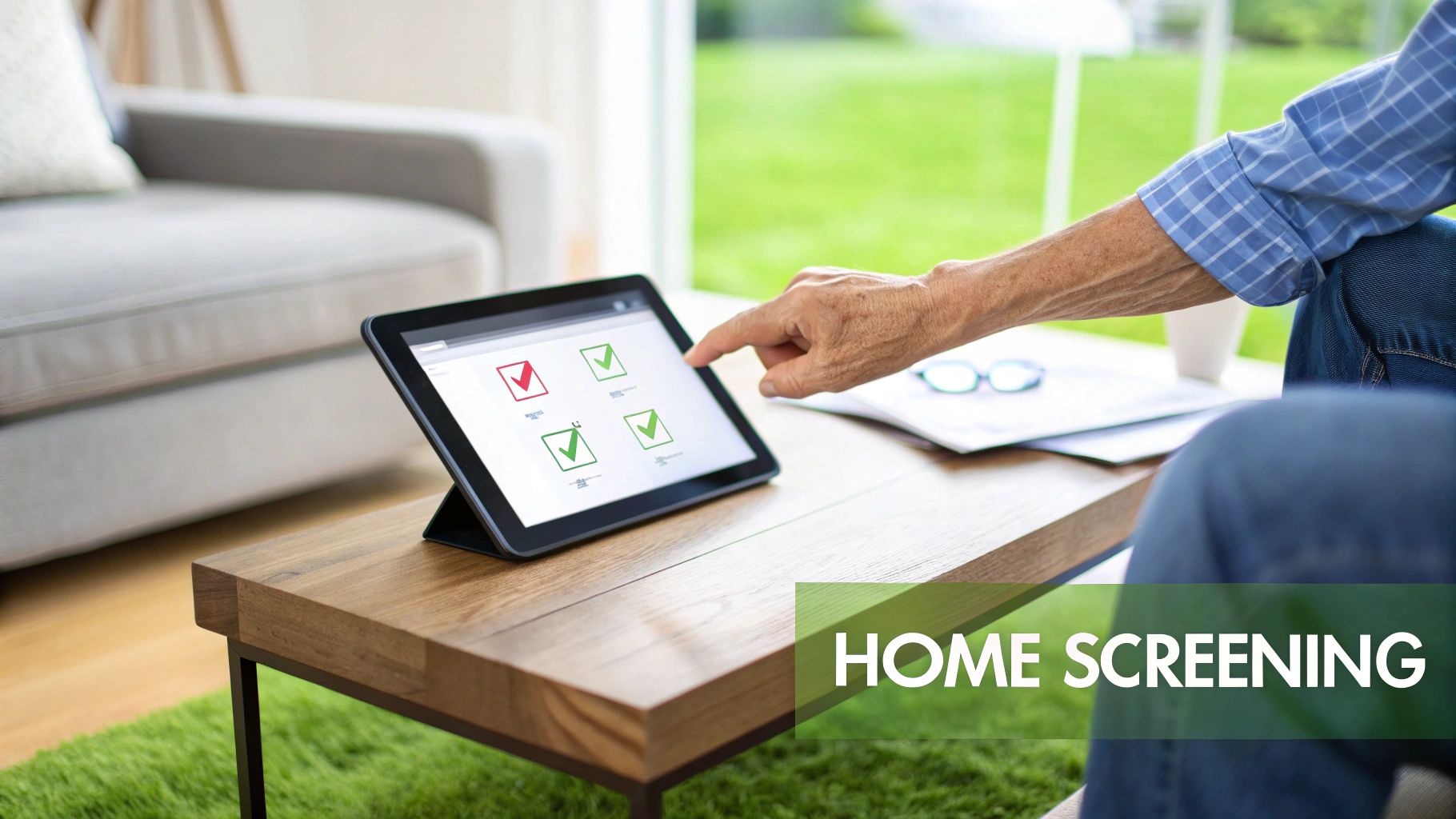
When people search for a "home test for dementia," they’re usually looking for something to help them spot the early warning signs, either in themselves or a loved one. These aren't medical kits but rather checklists, questionnaires, or simple brain exercises you can do from the comfort of your own home.
The real value here isn't in the 'score' you might get. It’s in the process. It helps you move from that vague, nagging feeling that "something's not quite right" to being able to pinpoint specific examples of what's causing your concern.
The Purpose of At-Home Checks
The main goal is to gather information in an organised way. Doing this can make you feel more prepared and confident when you do speak to a healthcare professional. It's the difference between saying, "Mum seems more forgetful," and being able to say, "Mum has asked me the same question four times today and couldn't remember how to use the microwave."
These self-assessments usually focus on the key cognitive areas that dementia can affect in its early stages, helping you spot patterns you might otherwise have missed. These often include:
- Short-Term Memory: Forgetting conversations you had just yesterday or what they had for breakfast.
- Executive Function: Sudden difficulty with planning a weekly shop, managing bills, or following a recipe.
- Language: Struggling to find the right word, or getting lost in the middle of a sentence.
- Orientation: Losing track of the day of the week, the month, or even the season.
What These Tests Cannot Do
It's absolutely crucial to understand the limitations of any at-home screening. These are informal checks, and they can't give you a diagnosis. Many other things—from vitamin deficiencies and infections to stress and depression—can cause very similar symptoms.
Think of a home cognitive screening as a conversation starter. Its real job is to help you structure your concerns so you can decide if it's time to speak with a GP. It is not there to deliver a diagnosis.
Only a qualified medical professional can make an official diagnosis after a full and proper evaluation.
If you're exploring self-assessment tools, there are various resources that discuss online dementia tests. While they can offer some insight, always approach them with caution and view them as just one small part of a much bigger picture. If you're already noticing early signs and want to understand how to manage day-to-day life, you can learn more about our dedicated home care services.
Recognising the Early Warning Signs
We all have those moments. You walk into a room and forget why you’re there, or you can’t quite put your finger on a word. It’s easy to brush these things off as just a "senior moment," but how do you know when it’s something more? A home test for dementia isn't just about catching memory slips; it’s about learning to spot specific patterns that go beyond the normal hiccups of ageing.
Think of it less as a test and more as a structured way to observe. Instead of a vague worry like "Mum's memory seems bad," these tools help you pinpoint concrete examples. A consistent pattern is what really matters, not a single off-day. The whole point is to help separate everyday forgetfulness from changes that might need a closer look.
So, what kind of things should you be looking out for? A home assessment will guide you to think about specific, real-world challenges.
- Difficulty with Planning: Does the weekly shop now feel like a monumental task? Maybe making a simple shopping list has become a struggle, or navigating the supermarket aisles feels confusing.
- Trouble Following Instructions: Think about a familiar recipe, one they've made a hundred times. If it suddenly seems too complicated—missing steps, using the wrong ingredients, or constantly re-reading the instructions—that's a sign worth noting.
- Confusion with Time or Place: It’s one thing to briefly forget it’s Tuesday, but it’s another to frequently lose track of the date, the season, or even the year.
- Changes in Mood or Personality: Have you noticed a shift? Perhaps a usually outgoing person has become quiet and withdrawn, or someone who was always easy-going is now often irritable, anxious, or quick to get upset.
Identifying a Consistent Pattern
The real key here is consistency. One-off incidents happen to everyone, but when you see a persistent pattern of these difficulties, it’s a strong signal that it's time to seek a professional opinion. Having a collection of specific examples makes that eventual chat with the GP far more focused and productive.
The NHS provides a clear overview of early symptoms, which is a fantastic starting point.
As their guidance points out, symptoms often start mild and progress slowly, which is why they’re so easy to dismiss at first. It’s rarely just one thing. It's usually a combination of issues—like memory loss showing up alongside mood changes or problems with communication—that paints the bigger picture.
A home cognitive check helps you gather the evidence. It turns a general worry into a structured list of observations, giving you and your doctor a much clearer idea of the day-to-day challenges. This kind of organised information is invaluable.
Catching these signs early is more important than ever. Back in 2006/07, there were around 213,000 recorded dementia diagnoses in the UK. That number has since soared to over 508,000, partly due to an ageing population but also better awareness.
Despite this, England's diagnosis rate is just 66.3%. This suggests that roughly one in three people living with dementia may not have a formal diagnosis. That's where accessible tools like home screenings can make a real difference, encouraging people to take that crucial first step. If you're interested, you can explore the latest dementia statistics in the UK to understand the full scope of the issue.
Comparing Different At-Home Assessments
When you start searching for a "home test for dementia," you'll quickly realise it's a broad term covering everything from simple printable checklists to more involved online assessments. Each has its place, but it's vital to understand what they can—and more importantly, what they can't—tell you.
The simpler, pen-and-paper style checks are all about observation. They prompt you to think about real-world changes. Has your loved one started struggling to follow a conversation? Are they finding it harder to manage their bills? Their real value lies in helping you gather and structure your thoughts before speaking to a doctor.
On the other hand, the more detailed online tools often present a series of tasks designed to check specific cognitive functions like memory recall, pattern spotting, or problem-solving. They feel a bit more clinical, but it's crucial to remember they are still just screeners. They are not a diagnosis.
Understanding the Pros and Cons
Every type of at-home assessment comes with its own set of strengths and weaknesses.
Printable checklists are wonderfully accessible—no tech skills required. However, they're entirely subjective, relying on your personal observations and interpretations.
Online questionnaires can provide a score, which might feel more objective and can be useful for noticing changes over a period of time. The big drawback here is that they can't possibly account for outside factors that influence performance. Things like stress, lack of sleep, or even just feeling anxious about using a computer can easily skew the results.
This visual guide breaks down some of the common behavioural changes that these kinds of home-based checks can help you pinpoint.
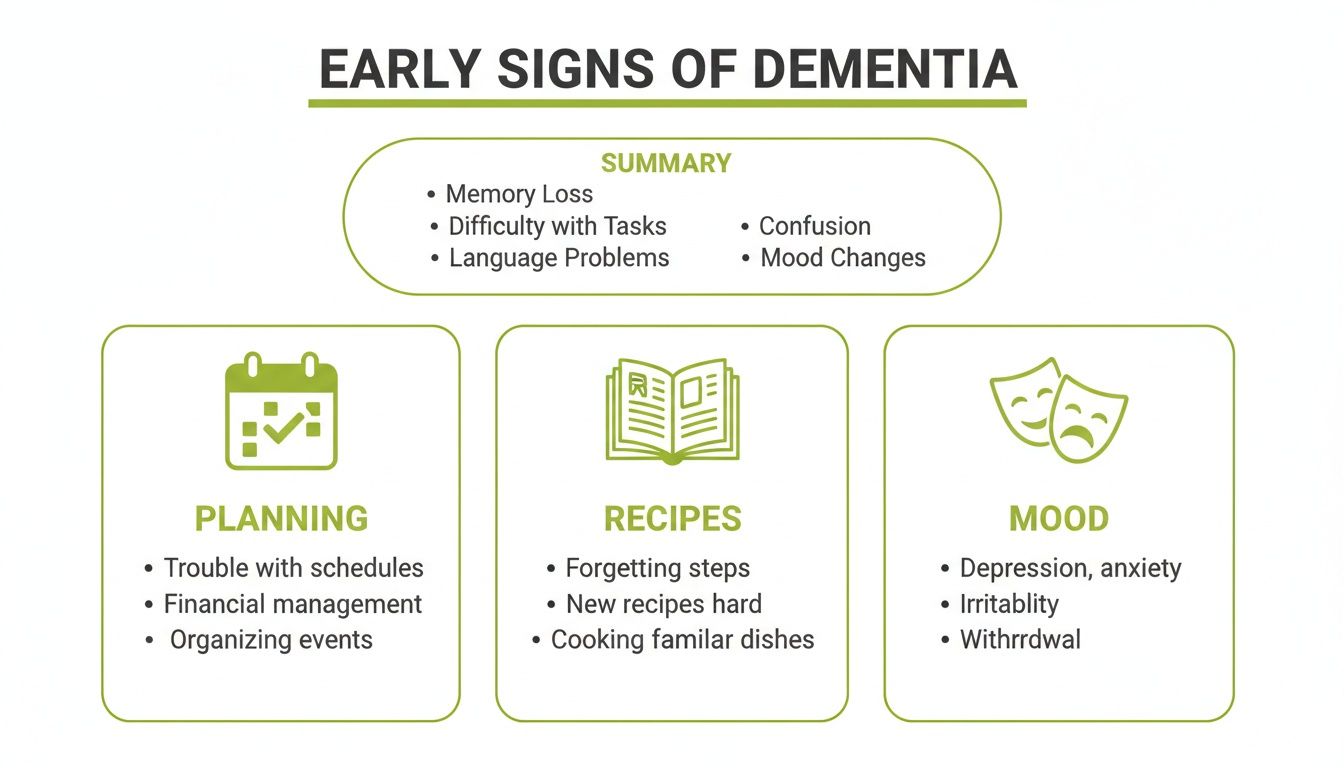
As the infographic shows, these aren't just memory slips; dementia can impact everyday skills like planning a journey, following a familiar recipe, or managing emotions.
To make things clearer, let's compare some of the common approaches you might find.
Types of At-Home Cognitive Assessments
This table offers a quick comparison of the different types of tools available, highlighting what they're for and where they fall short.
| Assessment Type | How It Works | What It Checks | Key Limitation |
|---|---|---|---|
| Printable Checklists | A series of questions about observable behaviours and changes in daily life. | Memory, confusion, mood swings, and difficulties with everyday tasks. | Highly subjective; relies entirely on the observer's interpretation and recall. |
| Online Questionnaires | Guided questions, often multiple-choice, about symptoms and their frequency. | A broad range of cognitive and behavioural symptoms based on self-reporting. | Lacks clinical context; can't differentiate symptoms caused by other conditions. |
| Digital Cognitive Games | Interactive tasks on a smartphone or computer, like matching pairs or recalling sequences. | Specific cognitive skills like short-term memory, attention, and processing speed. | Performance can be affected by tech skills, stress, or fatigue, not just cognition. |
| Pen-and-Paper Tests | Simplified versions of clinical screening tools, such as drawing a clock face (the "Clock-Drawing Test"). | Visuospatial skills, executive function, and memory recall in a structured way. | Without a trained administrator, results are difficult to interpret correctly. |
Ultimately, none of these methods can replace a professional evaluation. They are simply tools to help you decide if it's time to seek one out.
Limitations and Next Steps
No matter which tool you use, the result is never a diagnosis. It's best to think of it like an amber warning light on your car's dashboard. It signals that something needs a mechanic's attention, but it doesn't tell you what's wrong with the engine. A concerning score doesn't confirm dementia, and a "good" score doesn't rule it out.
The real purpose of any home test for dementia is to give you a clear, structured starting point for a conversation with a GP. The result itself is far less important than the action it prompts you to take.
Understanding the limits of any at-home screening is key. For example, learning about the accuracy of at-home blood tests for other conditions helps put these cognitive screeners into perspective. Your goal isn't to diagnose, but to gather enough information to have a confident and productive conversation with a healthcare professional.
Why a Professional Diagnosis Is Absolutely Essential
Think of a home test for dementia as a preliminary signpost, not the final destination. Whatever the result, it should always point you in one direction: your GP's surgery. Getting a professional medical diagnosis isn’t just the next logical step; it’s the most critical one you can take.
The reason for this is simple. Symptoms that often raise alarm bells—like memory loss, confusion, or changes in mood—aren't exclusive to dementia. They can be symptoms of a whole host of other, and often treatable, health conditions. Without a proper clinical check-up, you're left guessing at the real cause.
A formal diagnosis is the gateway to understanding, treatment, and support. It transforms uncertainty into a clear path forward, allowing you and your family to make informed decisions about the future with confidence and clarity.
A professional assessment is the only way to sift through the possibilities and make sure you or your loved one gets the right care for the right reason.
What to Expect from the Diagnostic Process
In the UK, the journey to a formal diagnosis begins with your GP. This first appointment is much more than a quick chat; it's a detailed conversation where your doctor will listen to your concerns, asking about specific symptoms, when they first appeared, and how they’re impacting day-to-day life.
They’ll also run some physical health checks and likely order blood tests. This is a crucial part of the process, as it helps to rule out other conditions that can masquerade as dementia. Common culprits include:
- Vitamin Deficiencies: A lack of Vitamin B12, in particular, can cause cognitive issues.
- Thyroid Problems: Both underactive and overactive thyroids can affect your mood and ability to think clearly.
- Infections: Some infections can bring on sudden confusion (delirium), especially in older adults.
- Depression or Anxiety: Mental health struggles can have a very real impact on memory and concentration.
If these initial checks don't provide a clear answer, your GP will likely refer you to a specialist memory service or clinic. Here, the experts take over with more detailed assessments. This often involves formal, validated cognitive tests like the Mini-Mental State Examination (MMSE) or the Montreal Cognitive Assessment (MoCA), which are standardised tools clinicians use to properly evaluate brain function.
The Power of a Formal Diagnosis
Hearing a diagnosis can feel overwhelming, but it’s also an incredibly empowering moment. Having a definitive answer, even if it’s the one you were anxious about, puts an end to the stressful period of "not knowing." It's the key that unlocks access to the right treatments, specialised support networks, and practical information.
Perhaps most importantly, it allows you to plan for the future. With a formal diagnosis, you can begin conversations about care preferences, arrange legal and financial affairs, and connect with local support services. It provides a solid foundation for managing the condition effectively, helping to preserve independence and quality of life for as long as possible. A diagnosis isn't an endpoint—it's the real start of taking back control.
Navigating Your Dementia Care Journey
Whether you're just beginning to notice subtle changes or you’ve recently received a diagnosis, the most important thing to remember is that you are not alone. Professional home care can offer both practical help and emotional reassurance, becoming a compassionate partner for your family at every stage.
The journey often starts with uncertainty, perhaps after seeing some worrying results from a home test for dementia. This is a crucial time where professional caregivers can step in to offer real, immediate value. Our team is trained to observe and document day-to-day cognitive changes, building a clear, consistent picture of what’s happening.
These detailed notes are incredibly helpful when you see a GP, turning vague worries into specific examples that can lead to a clearer diagnosis.
Personalised Support Following a Diagnosis
A formal diagnosis is a significant moment, but it's also the point where a truly supportive care environment can start to take shape. We create personalised care plans specifically designed to help people with dementia live with dignity and safety in the one place they feel most comfortable: their own home.
Our focus is on being a knowledgeable and compassionate partner for your family. We build care plans around the individual, recognising their unique personality, preferences, and needs to help maintain their independence and quality of life.
This kind of specialised support is all about tackling the unique challenges dementia presents. It’s a complete approach, with services designed to ease the strain on both the person with dementia and their family.
Core Components of Our Dementia Care
Good dementia care goes far beyond just helping with daily tasks. It’s about providing a full spectrum of support that helps someone live well. This often includes:
- Medication Reminders: Keeping on top of medication is vital for managing dementia symptoms and other health conditions. We make sure it's taken correctly and on schedule.
- Creating Safe Environments: We can help adapt the home to reduce risks, like preventing falls, and create a calm space that minimises confusion or distress.
- Companionship and Engagement: Isolation can be one of the biggest difficulties. Our caregivers provide genuine companionship, sharing in activities that stimulate the mind and lift the spirits.
- Respite for Family Caregivers: We offer family members a much-needed break to rest and recharge, confident that their loved one is in safe, professional hands.
In England alone, the number of people over 65 with a formal dementia diagnosis has now hit a record high of 483,000. This highlights just how important early identification and access to quality support are, enabling loved ones to receive excellent care where they feel most at ease. Read the full research about dementia care statistics.
By providing this dedicated support, we empower people to keep their routines and hold onto their independence for as long as possible. If you'd like to understand more about this, you can learn how personalised home care supports independent living in our detailed article.
Trusted UK Resources for Support and Information
Whether you’ve just used a home test for dementia or you’re navigating life after a formal diagnosis, it can feel overwhelming. It’s natural to wonder where to turn next. Thankfully, you don’t have to figure it all out on your own. There are some fantastic UK organisations ready to offer support, guidance, and clear information.
Knowing who to trust can make a world of difference. These resources are here to help families affected by dementia with everything from medical facts to practical, everyday advice.
Key National Support Networks
When you’re looking for reliable information, it’s always best to start with the experts. Here are the UK’s most trusted organisations for dementia support:
The NHS: This is your go-to source for official medical information in the UK. The NHS website is packed with clear, no-nonsense guidance on symptoms, how a diagnosis works, treatment options, and what it’s like living with dementia.
Alzheimer's Society: As a leading charity, they offer an incredible range of resources. You’ll find everything from local support groups and a national helpline to the latest research. For expert advice and a sense of community, visit the Alzheimer's Society.
Dementia UK: This brilliant organisation offers specialist support through its Admiral Nurses. These nurses are experts who provide one-to-one, compassionate guidance for families dealing with the complexities of dementia. You can find their support at Dementia UK.
Reaching out to these organisations means you're connecting with a network of professionals and other people who genuinely get it. You are not alone on this journey; expert help is there when you need it.
For anyone managing care at home, looking after your own wellbeing is just as important. You might find our article about why respite care is crucial for family caregivers a helpful read.
Your Questions Answered
It's completely normal to have questions when you're looking into cognitive assessments. Let's walk through some of the most common ones to clear things up.
Can a Home Test Actually Diagnose Dementia?
In a word, no. It's really important to be clear on this: home tests are simply informal screening tools. Think of them as a way to spot potential warning signs that might be worth raising with your GP. They are not medical devices and can never, under any circumstances, provide a diagnosis.
A proper dementia diagnosis can only come from a qualified medical professional. Your GP, or perhaps a specialist at a memory clinic, will conduct a full assessment. A key part of their job is to rule out other treatable conditions that can mimic dementia symptoms, which is something no home test could ever do.
What Should I Bring to a GP Appointment About Memory Worries?
Going in prepared can make a world of difference. The single most helpful thing you can do is bring a written list of specific examples of the changes you've seen.
Try to jot down details like:
- When you first started noticing memory issues or changes in behaviour.
- Concrete examples of things that have been forgotten, like recent conversations or important appointments.
- Any shifts in mood, personality, or their ability to manage everyday tasks.
If you have used an online checklist, feel free to bring the results with you—it can be a good conversation starter. But honestly, it's those real-world examples that will give your doctor the clearest picture.
How Accurate Are Online Dementia Tests?
The accuracy of online tests is all over the place, and none of them should ever be treated as a diagnostic tool. Their real value is in getting you to think about what's happening and giving you the nudge to seek a professional opinion if you're worried. They are just a first step, nothing more.
An online quiz can't hold a candle to a comprehensive clinical evaluation. A proper medical work-up is the only way to get an accurate understanding of what's going on and to check for other potential causes, such as infections, vitamin deficiencies, or even depression.
Does Dementia Affect Men and Women Differently?
Yes, research suggests it does. A big part of this comes down to lifespan—women generally live longer, and age is the single biggest risk factor for dementia. In fact, around twice as many women have Alzheimer’s disease as men.
On the other hand, some other types, like vascular dementia, tend to be more common in men. There are also biological factors to consider. Things like the menopause and the resulting changes in hormones like oestrogen are thought to impact brain health. Genetics, such as carrying the ApoE4 gene, can also affect risk differently between the sexes. It’s a complex area, but one that researchers are actively exploring.
At Cream Home Care, we understand that this journey often begins with questions and concerns. If you are starting to explore care options for a loved one, our compassionate team is here to offer the support and guidance you need. Find out more about our personalised home care services.