A home care assessment in Stoke-on-Trent is a Care Act needs assessment arranged through the local council, which determines eligibility and the type of support available; private provider assessments focus on care delivery preferences once eligibility is established. In 2023/24, around 3,915 people received long-term adult social care support in Stoke-on-Trent, while about 315 received short-term support.
Perhaps your parent has just returned home from hospital in Hanley, and the family is trying to work out who can help with washing, meals, medication or getting safely around the house. You may be unsure whether to contact Stoke-on-Trent City Council, speak to a home care agency, or do both.
That confusion is understandable because the word “assessment” describes two different stages. The council assesses whether someone has eligible care and support needs. A provider assesses how care could work in that person's home, including routines, preferences and the practical details of visits.
Knowing which route to take first can prevent avoidable delays and help you describe the situation clearly. The guidance below explains the local pathway, what happens during the assessment, how hospital discharge cases differ, and how families can prepare.
Why Home Care Assessments Matter in Stoke-on-Trent
The family in Hanley may know that their parent is struggling, but “needs help” isn't precise enough for a safe care plan. The assessor needs to understand what the person can do, where they need assistance, what risks exist at home and which outcomes matter to them. A missed detail, such as difficulty standing from the toilet or forgetting medication, can affect the support eventually arranged.
A council assessment is not just a formality before care begins. Under the Care Act 2014 guidance, a local authority must assess an adult who appears to have care and support needs, regardless of their finances or whether the authority expects them to qualify for funded care. The assessment must consider wellbeing and the outcomes the person wants to achieve.
What the assessment helps decide
The findings may point towards different kinds of assistance:
- Daily living support, such as help with washing, dressing, meals or household tasks.
- Equipment or adaptations, where a practical change could make the person safer or more independent.
- Reablement, offering short-term help while someone regains skills after illness or a hospital stay.
- Ongoing domiciliary care, where needs are likely to continue.
- Advice and community support, where formal home care isn't the most suitable response.
The council's assessment determines whether the person meets the relevant eligibility threshold and what type of support may be appropriate. A separate provider assessment then helps translate an agreed service into visits that fit the person's life.
Practical rule: Describe the person's difficult days as well as their good days. An assessment should reflect the support they reliably need, not only what they manage during a brief conversation.
Stoke-on-Trent's adult social care system was rated Good by the CQC in 2025, covering duties around access, support, safety and leadership, although the local assessment picture still includes delays for some non-urgent cases. That makes early, accurate contact important for families who are worried about safety or a rapid deterioration.
Understanding Home Care Assessments and Local Pathways
A Care Act needs assessment is the formal council route. Stoke-on-Trent City Council says residents who need help to live as independently as possible can complete its adult social care online self-assessment, providing information that helps connect them with appropriate support and resources. Someone who believes they have social care needs can also contact the council to ask for an assessment.
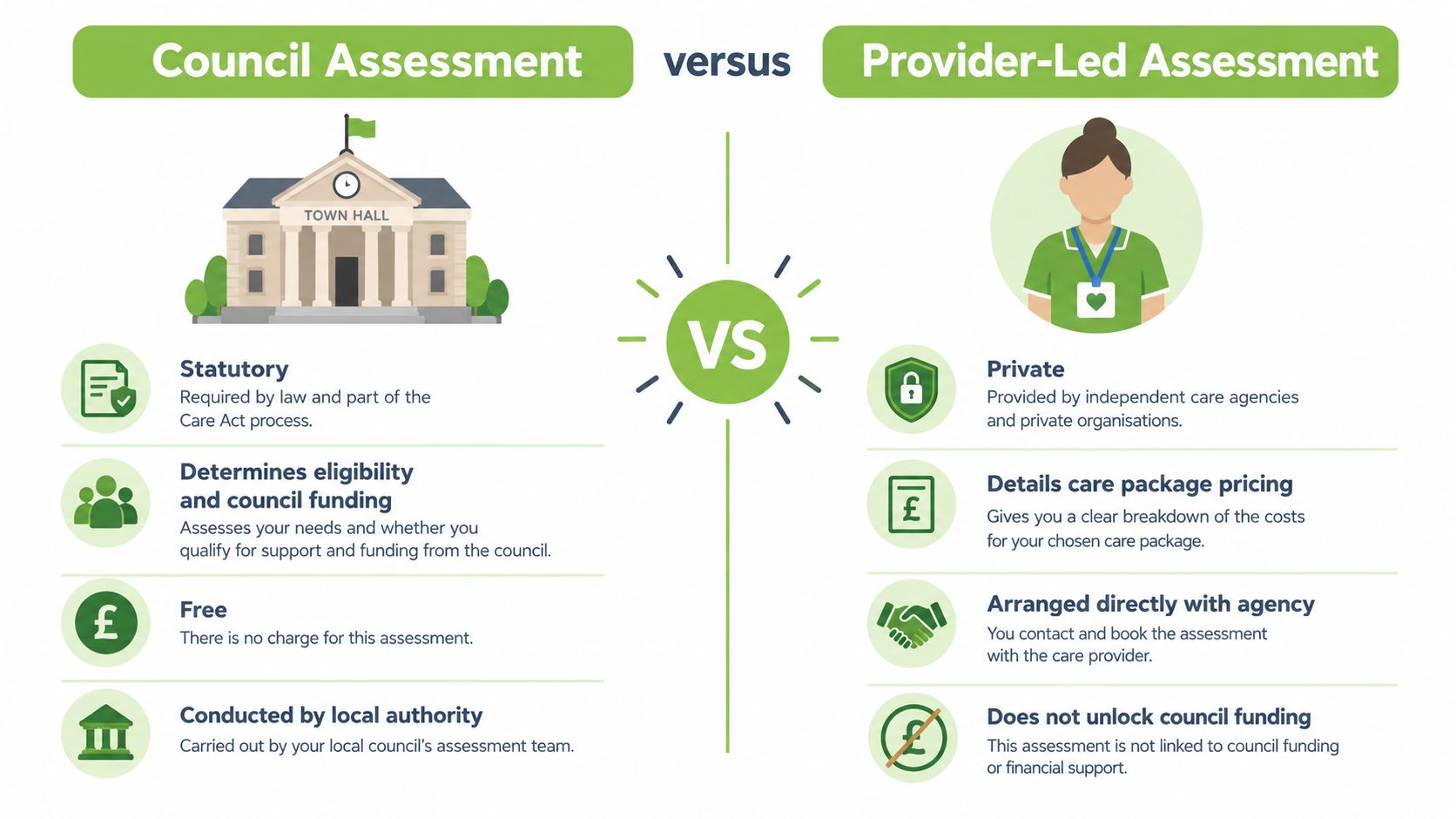
A provider-led assessment has a different purpose. A home care agency may meet the person and family to discuss routines, personal care, mobility, companionship, medication reminders, household tasks and the preferred pattern of visits. It can help arrange private care, or help a provider understand how to deliver an agreed package, but it doesn't replace the council's statutory decision about eligibility or council funding.
Choose the route that matches the question
Use the council route when you need to know:
- whether the adult has eligible care and support needs;
- what help could be available under the Care Act;
- whether the council may contribute to care costs;
- whether equipment, reablement or other services should be considered.
Use the provider route when you need to know:
- how care visits could fit around the person's routine;
- what tasks a care worker could support;
- whether the agency can meet specific preferences;
- what privately arranged care would involve.
The two routes can work alongside each other. A family might ask the council for a needs assessment while also gathering practical information from a provider, particularly if immediate private support is needed. For an overview of the practical support that may help someone remain at home, see support for independent living.
Recent local evidence gives useful context. The CQC found that people using Care Act assessments in Stoke-on-Trent generally found the process supportive and felt listened to, but it also identified delays in assessing needs, particularly in non-urgent cases. The system is therefore not a reason to avoid asking for help, but families should explain urgency clearly from the first contact.
The Home Care Assessment Process Explained
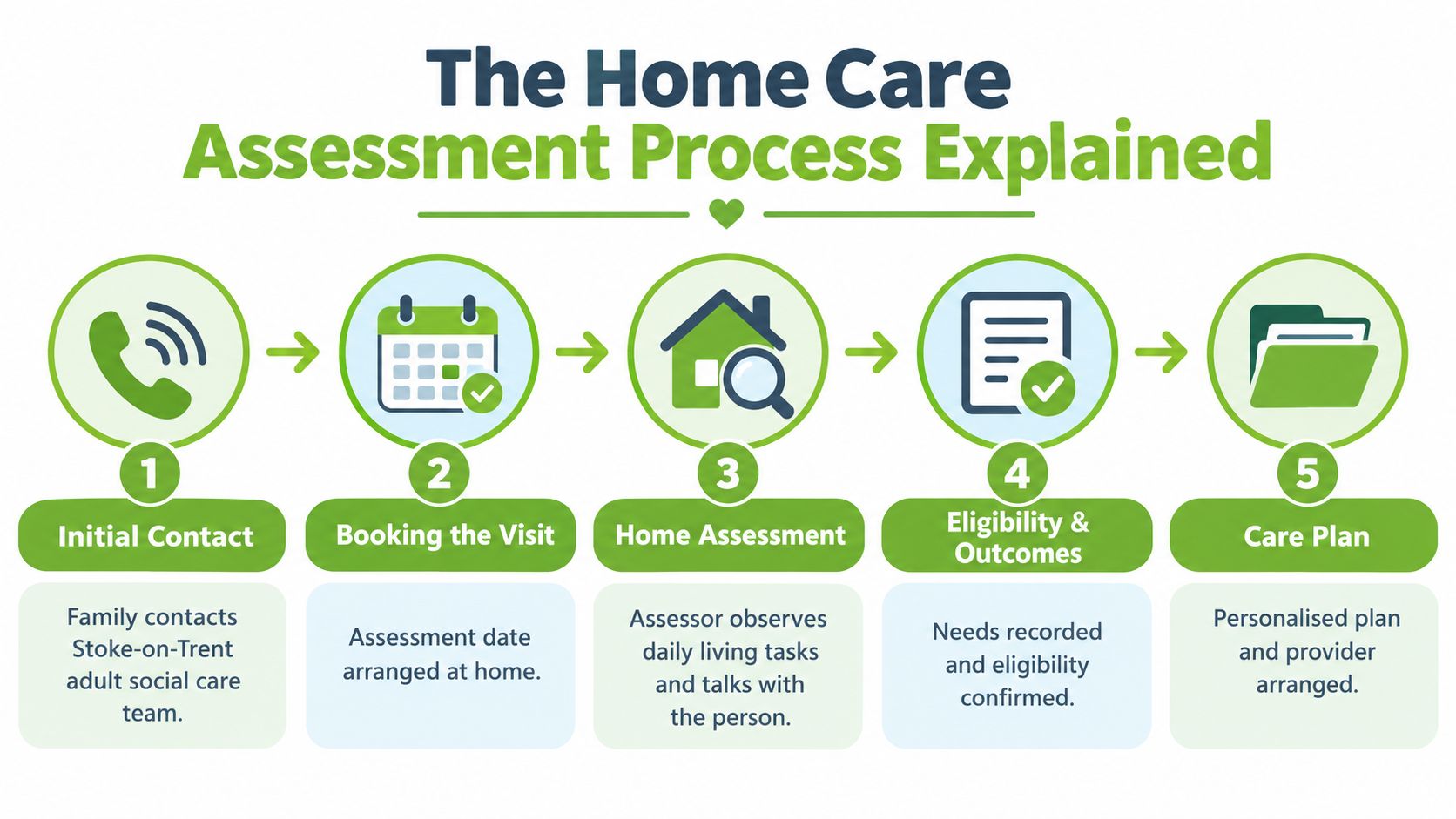
The process usually starts with contact from the adult who needs help, a relative, an unpaid carer or another professional. In Stoke-on-Trent, that contact can be made through the council's online self-assessment route or by asking the council directly for a Care Act assessment.
From first contact to the home visit
The council first considers the information provided and decides how the request should progress. An assessor may then arrange to speak with the person at home, where daily tasks and safety concerns can be discussed in the setting where they occur.
During the conversation, explain what happens at different points in the day. “Mum needs help” is less useful than “Mum can wash her face but needs support getting into the shower because she becomes unsteady when standing.” The assessor should also hear from the person themselves wherever possible, while recognising that a relative or carer may need to add important information.
The assessment considers four connected areas:
- Functional need, including what the person can and cannot manage.
- Risk and safety, such as falls, unsafe transfers, nutrition or medication concerns.
- Wellbeing outcomes, including independence, dignity, relationships and meaningful routines.
- Carer impact, including what unpaid family members can realistically continue doing.
After gathering the information, the council considers eligibility and discusses the next steps. The outcome may involve a care and support plan, advice, equipment, reablement or another response.
Waiting times and hospital discharge
Waiting times aren't identical for every case. Staffordshire County Council's CQC assessment recorded a median wait of 22 days from contact to Care Act assessment between February 2024 and February 2025, while the maximum recorded wait was 456 days. The same report recorded a median wait of 12 days for carers' assessments and a maximum of 453 days. These figures relate to Staffordshire, the wider county context around Stoke-on-Trent and Newcastle-under-Lyme, rather than a promise about an individual case. Read the Staffordshire adult social care CQC assessment for that local context.
Hospital discharge follows a different pattern. NHS guidance says a person returning home for assessment should receive a prompt check, within two hours of arriving home, with rapid same-day access to care if required. The immediate check deals with safety and urgent support. A fuller Care Act assessment should normally follow after discharge and an initial recovery period, when the person's abilities are easier to judge. The hospital discharge and community support guidance sets out this discharge-to-assess approach.
Council Assessment versus Provider-Led Assessment
Families often ask, “Which assessment should we book first?” The answer depends on what you need to establish.
If the central question is whether the person is entitled to support under the Care Act, start with Stoke-on-Trent City Council. The council route is statutory, considers needs and wellbeing, and can lead to decisions about eligible support and funding. It remains relevant even if the family expects to pay privately, because the assessment may identify equipment, reablement or other services that a provider alone cannot authorise.
If the immediate question is how care could be delivered at home, a provider-led assessment may be useful. The assessor can discuss preferred visit times, personal routines, privacy, communication, companionship and the practical tasks that matter most. A family can arrange this privately while waiting for a council assessment, subject to the provider's availability and terms.
A clear comparison
| Question | Council Care Act assessment | Provider-led assessment |
|---|---|---|
| Main purpose | Establish care and support needs and consider eligibility | Understand how an agency could deliver care |
| Who arranges it | The local authority | The person, family or another representative |
| What it considers | Wellbeing, outcomes, function, safety and carer impact | Routines, preferences, tasks and service requirements |
| Funding role | Can inform council support and financial decisions | Explains privately arranged care and the proposed package |
| Best first step | When rights, eligibility or urgent council support are unclear | When practical care arrangements need to be discussed |
Cream Home Care, for example, offers a private assessment that considers a person's needs, preferences and lifestyle before creating a customised home care plan. Its services include companionship, domiciliary care and respite care, so a conversation with the provider can help a family explore practical support while keeping the council route separate.
Stoke-on-Trent City Council's adult social care system was rated Good following the 2025 CQC assessment, and the city reported that no service area received the lowest rating, with most areas rated good across access, support, safety and leadership. That system-level result is reassuring, but it doesn't remove the need to explain individual risks and delays clearly. Families comparing agencies can use this guide to choosing a home care provider to consider practical questions before making arrangements.
How to Prepare for Your Home Care Assessment
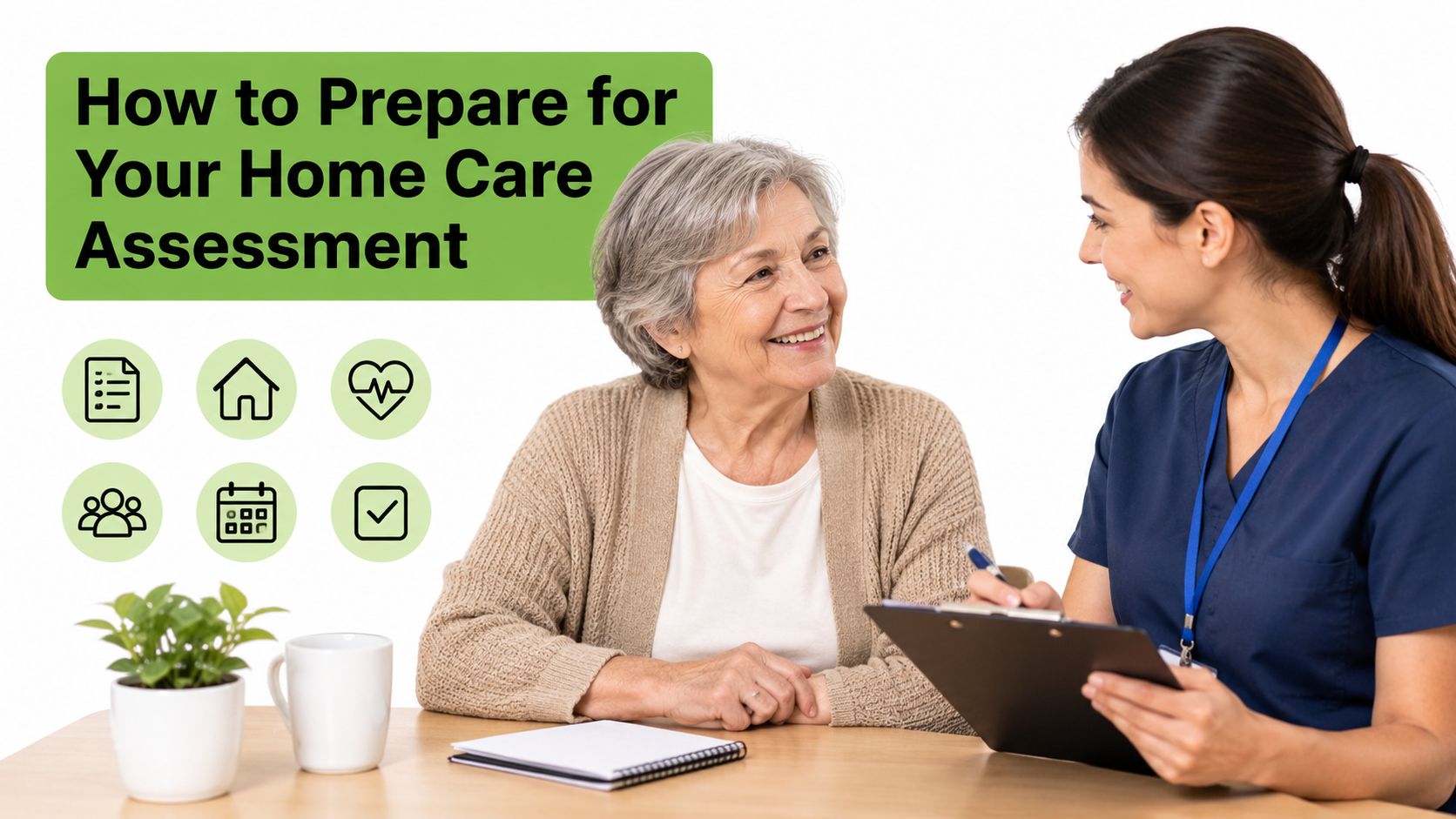
Good preparation doesn't mean rehearsing answers. It means giving the assessor a reliable picture of everyday life, including the tasks that take longer, feel unsafe or can only be completed with another person present.
Start with a short record of a typical day. Note what the person manages independently, what they avoid and where help is already being provided. Include bathing, dressing, toileting, preparing food, eating, drinking, moving around, using the stairs and taking medication.
Gather useful information
Keep these details together if they're available:
- Health information: Current diagnoses, recent hospital information and relevant professional contacts.
- Medication details: Prescribed medicines, reminders needed and any difficulty opening packaging or following instructions.
- Existing support: Current care visits, community services, equipment and help already provided by relatives.
- Home risks: Stairs, bathroom access, transfers, falls, poor lighting or areas the person can no longer use safely.
- Carer capacity: What family members do now, how often they help and what they can realistically continue.
The person's own priorities should guide the conversation. They may want to remain independent with breakfast, keep attending a community activity, maintain contact with family or feel confident using the bathroom. These outcomes help distinguish support that improves daily life from support that only adds tasks to a schedule.
Questions worth asking
Write down questions before the visit so anxiety doesn't make them disappear:
- What happens after the assessment?
- Which needs appear urgent?
- Will equipment or reablement be considered?
- How will the council explain eligibility and funding?
- What should the family do if the person's condition worsens while waiting?
- When can the assessment or plan be reviewed?
Be honest about difficult days. Downplaying problems to protect someone's dignity can leave the assessor with an incomplete picture, while describing needs accurately helps create a safer and more workable plan.
Assessment Outcomes and Care Plan Examples
An assessment outcome should connect identified needs with practical support. It may recommend assistance with personal care, meals, medication prompts, household tasks, mobility, companionship or carer breaks. It may instead identify equipment, adaptations, reablement or advice where a regular care package isn't the right first response.
For example, an older person who can dress independently but needs support with washing and breakfast might receive a plan built around morning visits. Someone returning from hospital may need short-term help with transfers and meals while strength improves, followed by a later review. A person whose family is providing constant unpaid support may need respite visits so relatives can work, rest or attend appointments.
A plan should also reflect preferences. The person may prefer support from a consistent team, care at particular points in the day, or help delivered in a way that protects privacy. A provider can discuss how those preferences fit with its service, while the council remains responsible for the statutory assessment and related decisions.
Short-term and ongoing support
The scale of local demand helps explain why assessment and planning decisions matter. The CQC reported that Stoke-on-Trent supported approximately 3,915 people with long-term adult social care and approximately 315 people with short-term adult social care in 2023/24. Those figures are reported in the CQC local authority assessment.
Funding depends on the person's circumstances and the route used. Council support is subject to the relevant financial assessment, while privately arranged care is paid for by the individual or another funder under the provider's terms. Ask for costs and what is included before agreeing to private visits.
Small equipment can also form part of a safer plan. If bathing is difficult, families may want to compare shower chair options online before discussing suitable equipment with an occupational therapist or care professional. For discharge cases, a written hospital discharge care plan can help relatives and professionals keep immediate support arrangements clear.
Needs can change. A care plan can be reviewed when circumstances alter, and a family can ask for reassessment if the existing arrangements no longer keep the person safe or support the outcomes they want.
Frequently Asked Questions About Home Care Assessments
How long will a Stoke-on-Trent assessment take?
There isn't one guaranteed waiting time for every person. Urgent cases may be prioritised, while non-urgent cases can take longer, and the CQC has identified delays in some Stoke-on-Trent assessments and reviews. The wider Staffordshire figures cited earlier show why families should ask what has been recorded about urgency, who is handling the referral and what to do if the person's condition deteriorates.
If someone is unsafe at home, explain the specific risk rather than just requesting “urgent care”. Mention falls, inability to access food or medication, unsafe transfers, carer breakdown or a recent discharge.
Does everyone qualify for council-funded home care?
No. The council must assess an adult who appears to have care and support needs, but the assessment and eligibility decision are separate from the financial arrangements. The council considers how needs affect wellbeing and whether the person can achieve relevant outcomes, then explains the resulting support and funding position.
An assessment is still worthwhile when a family expects to self-fund. It can clarify the wider situation and identify support that a private agency cannot arrange on its own.
Can a carer request an assessment?
Yes. An unpaid carer's position is considered separately from the cared-for adult's needs. The Staffordshire CQC assessment recorded separate waiting-time figures for carers' assessments, which reflects the fact that the carer's ability to continue providing support needs its own attention.
Ask for a carers' assessment if caring affects sleep, work, health, relationships or the ability to manage daily responsibilities. Don't wait until the arrangement has completely broken down.
What if the person has just left hospital?
Expect an immediate safety-focused check at home, followed by a fuller assessment once the person has had time to recover. Tell the council and discharge team what help is available at home, what equipment is missing and which tasks cannot be completed safely.
Can the family choose a provider?
Ask the council which options apply to the individual's support and funding arrangement. If the family is arranging private care, it can speak directly with providers about availability, care tasks, continuity, communication and pricing before agreeing a package.
The most useful first action is to record the person's daily difficulties and contact Stoke-on-Trent adult social care for a Care Act needs assessment. If practical home support is also needed, Cream Home Care can discuss personalised domiciliary, companionship or respite arrangements and how they might fit around the person's routine. Visit Cream Home Care to start a conversation about assessment and support at home.