Welcome to our comprehensive guide, designed to inspire and support a vibrant and fulfilling life within the comfort of home. As we age, maintaining engagement, purpose, and joy becomes more crucial than ever for our wellbeing. Staying active and mentally stimulated is not just about passing the time; it is fundamental to preserving cognitive function, physical health, and emotional balance. Finding the right activities for elderly at home can transform daily routines into opportunities for growth, connection, and happiness.
This article moves beyond generic suggestions to provide a practical, curated selection of meaningful activities tailored for varying abilities and interests. We understand that one size does not fit all, especially when considering different mobility levels or cognitive conditions like dementia. Therefore, we have organised a detailed collection of ideas spanning physical, mental, creative, and social categories, ensuring there is something for everyone.
You will discover actionable strategies to empower older adults and their carers. We'll delve into how each activity can be personalised, offering crucial safety tips, required material lists, and specific guidance for adapting tasks. For families and individuals, particularly those in areas like Stoke-on-Trent and Newcastle-under-Lyme, these suggestions can be wonderfully complemented by professional in-home support, ensuring a truly holistic approach to maintaining independence and enhancing quality of life. This guide is your starting point for creating an enriching home environment filled with purposeful engagement.
1. Reading and Audiobook Engagement
Reading is a timeless and profoundly beneficial cognitive activity that can be adapted to suit nearly any ability or interest. It serves as a powerful tool for mental stimulation, helping to maintain focus, improve memory, and preserve cognitive function. Engaging with a book offers a peaceful escape, reduces stress, and provides endless entertainment, making it one of the most versatile activities for elderly at home.
For individuals with visual impairments or those who find holding a book difficult, audiobooks present an excellent alternative. Services like the RNIB's Talking Books service or mainstream apps such as Audible and Libby offer vast libraries of spoken-word content, accessible via smart speakers or tablets.
How to Implement This Activity
- Adapt for Comfort: Use large-print books, magnifying glasses, or adjust the font size on e-readers like a Kindle to prevent eye strain. Ensure good lighting is always available.
- Establish a Routine: Set aside a consistent time each day for reading, such as after breakfast or before bed. Even 15-30 minutes daily can build a positive and sustainable habit.
- Leverage Local Services: Many local libraries, including those in areas like Stoke-on-Trent and Newcastle-under-Lyme, offer homebound delivery programmes, bringing a fresh selection of books directly to the door.
- Go Digital: Explore audiobook apps that can be easily navigated. BBC Radio 4's "Book at Bedtime" is another wonderful, freely available resource for nightly stories.
Making It Social and Engaging
To add a social dimension, consider joining a virtual book club. Many care providers, such as Cream Home Care, organise these groups to help clients connect with others, share their thoughts on a chosen book, and foster a sense of community. This combines the cognitive benefits of reading with vital social interaction, combatting feelings of isolation without needing to leave the house. A caregiver can assist with setting up the technology and facilitating participation.
2. Gentle Arts and Crafts
Creative expression through arts and crafts offers profound benefits for emotional wellbeing and cognitive health. Activities such as painting, knitting, sketching, or pottery provide a powerful outlet for self-expression while helping to maintain fine motor skills and dexterity. Engaging in these gentle crafts can reduce anxiety, boost self-esteem by creating something tangible, and serve as a wonderfully fulfilling activity for elderly at home.
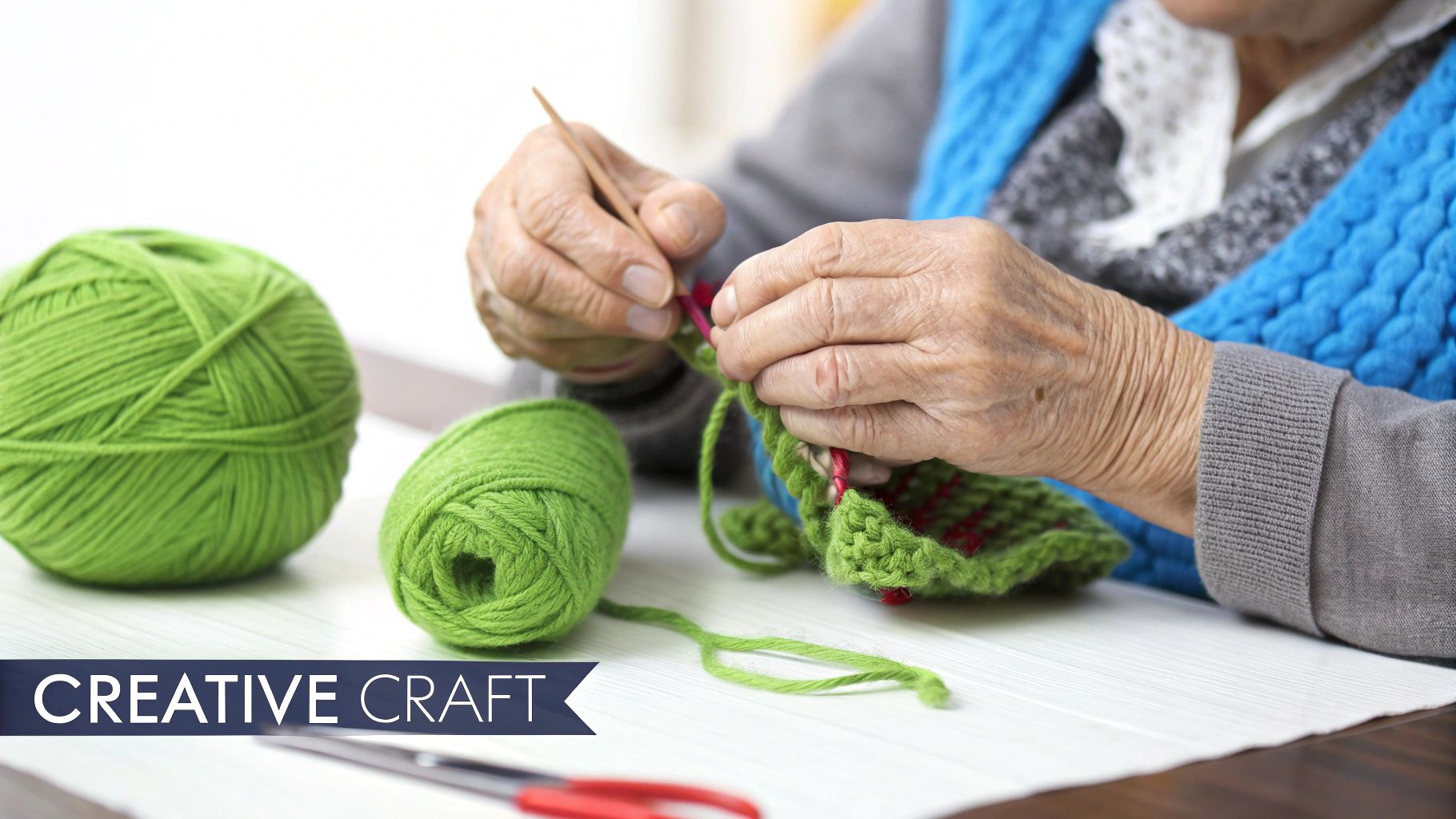
The adaptability of arts and crafts makes them accessible for almost any ability level. For instance, engaging in a relaxing needlecraft like cross stitch can provide hours of focused, creative enjoyment. The sense of accomplishment that comes from completing a project, whether a small painting or a knitted scarf, is invaluable for mental health.
How to Implement This Activity
- Adapt for Comfort: Use ergonomic tools designed for arthritic hands, such as chunky-handled paintbrushes or spring-loaded scissors. Provide pre-assembled kits to simplify complex projects and build confidence.
- Create a Dedicated Space: Ensure the crafting area has good natural light supplemented by a task lamp to prevent eye strain. Use non-toxic and washable materials for safety and easy clean-up.
- Start with Simple Projects: Begin with small, achievable goals, like painting a pre-drawn canvas or knitting a simple square. Success with these initial projects will encourage continued participation.
- Celebrate Achievements: Proudly display finished artwork around the home. This validates their effort and provides a joyful reminder of their creativity and accomplishment.
Making It Social and Engaging
Crafting can be a fantastic social activity that combats loneliness. A caregiver from Cream Home Care can facilitate a session, working alongside the individual or helping to set up a virtual craft circle with friends or family via video call. Many community centres in areas like Stoke-on-Trent and Newcastle-under-Lyme also organise local knitting or art groups, which can provide inspiration and a sense of connection, even if patterns or ideas are just shared online.
3. Indoor Gardening and Plant Care
Tending to houseplants or a windowsill herb garden is a wonderfully therapeutic activity that brings the restorative power of nature indoors. It provides gentle physical movement, a clear sense of purpose, and a tangible connection to the natural world. This activity offers cognitive benefits through planning and problem-solving, while the nurturing aspect provides deep emotional fulfilment, making it one of the most rewarding activities for elderly at home.
This simple hobby is accessible regardless of mobility and provides ongoing, year-round engagement. The success of horticultural therapy programmes, championed by charities like Thrive, highlights how gardening can significantly improve wellbeing, reduce stress, and combat loneliness. Even a single pot plant can make a difference.
How to Implement This Activity
- Choose Wisely: Start with hardy, low-maintenance plants like succulents, snake plants, or peace lilies that can tolerate infrequent watering.
- Adapt for Accessibility: Use lightweight tools and containers. Position plants on stable, waist-high surfaces or in raised planters to eliminate the need for bending and reduce fall risks.
- Simplify the Routine: Post a simple watering schedule in a visible location. Group plants together to minimise movement around the home and consider self-watering containers to reduce daily tasks.
- Add Purpose: Grow edible herbs like mint, basil, or chives on a sunny windowsill. This adds a sensory element and a practical purpose, as they can be used in cooking.
Making It Social and Engaging
Gardening is an excellent shared activity. A caregiver can assist with more physically demanding tasks like repotting or carrying bags of compost, turning it into a collaborative project. Together, you can plan the garden, choose new plants, or simply enjoy the calming process of watering and pruning. Discussing the plant's progress provides a regular, positive topic of conversation, nurturing both the plant and the relationship. This shared responsibility helps to foster a sense of teamwork and accomplishment.
4. Memory Games and Brain Training
Engaging in structured cognitive activities is a fantastic way to keep the mind sharp, active, and entertained. Memory games and brain training encompass a wide range of pastimes, from classic crossword puzzles and sudoku to modern digital apps. These activities are designed to challenge memory, problem-solving skills, and concentration, providing a powerful workout for the brain that has been shown to help maintain cognitive function.
The flexibility of these games is a key advantage, as their difficulty can be easily adjusted to suit individual abilities and prevent frustration. Whether it's a gentle word search or a complex game of chess, these activities for elderly at home provide a sense of accomplishment and purpose while supporting long-term brain health.
How to Implement This Activity
- Start Simple: Begin with easier puzzles or games to build confidence. A 100-piece jigsaw puzzle or a straightforward word search can be a great entry point before moving to more complex challenges.
- Create Variety: Mix different types of puzzles throughout the week to stimulate various cognitive areas. Alternate between logic games like sudoku, word-based puzzles, and spatial challenges like jigsaws.
- Adapt for Vision: Use large-print puzzle books, which are widely available. On a tablet or smartphone, apps like Lumosity and Peak allow for adjustable text sizes and bright, clear interfaces.
- Set a Routine: Schedule 15-30 minutes for brain training during a time of day when the individual feels most alert, which is often in the morning. This consistency helps build a positive habit.
Making It Social and Engaging
Puzzles and games are naturally suited for social interaction. A caregiver or family member can join in on a jigsaw puzzle, turning it into a collaborative effort and a chance for conversation. You could also start a friendly competition, timing who can complete the daily newspaper crossword fastest. For those more tech-savvy, many brain-training apps have features to share scores with friends and family, adding a fun, competitive element that fosters connection and motivation.
5. Music, Television, and Media Engagement
Engaging with familiar music, favourite television shows, or captivating films is a powerful way to provide comfort, stimulate memories, and offer enjoyable entertainment. These media-based activities for elderly at home can be easily personalised to individual tastes and abilities, offering emotional connection and cognitive engagement. From triggering cherished memories with a song to exploring new worlds through a documentary, media can significantly enhance mood and reduce feelings of loneliness.
Music, in particular, has a unique ability to reach individuals with cognitive decline, as demonstrated by the Alzheimer's Society's Singing for the Brain programme. Similarly, high-quality television like David Attenborough documentaries or classic films on BritBox provides accessible and stimulating passive entertainment that requires minimal physical effort but delivers immense enjoyment.
How to Implement This Activity
- Curate Personalised Playlists: Create playlists of songs from a person's youth or favourite genres on services like Spotify. Use BBC Radio 2's "Sounds of the 60s/70s/80s" for curated, nostalgic listening experiences.
- Optimise the Environment: Ensure seating is comfortable with good lighting for viewing. Use high-quality headphones or wireless speakers to improve sound quality and accommodate hearing loss.
- Enhance Comprehension: Turn on subtitles for television and films. This simple adjustment can make a significant difference for those with hearing impairments, allowing them to follow along easily.
- Balance Screen Time: While media is beneficial, ensure it's balanced with other types of activities throughout the day to encourage variety in stimulation and movement.
Making It Social and Engaging
Transform passive viewing into an active, social event by organising a weekly "film night" or "singalong session" with a caregiver or family member. Discussing the plot of a film or sharing memories sparked by a song turns a solitary activity into a shared experience. A caregiver can help choose appropriate content, manage the technology, and facilitate conversation, using media as a wonderful tool to foster connection and joy.
6. Cooking and Baking Activities
Cooking and baking are wonderfully sensory activities for elderly at home, engaging sight, smell, taste, and touch. These familiar kitchen-based tasks offer significant cognitive benefits by requiring planning, measurement, and following instructions, which helps to maintain mental acuity. Beyond the practical result of a delicious meal or treat, the act of preparing food provides a profound sense of purpose, accomplishment, and the joy of creating something to share.
The cultural appeal of figures like Mary Berry and programmes like The Great British Bake Off has highlighted how accessible and rewarding baking can be for all ages. It taps into nostalgia and creativity, turning a daily necessity into an enjoyable and therapeutic pastime that reinforces a person's role within the home and family.
How to Implement This Activity
- Adapt for Safety and Ease: Use lightweight utensils and mixing bowls. Ensure work surfaces are non-slip and at a comfortable height, allowing tasks to be done while seated if needed.
- Simplify the Process: Choose simple recipes with fewer steps, like classic scones, quick breads, or a simple soup. Using pre-chopped vegetables or pre-measured spice blends can reduce physical strain and complexity.
- Prioritise Accessibility: Keep all necessary ingredients and tools within easy reach to minimise bending and stretching. Label ingredients and recipe steps in large, clear font for better visibility.
- Install Safety Aids: Consider fitting grab bars near the cooker or worktops for added stability. Always ensure a caregiver is present to assist with using the oven or other hot appliances.
Making It Social and Engaging
Cooking can be transformed from a solo task into a vibrant social event. A caregiver can act as a "sous chef," helping with preparation while sharing conversation and laughter, strengthening their bond. This collaborative approach enhances safety and makes the activity more enjoyable. Organising a family baking session where a senior can share a cherished family recipe with grandchildren is a powerful way to create new memories. This not only provides social interaction but also preserves family traditions, reinforcing the individual's dignity and value. For more insights on this, you can learn about caring for the elderly with dignity and comfort.
7. Reminiscence Therapy and Memory Sharing
Reminiscence therapy involves revisiting past experiences and memories, often using prompts like photographs, music, or familiar objects. This powerful activity provides profound cognitive engagement and emotional connection, validating an individual's life experiences and reinforcing their sense of identity. It is an especially beneficial activity for elderly at home, particularly for those living with dementia, as it often accesses long-term memories that remain more intact.
Engaging in life story work helps to reduce stress, improve mood, and strengthen bonds between family members and caregivers. Projects like the BBC's "The Listening Project" or initiatives by organisations like Dementia UK highlight the therapeutic value of storytelling, turning personal histories into cherished legacies and offering a comforting, structured way to connect with the past.
How to Implement This Activity
- Create Memory Boxes or Books: Gather meaningful items like photographs, postcards, ticket stubs, or small trinkets into a dedicated box. Alternatively, organise photos chronologically in an album with large-print labels.
- Use Sensory Triggers: Incorporate music from their youth, familiar scents like a favourite perfume, or the taste of a classic recipe to evoke powerful memories.
- Establish a Comfortable Pace: Keep sessions short and focused, perhaps 20-30 minutes, during a time of day when the person is most alert. Ensure the environment is calm and free from distractions.
- Go Digital: Create digital slideshows of family photos that can be viewed on a tablet or television screen. This is an excellent way to share memories with family members who live far away.
Making It Social and Engaging
This activity is inherently social and can beautifully involve multiple generations. A caregiver can facilitate a storytelling session, gently prompting with open-ended questions like, "Tell me about the day you got this," or "What was school like for you?". Recording these stories, either in writing or as audio clips, creates a priceless family archive. This process not only stimulates the individual's mind but also fosters deep, meaningful connections and preserves a family's heritage for the future.
8. Gentle Exercise and Movement Activities
Regular physical activity is vital for maintaining health and independence at any age, and it’s one of the most impactful activities for elderly at home. Gentle exercise helps improve mobility, strength, and balance, which significantly reduces the risk of falls. It also boosts mood, improves circulation, and supports overall wellbeing, making movement an essential part of a healthy daily routine.
From chair-based yoga to simple stretching, these activities can be easily adapted to suit different physical abilities and health conditions. The key is consistency, not intensity. Even small, regular movements can lead to substantial improvements in physical and mental health. For a highly beneficial and gentle exercise option, consider exploring the advantages of Pilates for seniors to improve strength and balance.
How to Implement This Activity
- Start with Medical Clearance: Always consult a GP before beginning a new exercise programme, especially if there are pre-existing health conditions.
- Create a Safe Space: Ensure the exercise area is clear of trip hazards like rugs or clutter. Use a sturdy, armless chair for seated exercises.
- Begin Slowly: Start with short sessions of 10-15 minutes and gradually increase the duration and intensity. Focus on slow, controlled movements.
- Use Available Resources: The NHS and Age UK offer excellent free guides and online videos specifically designed for older adults, including seated exercises and strength training.
Making It Social and Engaging
Exercise doesn’t have to be a solitary activity. Joining a local group, even a virtual one, can provide motivation and social connection. A caregiver or family member can participate in exercises, providing encouragement and ensuring safety. Playing favourite music during sessions can make movement more enjoyable and rhythmic. A caregiver can also help establish a consistent routine, which is a key component of how personalised home care supports independent living by integrating beneficial habits into daily life.
9. Spiritual and Mindfulness Practices
Engaging in spiritual and mindfulness activities offers profound benefits for emotional comfort, cognitive engagement, and a sense of purpose. These practices can be deeply personal and are adaptable to any belief system or physical ability. From formal religious observance to secular mindfulness exercises, these activities for elderly at home help reduce stress, manage anxiety, and improve overall mental well-being, providing a powerful anchor in daily life.
The rise of digital access has made these practices more accessible than ever. Seniors can now join online church services, participate in virtual prayer groups, or use guided meditation apps like Headspace and Calm. This allows them to nurture their spiritual health and connect with a community without leaving the comfort and safety of their home.
How to Implement This Activity
- Create a Tranquil Space: Designate a quiet, comfortable corner of the home for prayer, meditation, or reflection. Ensure it is free from distractions to promote a peaceful atmosphere.
- Access Virtual Services: Most religious organisations, including local churches in Stoke-on-Trent, now stream services on their websites or YouTube. A caregiver can help set this up on a tablet or television.
- Explore Guided Mindfulness: Use apps like Calm or free resources from the NHS and YouTube for guided meditation sessions. Start with short, 5-10 minute exercises to build a consistent routine.
- Establish a Daily Practice: Schedule a regular time for spiritual or mindfulness activities, such as first thing in the morning or before bed. Consistency is key to experiencing the full benefits.
Making It Social and Engaging
Spiritual practice doesn't have to be a solitary activity. A Cream Home Care companion can provide support by facilitating access to online groups, reading spiritual texts aloud, or simply being present during a quiet reflection. They can also help connect individuals with local faith communities in areas like Newcastle-under-Lyme, arranging for phone calls or safe visits from community members. This support respects personal beliefs while fostering vital social connections and combating loneliness.
10. Social Engagement and Companionship Activities
Meaningful social interaction is a cornerstone of emotional and mental wellbeing, acting as a powerful antidote to isolation and loneliness. Structured social engagement, whether virtual or in-person, helps to maintain cognitive function, reduce the risk of depression, and foster a sense of belonging. These activities for elderly at home focus on creating and nurturing connections with family, friends, and dedicated companions, ensuring that vital human contact remains a consistent part of daily life.
From scheduled video calls with loved ones to regular visits from a professional companion, these activities are adaptable to any level of mobility or technical skill. National initiatives like the NHS social prescribing programme and local befriending services from charities such as Age UK connect seniors with valuable community resources, reinforcing that support is always within reach.
How to Implement This Activity
- Schedule Regular Contact: Establish a routine for phone or video calls with family and friends. A consistent weekly chat can become a cherished event to look forward to.
- Embrace Technology: Use user-friendly video apps like WhatsApp, Zoom, or Skype for face-to-face interaction. A caregiver can help with the initial setup and a quick tutorial.
- Explore Local Groups: Investigate what is offered by community centres in areas like Stoke-on-Trent and Newcastle-under-Lyme, which often host group activities like coffee mornings or hobby clubs.
- Engage Professional Support: Services like Cream Home Care offer dedicated companionship visits, providing not just conversation but also support with errands and social outings.
Making It Social and Engaging
The core of this activity is connection. To enhance it, create shared experiences even when apart. Family members can start a virtual book club, play online games like bridge together, or simply watch the same television programme and discuss it afterwards. For more structured support, professional companionship can transform a day. As outlined in our guide on why companionship is as important as physical care, a companion can assist with attending local events, sharing a hobby, or simply providing a friendly, listening ear, profoundly boosting mood and overall quality of life.
10-Point Comparison: At-Home Activities for Seniors
| Activity | Implementation complexity | Resource requirements | Expected outcomes | Ideal use cases | Key advantages | Limitations |
|---|---|---|---|---|---|---|
| Reading and Audiobook Engagement | Low — simple setup for print or audio | Books, e‑readers or audiobook apps, good lighting/headphones | Improved cognition, focus, entertainment | Visually impaired (audio), mobility-limited, solo leisure | Accessible formats, low cost, flexible timing | Vision/screen fatigue, requires sustained attention |
| Gentle Arts and Crafts | Low–Moderate — some prep and adaptations | Basic materials, ergonomic tools, good lighting | Maintained fine motor skills, emotional expression | Those seeking creativity, arthritis (with adaptations) | Tangible outcomes, therapeutic, social potential | Dexterity challenges, mess and setup needs |
| Indoor Gardening and Plant Care | Low–Moderate — ongoing care routine | Plants, pots, light (or grow lights), lightweight tools | Sense of purpose, routine, mild physical activity | Limited mobility, those wanting daily purpose | Year‑round engagement, sensory benefits, edible herbs | Needs light/maintenance; fall risk bending/watering |
| Memory Games and Brain Training | Low — easy to start, scalable difficulty | Puzzles, apps, large‑print materials | Improved memory, problem‑solving, measurable progress | Cognitively active individuals; prevention focus | Adjustable challenge, low cost, solo or group play | Can frustrate cognitive decline; screen fatigue |
| Music, Television, and Media Engagement | Low — minimal setup for listening/viewing | Radio/streaming, speakers/headphones, TV/subtitles | Mood improvement, reminiscence, entertainment | Dementia patients, those seeking nostalgia or passive activity | Strong emotional triggers, highly personalised | Hearing loss needs amplification; potential overstimulation |
| Cooking and Baking Activities | Moderate — safety and supervision often required | Kitchen, adapted utensils, prepped ingredients | Practical skills, nutrition, social bonding | Functionally mobile individuals, family activities | Multisensory, purposeful, social reward | Safety risks (heat/sharp tools), physical demands |
| Reminiscence Therapy and Memory Sharing | Low — preparation of materials needed | Photos, recordings, memory boxes, quiet space | Emotional validation, strengthened identity and relationships | People with dementia or seeking legacy documentation | Highly personalised, low cost, family involvement | May trigger difficult memories; time‑consuming to prepare |
| Gentle Exercise and Movement Activities | Moderate — requires supervision/clearance | Chair, resistance bands, mats, space | Improved mobility, balance, mood, reduced fall risk | Those at fall risk, mobility limitations, health maintenance | Low cost, adaptable, strong physical benefits | Needs medical clearance; risk of injury without supervision |
| Spiritual and Mindfulness Practices | Low — minimal setup, needs personalisation | Quiet space, apps or local services, reading materials | Reduced anxiety, improved well‑being and purpose | Spiritually oriented individuals or stress management | Highly flexible, low cost, supports coping | Sensitive to beliefs; virtual access barriers for some |
| Social Engagement and Companionship Activities | Low–Moderate — scheduling and matching required | Phone/video apps, transport or companion services | Reduced loneliness, improved mental and physical health | Isolated individuals, those needing social support | Strong impact on wellbeing, flexible formats | Requires consistency, possible technology or cost barriers |
Creating a Personalised Plan for Engagement and Happiness
Navigating the journey of ageing at home doesn't have to mean a decline in engagement or joy. As we've explored, the home can be a vibrant centre for growth, connection, and wellbeing. The key lies in moving beyond a passive routine and actively curating a life rich with purpose. This article has provided a comprehensive toolkit of activities for elderly at home, spanning the physical, cognitive, creative, and social realms. From the simple pleasure of tending to an indoor plant to the profound connection forged through reminiscence therapy, each suggestion is a building block for a more fulfilling daily existence.
The true power of this guide is not in trying to do everything at once, but in its potential for personalisation. The most effective approach is a bespoke one, tailored to individual preferences, abilities, and even the natural rhythm of the day. A person who has always loved literature might find immense comfort in an audiobook club, while someone who was once a keen baker can rediscover that passion with simplified, safe recipes. The goal is to build a structure that feels supportive, not restrictive, transforming routine tasks into meaningful rituals.
Key Takeaways for Building a Vibrant At-Home Life
The most crucial insight is that small, consistent efforts yield the most significant long-term benefits. A daily 15-minute gentle exercise session is far more impactful than a strenuous monthly workout. Similarly, a short, daily puzzle or a scheduled weekly video call with family can do more for cognitive health and emotional wellbeing than sporadic, intensive efforts.
Here are the core principles to remember:
- Balance is Essential: A healthy routine incorporates variety. Aim to blend activities from different categories: a physical activity like chair yoga, a cognitive challenge like a crossword, and a social connection like a phone call. This holistic approach nourishes the mind, body, and spirit in equal measure.
- Adaptation is Strength: Every activity can be modified. Mobility limitations don't rule out gardening; they simply shift the focus to raised beds or indoor pots. Memory challenges don't prevent creative expression; they might just mean using larger stencils or simpler patterns. The focus should always be on what is possible.
- Purpose Drives Participation: Activities are most successful when they feel meaningful. Connecting a craft project to a gift for a grandchild or linking a baking session to a cherished family recipe infuses the task with purpose, boosting motivation and enjoyment.
Your Actionable Next Steps
Mastering this approach is about transforming a house into a home that actively supports health and happiness. It’s about recognising that independence and engagement are not mutually exclusive. By thoughtfully integrating a few select activities for elderly at home, you or your loved one can cultivate a sense of autonomy, reduce feelings of isolation, and maintain a sharp, active mind. The journey begins with a single, simple choice.
Start by selecting just two or three activities from our list that genuinely spark interest. Don't overwhelm yourself. Perhaps it's listening to a classic novel on Tuesdays, trying a new simple recipe on Fridays, and committing to five minutes of gentle stretching each morning. Schedule these into the week and treat them as important appointments. Observe the impact on mood and energy levels, and gradually build from there. This proactive, personalised strategy is the cornerstone of a joyful and dignified life at home.
Implementing a consistent and engaging routine can be challenging, but you don't have to do it alone. For families in Stoke-on-Trent and Newcastle-under-Lyme, Cream Home Care provides compassionate companionship and support, helping to facilitate these activities in a safe and encouraging environment. Visit Cream Home Care to learn how our dedicated carers can help you or your loved one thrive at home.