When we talk about companionship for an elderly loved one, what we're really getting at is the simple, powerful act of providing friendship and emotional support. It’s about fighting back against the quiet creep of loneliness that can so easily set in.
This isn't about medical tasks or clinical help. It’s about genuine human connection – sharing a conversation, enjoying a hobby together, and fundamentally, improving someone's quality of life and mental well-being.
What Elderly Companionship Really Means

When families here in Stoke-on-Trent and Newcastle-under-Lyme start looking into care options, the word 'companionship' comes up a lot. But what's really behind the term? It’s easy to mistakenly lump it in with personal care, which involves hands-on support with things like washing and dressing.
It's much more helpful to think of companionship for elderly people as a kind of supportive friendship. The whole point is to meet the emotional and social needs that are absolutely essential for a happy, fulfilling life as we get older. It means having a friendly face to look forward to, an ear that's ready to listen, and a reliable source of positive social contact.
This kind of support is built on connection, not just convenience. It’s a step beyond simply getting tasks done; it’s about creating moments of shared joy and real interaction to tackle the very serious effects of social isolation.
The Core Focus: Emotional and Social Support
At its heart, companionship care puts a person's mental and emotional state first. A companion is there to offer company, spark a good chat, and encourage someone to get involved in activities that bring them pleasure and a sense of purpose. This is a critical point because, as we explore in our guide, companionship is just as important as physical care.
So, what does that look like day-to-day?
- Engaging in Conversation: Sharing stories from the past, talking about the day's news, or just having a natter over a cup of tea. It all helps to keep the mind sharp and spirits up.
- Enjoying Hobbies Together: Getting stuck into shared interests like gardening, playing a game of cards, listening to favourite music, or tackling a jigsaw puzzle. These things can bring back a real sense of fun and achievement.
- Providing a Comforting Presence: Sometimes, just knowing someone else is in the house is enough. It can bring enormous peace of mind and lessen the feelings of anxiety and vulnerability that often come with living alone.
- Accompanying on Outings: A companion can be the key to getting out and about. Whether it’s a trip to the shops, a walk in the local park, or a visit to friends, it helps your loved one stay connected to their community.
Companionship is the art of being present. It’s not about filling every moment with activity, but about making the moments that matter feel shared, understood, and valued.
Distinguishing Companionship from Personal Care
It’s really important to see the line between a companion and a personal carer. A companion might certainly help with light tasks – making a sandwich or tidying the living room, for example – but their role is strictly non-medical.
They don't typically help with things like bathing, dressing, or managing medication. That's the job of a personal carer. Instead, companionship is designed purely to prevent loneliness and boost well-being through social interaction. This makes it a perfect choice for older adults who are still quite independent but would really blossom with a bit more company.
The Life-Changing Benefits of Companionship
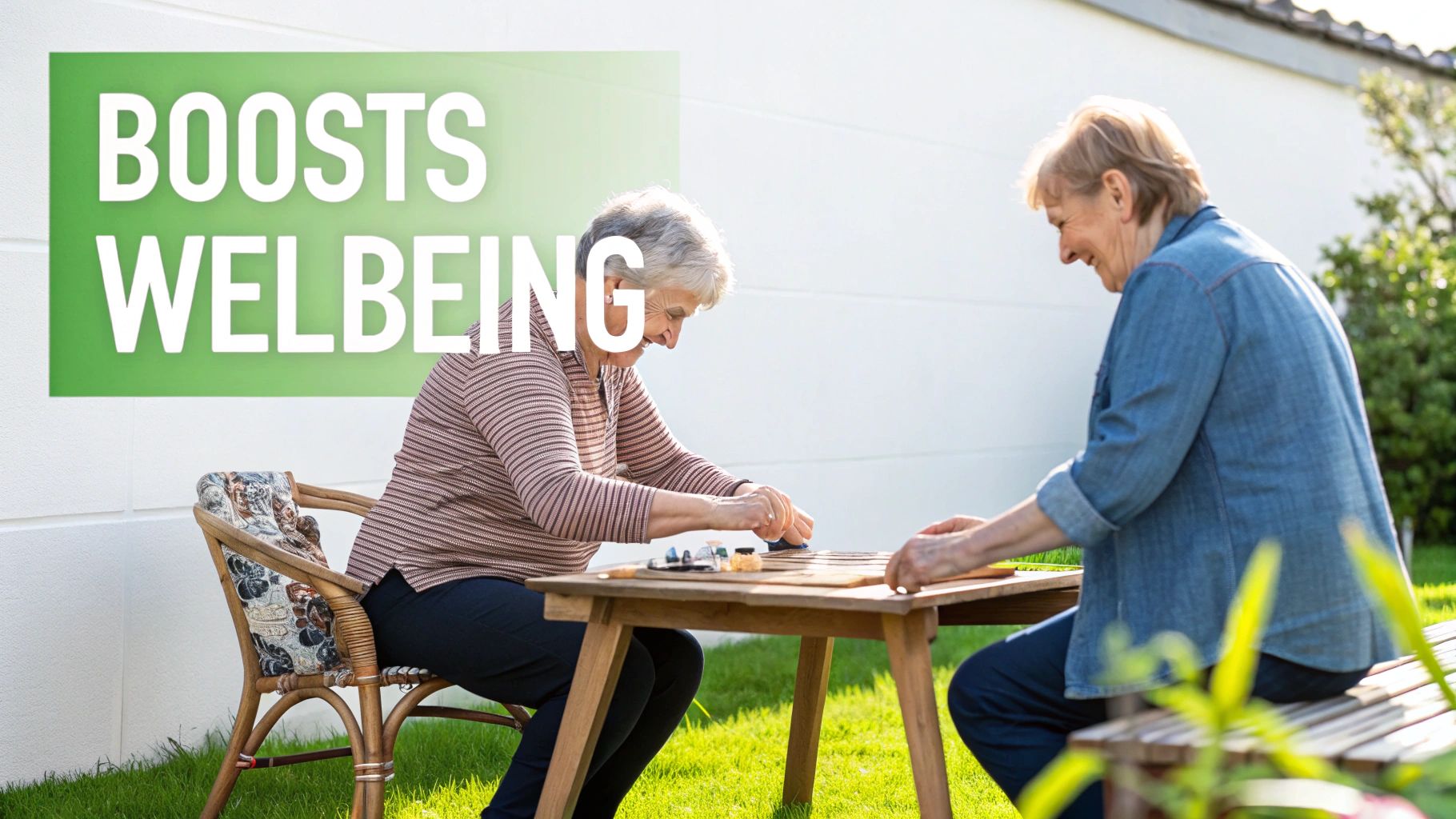
Loneliness can feel like a heavy blanket, dampening the joys of daily life. Introducing regular companionship for elderly loved ones can lift this weight, bringing profound benefits that ripple through every part of their well-being. It’s about much more than just having someone in the room; it’s a powerful way to relight a spark.
The impact of this connection can be seen across three core areas of life. From sharpening the mind to strengthening the body and soothing the soul, companionship offers a powerful, positive influence.
Enhancing Mental and Emotional Health
One of the first and most noticeable changes you'll see is the mental and emotional uplift that companionship provides. Regular, friendly conversation acts as a direct antidote to the feelings of isolation that can so easily creep in when someone lives alone or has seen their social circle shrink over time.
Having someone to talk to—to share memories with, discuss the day’s news, or simply have a good laugh—can significantly reduce feelings of anxiety and depression. This consistent social interaction helps rebuild confidence and restores a vital sense of belonging. It’s a simple reminder that they are seen, heard, and valued.
Loneliness is a huge challenge in the UK. According to Age UK, over 2.9 million people aged 65 and above in Great Britain reported having no one to turn to for support. On top of that, more than 2 million people over 75 live alone in England. These stark figures highlight just how critical connection is. You can find more of their research on the Age UK website.
Boosting Cognitive Function and Engagement
Just as physical exercise keeps the body strong, mental stimulation keeps the mind agile. Companionship offers a natural and genuinely enjoyable way to keep the brain active, which is absolutely essential for maintaining cognitive health as we age.
Sharing activities, whether it's a board game, a crossword puzzle, or tackling a bit of gardening together, encourages problem-solving and strategic thinking. Even just having a lively discussion requires active listening, memory recall, and putting thoughts into words—all of which exercise important pathways in the brain.
A companion doesn't just fill an empty chair; they help keep the mind's lights on. By sharing experiences and conversations, they provide the daily mental "stretches" needed to stay sharp and connected to the world.
This consistent engagement helps to create a stimulating routine. It gives someone something positive to look forward to and participate in, which can help ward off the mental fog that often comes with long periods of solitude.
Improving Physical Well-being
Perhaps the most surprising benefit of companionship is its positive effect on physical health. The link between a happy mind and a healthy body is well-established, and a companion strengthens this connection in several practical ways.
A companion can be that gentle encouragement needed to get moving. This could be as simple as:
- A short walk in the garden: Getting some fresh air and gentle movement together.
- A trip to the local shops: Turning a necessary errand into a pleasant social outing.
- Light chair-based exercises: Making fitness feel less like a chore and more like a shared activity.
On top of that, people are often more inclined to eat properly when they share a meal with someone. A companion can help prepare a simple, nutritious lunch, and the very act of eating together can improve appetite and ensure better nutrition. This transforms mealtime from a lonely task into a moment of genuine connection, directly boosting physical health and vitality.
Recognising When Your Loved One Needs Support
It can be tough to spot the signs of loneliness in an older loved one. The changes often creep in slowly and are easily brushed off as just a normal part of getting older. But these subtle shifts are frequently quiet calls for a bit more connection. Learning to see them is the first real step in offering the right kind of help before that feeling of isolation takes hold.
These clues aren't about failure or weakness. They're simply human reactions to not having enough social contact. By paying close attention to changes in their mood, daily habits, and even their home, you can start a conversation from a place of genuine care and understanding.
Changes in Mood and Behaviour
One of the first things you might notice is a real shift in their personality and daily rhythm. Someone who was always upbeat and busy might start to seem withdrawn, a bit snappy, or just consistently down. This isn't just a fleeting "bad mood"—it's a persistent change that seems to cloud their whole perspective.
Keep an eye out for specific behavioural shifts, such as:
- Losing Interest: They might suddenly drop hobbies they’ve loved for years, whether it's gardening, knitting, or keeping up with the football. Things that once brought them joy now just seem like a chore.
- Constant Boredom: You may hear them mention more often how they have nothing to do, or that the days seem to drag on endlessly.
- Different Communication Patterns: The phone calls might dry up. Or, you might find the opposite is true—they might ring you more and more, just to have someone to talk to, even if there’s not much to say.
When a loved one is also navigating cognitive challenges like dementia, their needs become more specific, and specialised companionship is key. For families in this situation, learning about different approaches to care can make a world of difference. Resources covering CNA care for dementia patients offer valuable insights into how to communicate and engage in a way that truly connects.
Physical and Environmental Clues
The effects of loneliness aren't just confined to feelings; they often show up in real, physical ways. Sometimes, these are the most obvious signs that your loved one would benefit from having someone pop in regularly. A quick look at their appearance and the state of their home can tell you a great deal.
A person's home is often a mirror to how they're feeling inside. An unusually cluttered house or a noticeable slip in personal care can be a strong signal that the motivation for daily routines is fading, often because there's no social purpose to them anymore.
Look for these more tangible indicators:
- A Decline in Personal Care: A real change in personal hygiene, like not getting dressed for the day, bathing less often, or having unkempt hair, can point to low spirits and a sense of apathy.
- Changes in Eating Habits: This could be anything from a loss of appetite and weight loss to relying on toast and tea for every meal. People often lose the desire to cook proper meals when there isn't anyone to share them with.
- A Neglected Home: If a house that was once spotless has become cluttered, dusty, or generally disorganised, it could mean your loved one is feeling too overwhelmed or just doesn't have the energy to keep on top of things.
Spotting these signs early gives you a gentle way to open up a conversation about introducing companionship for elderly loved ones. You can frame it not as them losing independence, but as a wonderful way to bring more connection and joy back into their daily life.
Exploring Different Companionship Options
Realising your loved one might need more social interaction is the first step. The next is figuring out exactly what kind of support is the right fit. When it comes to companionship for elderly people, there’s certainly no one-size-fits-all solution. The best choice always comes down to your family member’s unique personality, their specific needs, and what you’re hoping to achieve.
Think about it this way: you wouldn’t pick the same hobby for two completely different people, and companionship should be just as personal. For some, a simple, friendly chat over a cup of tea is the perfect tonic for a quiet afternoon. For others, a more active and engaged form of company is needed to really bring them out of their shell.
The infographic below highlights a few key warning signs that can point towards a need for greater social connection, focusing on subtle shifts in mood, their home environment, and personal grooming.
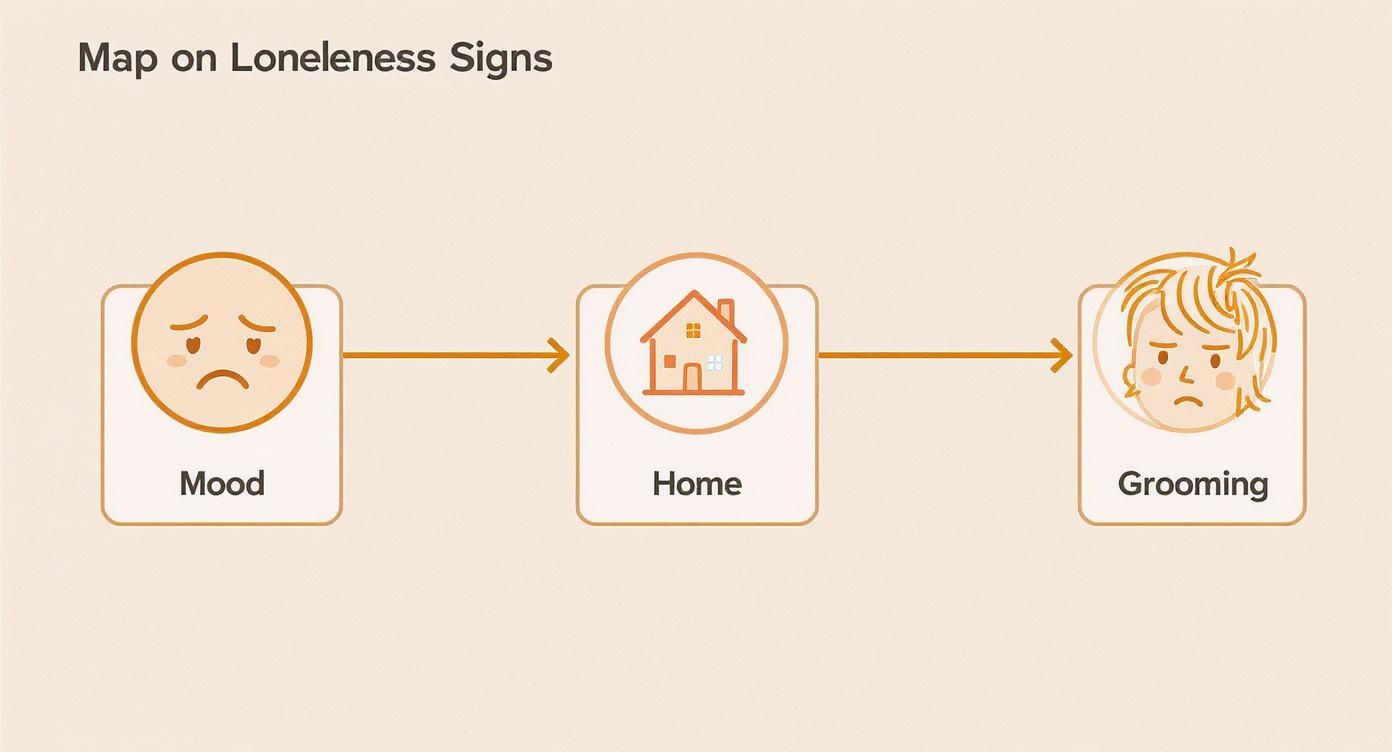
Often, these visual clues point to a deeper emotional need. They show how loneliness can appear in tangible, everyday ways that go far beyond just feeling a bit sad.
Social Visits vs. Activity-Based Companionship
The most familiar form of companionship is the classic social visit. This is all about conversation and simply being present. It’s perfect for someone who misses having a good natter, wants to share stories from their past, or just feels safer and more secure with another person in the house.
On the flip side, activity-based companionship is much more hands-on. It's designed for individuals who thrive on doing things and staying busy. This could involve anything from:
- Shared Hobbies: Getting stuck into the garden together, finishing a tricky jigsaw puzzle, or playing a favourite board game.
- Gentle Outings: Popping out for a trip to a local café, visiting a museum, or just enjoying a walk in a nearby park.
- Creative Pursuits: Listening to music from their younger days, painting, or looking through old photograph albums together.
This approach is especially brilliant for reigniting an interest in old hobbies that might have fallen by the wayside due to a lack of confidence or motivation.
Specialised Support for Dementia
When an older person is living with dementia, their companionship needs are entirely unique. A companion has to be much more than just a friendly visitor; they need immense patience, specific training, and a deep understanding of how to communicate effectively.
Specialised dementia companionship is focused on creating a calm, reassuring, and consistent environment. The main goal is to reduce any anxiety and confusion while providing gentle, positive stimulation. This might involve using reminiscence therapy (chatting about the past), playing familiar music, or engaging in simple, repetitive tasks that give a sense of comfort and achievement. The emphasis is always on dignity and respectful, person-centred interaction.
For a clearer picture of how different care roles fit together, you might find it useful to read our guide explaining personal care versus home help.
Volunteer Schemes vs. Professional Services
Finally, it’s really important to understand the difference between volunteer-led schemes and professional, agency-managed services. Both are fantastic options, but they offer very different things.
Volunteer schemes, often run by brilliant charities, are a cornerstone of the community. They can provide warm, friendly visits, but the availability and consistency of volunteers can sometimes be a bit unpredictable.
Professional services, like those from a dedicated home care agency, provide a much more structured and accountable setup. This brings a level of reassurance that many families need. The table below breaks down the key differences.
Comparing Companionship Options
| Feature | Volunteer Companionship | Professional Agency Companionship |
|---|---|---|
| Training & Vetting | Basic checks, training varies | Professionally trained, fully vetted, DBS checked |
| Consistency | Can be variable depending on volunteer availability | Guaranteed, consistent carer and scheduled visits |
| Accountability | Managed by a charity co-ordinator | Formal care plan, regulated by the CQC |
| Matching | Based on volunteer availability in the area | Carefully matched based on personality and interests |
| Scope of Support | Primarily social visits and befriending | Can be combined with other home help or personal care tasks |
| Cost | Usually free | A paid-for service |
As you can see, the choice often comes down to the level of need and the desire for reliability. A professional service ensures that companions are not only friendly but also fully trained and carefully matched to clients. This consistency is crucial, especially for vulnerable individuals or those with more complex needs.
This preference for organised, in-home support is a growing trend. In England, the number of people receiving community-based social care rose to 488,000 by September 2024, a clear sign that families are increasingly looking for reliable, professional services.
How to Arrange and Fund Companionship Care
Taking that first step to arrange companionship for a loved one can feel a bit daunting. It's often a mix of practical questions and emotional ones. But once you break it down, it's really about two key things: finding a trustworthy provider who genuinely clicks with your family member, and then figuring out how to manage the costs.
Think of this section as your roadmap. We'll walk through how to find the right support and navigate the financial side of things, giving you the confidence to move forward.
Choosing a Reputable Provider
When you start looking for a care provider, especially here in Stoke-on-Trent and Newcastle-under-Lyme, a little homework goes a long way. The best agencies are transparent and more than happy to answer your questions. It’s all about finding someone who gives you complete peace of mind.
To make sure you're making a good choice, here are a few essential questions to have ready:
- DBS Checks: “Are all your companions given an enhanced Disclosure and Barring Service (DBS) check?” This is an absolute must-have for safety and is non-negotiable.
- Staff Training: “What kind of training do your companions have?” You'll want to know about specifics like dementia awareness, first aid, and safeguarding.
- The Matching Process: “How do you match a companion to my loved one?” A good fit isn't just about skills; it’s about personality. Finding someone with shared interests can be the start of a real friendship.
- Consistency: “Will it be the same person visiting each time?” Having a consistent, friendly face is crucial for building trust and a strong bond.
A great companionship service doesn't just send a person; they make a connection. The time they take to understand your loved one's personality and preferences is a clear indicator of their commitment to providing genuine, person-centred care.
A professional provider will always insist on creating a personalised care plan. This isn't just a generic form. It’s a living document that details everything from visit times and favourite activities to little things like their preferred mug for a cup of tea. It should be reviewed regularly and updated as things change, ensuring the support is always just right.
For a clearer picture of what this involves, take a look at our guide on arranging home care services in 5 simple steps.
Navigating the Costs and Funding Options
Understanding how to pay for companionship care is, of course, a major consideration for most families. The costs will naturally vary based on how much support is needed, but there are a few different avenues to explore.
1. Self-Funding
Many families pay for care privately. This route offers the most flexibility, letting you choose the exact provider and type of care that works for your loved one without needing to go through a local authority assessment. For those juggling this alongside a career, finding good strategies for balancing work and family life can make a huge difference when planning for the future.
2. Local Authority Support
If your loved one has limited savings, they might be able to get financial help from the council (like Stoke-on-Trent City Council or Staffordshire County Council). It all starts with a free needs assessment, where a social worker visits to understand what support is required. If they're eligible, a financial assessment follows to work out how much the council will contribute.
So much elderly support in the UK comes from unpaid carers—the 2021 Census identified an incredible 5.8 million people in this role. However, with local authorities receiving 1.43 million requests for social care from older adults in 2023/24 but only funding around 559,000 for long-term care, there's a clear gap. This is exactly why professional companionship for elderly individuals has become so vital for so many families.
3. Attendance Allowance
This is a government benefit that’s worth looking into. It’s a tax-free payment for people over State Pension age who need a bit of help with personal care or supervision due to an illness or disability. The crucial thing to know is that it’s not means-tested, so income and savings don’t come into it. It can be a real help towards the cost of companionship, and you don’t even need to have a carer already in place to apply.
Taking the Next Step Towards Companionship
We've covered a lot of ground in this guide, but the core message is simple: companionship for elderly people isn't just a 'nice-to-have'. It's a vital part of what makes for a happy, healthy, and dignified life in later years. It’s about bringing connection and light back into a daily routine that may have become a little too quiet.
If you’ve been nodding along, perhaps recognising some of the signs of loneliness we discussed in a loved one, the next step is just a simple conversation. Sometimes, just exploring the possibilities and understanding what’s out there is the most reassuring part of the entire journey.
Your Local Experts in Stoke-on-Trent and Newcastle-under-Lyme
For families here in the Stoke-on-Trent and Newcastle-under-Lyme areas, we’re right on your doorstep. We invite you to get in touch for a friendly, no-obligation chat. Forget any worries about a hard sell; this is about offering helpful advice that fits your family's unique situation.
One of our dedicated care experts can walk you through the options, answer all your questions, and give you a clear picture of how companionship could work for you. The whole point of this first chat is to make sure you feel confident and supported in whatever decision you make for your loved one.
Taking that first step can feel like the biggest hurdle, but it's also the moment you begin to replace worry with a clear, positive plan. A simple chat can open the door to renewed connection and peace of mind for your entire family.
Making that initial call or sending an enquiry is, in itself, an act of care. It’s a way of saying you want the person you love to have every chance to live their later years with the joy, engagement, and friendship they absolutely deserve. Let us help you find the right path forward, with compassion and local expertise guiding you every step of the way.
Frequently Asked Questions
When you start looking into companionship care for a loved one, it’s completely normal to have a few questions. To help you get a clearer picture, we’ve answered some of the queries we hear most often from families just like yours.
What Does a Companion Actually Do?
Think of a companion as a supportive friend who focuses on social and emotional well-being, rather than medical tasks. Their role is all about brightening someone's day and helping with the little things that make life easier and more enjoyable.
This typically looks like:
- Good Conversation: Their main job is simply to be a friend – someone to chat with, share stories, or just talk about the day’s news over a cup of tea.
- Shared Activities: They can join in with whatever your loved one enjoys, whether that's a game of cards, pottering in the garden, working on a puzzle, or listening to favourite music.
- A Helping Hand: This might mean making a light lunch, tidying up the living area, or helping to write a shopping list. It's about light, non-strenuous help around the house.
- Getting Out and About: A companion can go along on trips to the local shops, a café, the park, or to appointments, offering a steady arm and a bit of confidence.
It's worth noting that while they can offer gentle reminders to take medication, they don't administer it. That's a task for someone providing medical or personal care.
How Do You Find the Right Companion for My Loved One?
This is probably the most important part of getting companionship right. A genuine connection is built on personality, not just a list of skills, so a one-size-fits-all approach just won’t cut it. Any good care provider will take the time to get this right from the start.
A successful match is about more than just skills; it's about chemistry. The goal is to find someone who doesn't just feel like a carer, but like a true friend who genuinely brightens their day.
We get to know your loved one properly – their personality, their life story, their interests, and what makes them tick. With that understanding, we can thoughtfully pair them with a companion who has a similar temperament or shares some of their passions. This creates a natural foundation for a real friendship to grow.
How Flexible Are Visiting Times?
Life isn’t always predictable, and we know that support needs can change. Professional companionship services are built to be flexible and fit in with your family's routine, not the other way around.
You can arrange a schedule that works for everyone. Maybe you just need a couple of hours a week for a bit of social contact, or perhaps you’re looking for several visits a day for more consistent support. The plan is built around you. And crucially, if your loved one’s needs change, the schedule can be reviewed and adjusted quickly to make sure they’re always getting the right support at the right time.
Is Companionship Only for People Living Alone?
Not at all. While it’s a lifeline for many older people who live on their own, companionship is just as valuable for those who live with family. Family members often juggle so much, from their own jobs and running a home to looking after their own health.
In these cases, a companion provides dedicated, one-to-one social time for your loved one, giving them a fresh face to talk to and a different activity to look forward to. It also offers a much-needed break for family carers, giving them vital respite with the peace of mind that their loved one is in safe, friendly hands. It’s an extra layer of support that truly benefits the whole family.
Ready to see how a friendly, familiar face could make a real difference to your loved one’s week? The team at Cream Home Care is here to help families across Stoke-on-Trent and Newcastle-under-Lyme. Give us a call for a no-obligation chat to see how we can help.