When people talk about domestic help at home, they're really talking about getting professional, friendly support to help someone continue living independently and comfortably in their own house. It’s all about providing personalised assistance with the day-to-day things that might have become a bit of a struggle due to age, illness, or a disability. This can be anything from a hand with the housework and personal care to simply having a companion to chat with, always delivered with kindness and respect.
What Is Domestic Help at Home Really?

It’s time to look past any old-fashioned notions you might have. Modern domestic help is much more than just a 'service' – it's a partnership. The entire goal is to help you or your loved one live with dignity, independence, and genuine comfort in the place you know and love best. It's a completely flexible and adaptable solution that puts the individual’s needs first.
We understand that the thought of having someone come in to help can feel a little strange or even daunting at first. But today's professional support is built on teamwork and collaboration. A good carer isn't there to take over; they're there to empower. It’s all about creating a safe, supportive, and cheerful environment where familiar routines can continue and quality of life is always the top priority.
The Core Pillars of In-Home Support
At its heart, domestic help at home is simply about making life easier and more enjoyable. The support is built around a few key areas, which can be mixed and matched to create a care plan that’s just right for you. These pillars ensure the help you receive is practical, emotionally supportive, and always respectful of your personal choices.
The main areas of focus usually include:
- Maintaining Personal Routines: A little help with things like waking up, getting dressed, or preparing for the day can make a huge difference in preserving a sense of normality and independence.
- Creating a Comfortable Home: Getting support with light housekeeping, laundry, and cooking meals ensures the living space stays clean, safe, and welcoming.
- Fostering Well-being: Never underestimate the power of companionship. Having someone to chat with provides vital emotional support and helps prevent feelings of loneliness or isolation.
By focusing on the person, not just the tasks, professional domestic help provides a much more complete and compassionate form of support. It's about building a trusting relationship that gives peace of mind to both the person receiving care and their entire family.
What Kind of Support Can I Expect?
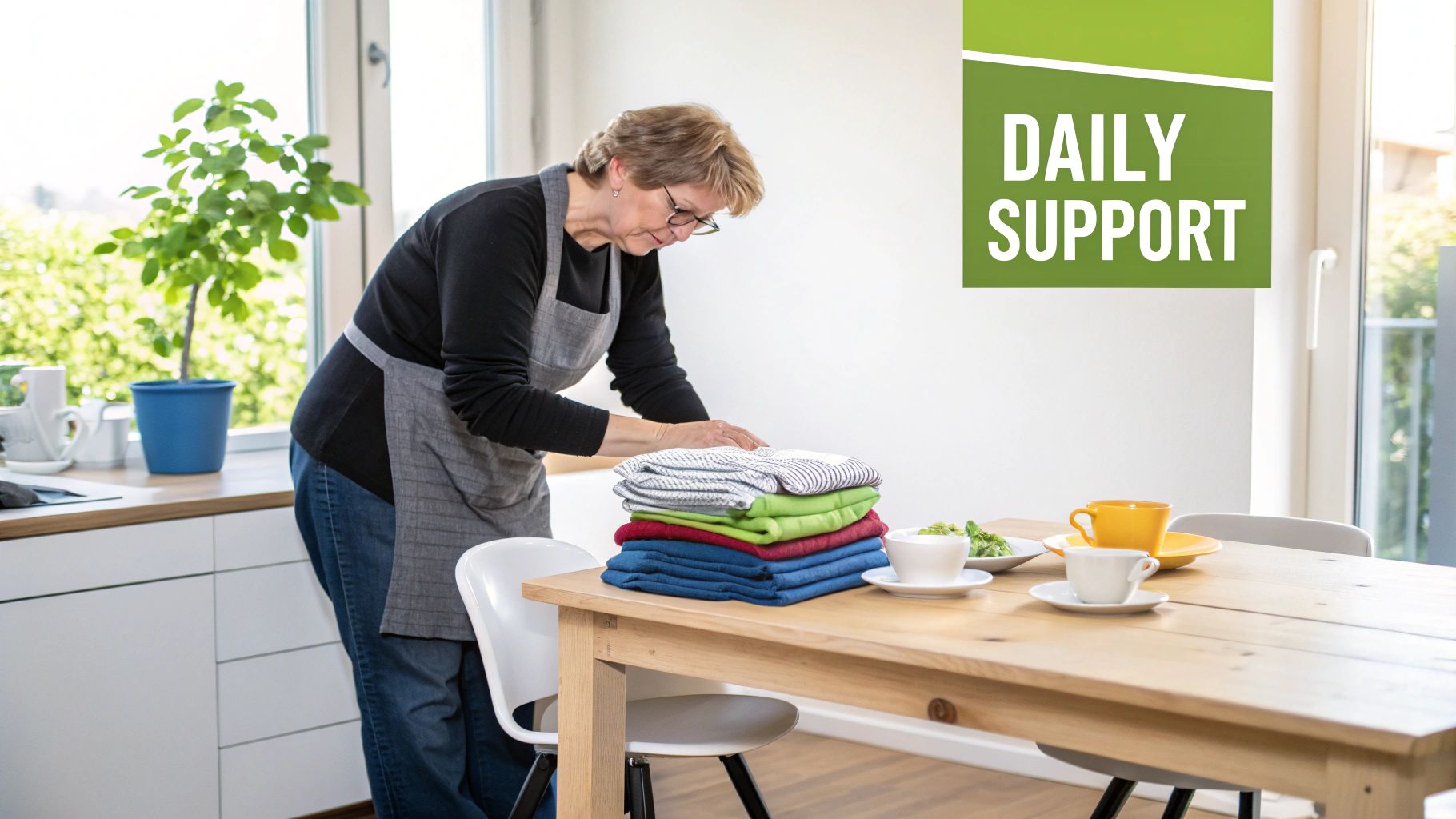
When you first think of domestic help at home, it's best not to picture a one-size-fits-all service. Think of it more like a flexible menu of options, designed to fit into someone's life without disrupting their cherished routines. The whole point is to provide just the right amount of support, exactly when it's needed, whether that’s for a couple of hours each week or daily visits to help things run smoothly.
This means that in practice, home care looks completely different from one person to the next. For one individual, it might simply be a friendly face who pops in to help with the weekly shop and stays for a cup of tea and a chat. For another, it could involve more hands-on help with their morning and evening routines, making sure they can start and end their day safely and comfortably.
Personal Care and Daily Assistance
This is all about helping with the personal tasks of daily living that might have become a bit of a struggle. The key here is providing that support with genuine dignity and respect, empowering people to feel their best while staying in the home they love.
Personal care often involves things like:
- Support with Morning Routines: A helping hand getting out of bed, washing, and dressing to get the day off to a good start.
- Evening Assistance: Help with getting undressed and settled comfortably and safely for the night.
- Medication Reminders: Gentle prompts to ensure medicines are taken correctly and on time, just as the doctor prescribed.
It's really useful to understand the subtle differences in care. If you're curious about how these services differ, we've broken down personal care vs home help in another guide.
Household Support and Practical Tasks
Beyond personal routines, keeping a home clean and tidy is vital for both physical safety and mental well-being. Household support is there to lift the burden of these practical jobs, creating a much more pleasant and secure living space.
This could mean light housekeeping like dusting and vacuuming, or taking care of the laundry and changing bed linens. It often includes preparing meals, too, ensuring a nutritious, hot meal is ready without the hassle of cooking. There’s real peace of mind in knowing a loved one can enjoy a freshly made dinner, especially on days they don't have the energy to cook. As you weigh up your options, this guide on considerations for caring for elderly people offers some brilliant insights.
At its heart, household help is about so much more than cleaning. It's about maintaining a comfortable, safe, and organised space that feels like a proper home, reducing hazards and helping someone stay independent for longer.
Companionship and Respite Care
Emotional well-being is every bit as critical as physical health. Companionship provides that crucial social link, fighting back against the loneliness and isolation that sadly affects over 1 million older people in the UK. This could be as simple as sharing a conversation over a puzzle, or accompanying someone to a doctor's appointment or a local club.
For family members who are caregivers, respite care is an absolute lifeline. It offers a planned, well-deserved break, giving you time to rest and recharge, confident that your loved one is being looked after by a professional. This service is essential for preventing burnout and keeping the whole family dynamic healthy and positive.
The Real Benefits of Professional Home Care

The true value of professional domestic help at home goes far beyond just getting through a to-do list. Of course, a tidy home and a hot meal are important, but the real magic lies in the huge improvements to health, independence, and the overall quality of life for everyone involved. It’s about building a supportive and positive atmosphere where people can truly thrive.
For the person receiving care, the difference is often felt straight away. Having a friendly, reliable professional to help with daily routines can bring back a powerful sense of control and independence. This confidence boost often leads to better physical health and a brighter outlook on life, all from the comfort of their own home.
Enhancing Mental and Emotional Well-being
One of the most powerful, and sometimes overlooked, aspects of home care is consistent companionship. A regular chat over a cup of tea or sharing a favourite hobby can make all the difference, cutting through the feelings of loneliness and isolation that can seriously affect mental health. This simple social interaction provides vital emotional support and keeps the mind active.
A professional carer isn’t just there to tick off tasks; they’re there to build a genuine, trusting relationship. That bond becomes a reassuring presence in the home and is fundamental to emotional well-being. If you'd like to explore this idea further, we have an article explaining why companionship is just as important as physical care.
This isn't just a feeling; it's a trend we're seeing across the country. The UK's domiciliary care sector was recently valued at around £11.5 billion, which is a 12% increase since 2020. It’s a clear sign that more and more families are realising the profound benefits of personalised care at home. You can find more domiciliary care statistics and insights into its growth online.
Invaluable Support for Family Carers
It’s important to remember that professional domestic help provides a lifeline for family members, too. Looking after a loved one is incredibly rewarding, but it can also be physically and emotionally exhausting, often leading to burnout. A professional carer stepping in provides that much-needed relief and peace of mind.
Respite allows family carers to take a proper break from their duties to rest, recharge, or just focus on their own lives for a while. This isn't a luxury; it's an absolute necessity for providing sustainable, long-term care.
This support allows families to simply be families again. Instead of being preoccupied with the logistics of care, you can spend quality time enjoying each other’s company, free from the stress of managing daily tasks. It helps shift the relationship dynamic from one of carer and recipient back to one of family, creating a happier, healthier home for everyone.
How to Arrange Domestic Help Step by Step

Organising domestic help at home for the first time can certainly feel like a big step. The best way to approach it is by breaking the process down into simple, manageable stages, which makes everything feel much less overwhelming.
Your starting point isn’t about making calls or filling out forms. It all begins with an honest, open conversation right there at home. Taking a moment to really think about what support is needed is the single most important part of finding the right fit for your family.
Try to pinpoint the specific challenges in the daily routine. Is getting up and dressed in the morning a struggle? Is preparing nutritious meals becoming difficult, or is it the household chores that are piling up? Maybe the main thing needed is just a friendly face to combat loneliness. Jotting these things down gives you a clear brief for the kind of help that will make a real difference.
Asking the Right Questions
Once you've got a clearer picture of your needs, it's time to start talking to potential care providers. A professional and caring agency will always take the time to answer your questions properly, helping you feel confident about your decision. This first chat is your chance to get a feel for their values and how they work.
Don't hold back from asking about the details that are important to you and your family. Your questions should dig into the practical side of things and, crucially, the quality of the carers themselves.
Here are a few vital questions to have on your list:
- Carer Training: What kind of training and qualifications do your carers hold? Do they have experience in specific areas like dementia care or first aid?
- Consistency of Care: Will my loved one see the same familiar face each time, or will there be a small team? We find building that trust is so important.
- Communication: How will you keep us in the loop about how things are going or if anything changes?
- Emergency Procedures: What happens if a carer can't make it due to illness, or if there's an emergency at home?
Creating a Personalised Care Plan
When it comes to in-home support, a one-size-fits-all approach just doesn’t cut it. The very best domestic help at home is built on a personalised care plan, something that should be created with you, your loved one, and the care provider. This document is far more than just a list of jobs. It’s a roadmap that honours an individual’s personal history, routines, and preferences.
A truly effective care plan ensures that support is delivered not just efficiently, but with empathy and respect for the person's unique lifestyle and wishes. It transforms the service from a set of tasks into a meaningful partnership.
This plan should cover everything, from what time they like their breakfast and when medication is due, to their favourite hobbies and social interests. It’s a living document, too, meant to be reviewed and tweaked as needs evolve. This ongoing conversation ensures the care is always relevant, respectful, and exactly what’s needed to live comfortably and happily at home.
For a more detailed breakdown, our guide explains how to arrange home care services in 5 simple steps.
Understanding Costs and Funding Your Options
Let's talk about the financial side of things. It’s often one of the biggest questions people have when thinking about arranging domestic help at home, and it's completely understandable to want a clear picture of the costs.
The final price of a care plan really depends on what's needed. The level of support required – for instance, personal care versus companionship – and how often our carers visit will naturally shape the cost. Our focus is always on putting together a plan that gives you exactly the support you need, without any unnecessary extras.
Exploring How to Fund Care
There are a few different ways to cover the cost of care at home, and knowing what's out there can make a real difference. Many families in Stoke-on-Trent and Newcastle-under-Lyme find that a mix of personal funds and other support works best for them.
Here are the main routes people take:
- Local Authority Funding: The council may be able to help with the cost, depending on your financial situation and care needs. This starts with a needs assessment, which is where they work out if you're eligible for support.
- Direct Payments: If the council agrees to help with funding, they might offer you Direct Payments. This means the money comes straight to you, giving you the freedom to choose your own registered care provider, like us here at Cream Home Care.
- Self-funding: Many people also choose to pay for their care privately. This route gives you the most flexibility, letting you arrange support exactly when and how you want it, without any restrictions.
A Smart Choice for Both Wellbeing and Your Wallet
When you look at the bigger picture, choosing care at home is often a very sound financial decision. Compared to the steep costs of moving into a residential care home, professional support at home is usually a much more affordable and sustainable way to get the help you need.
Choosing in-home support isn't just an investment in a person's independence; it's a choice that supports our wider healthcare system by easing the pressure on public services.
The positive ripple effect is huge. Research has actually shown that this kind of care saves the NHS a significant amount of money by helping to prevent hospital stays. In fact, across the UK, home care services are thought to free up 1,523,200 hospital bed days every year. That's a potential saving of £1.67 billion. If you're interested in the details, you can read more about these UK home healthcare market findings. It really shows how opting for domestic help at home is a choice that benefits everyone involved.
Finding Your Local Care Partner
Choosing someone to provide domestic help at home is a big decision. It’s not just about finding a service; it's about inviting a person into your life and home. You’re looking for a team that not only understands the practicalities of care but also gets what it means to be part of the local community.
Think of it like this: when you need any skilled professional, you look for someone reliable and trustworthy. The same logic applies here, and it's even more personal. While these are tips for finding trustworthy professionals in a different field, the core ideas—checking reviews, confirming credentials, and making sure you can communicate well—are absolutely essential when choosing a carer.
Taking the Next Step with Confidence
The process of arranging care shouldn't add to your worries. It should start with a simple, honest conversation where you can explain what you need without any pressure. A good local provider will always be happy to chat, listen to your concerns, and talk through how they could build a support plan that truly fits your life.
Finding the right care partner is about building a real connection. It’s this commitment to professional, compassionate support that turns a simple service into a genuine partnership, helping people live more independently and happily here in Stoke-on-Trent and Newcastle-under-Lyme.
This is exactly how we see it at Cream Home Care. We'd welcome the chance to have that conversation with you.
Your Questions About Domestic Help Answered
Deciding to bring a carer into your home is a big step, and it’s completely natural to have a lot of questions. For most families in Stoke-on-Trent and Newcastle-under-Lyme, it’s a new experience, and feeling confident about how it all works is the most important thing. We’ve pulled together some of the most common questions we hear to give you clear, straightforward answers.
Our aim is simply to offer a bit of clarity and peace of mind. Getting to grips with the details often makes the whole process feel much less daunting for everyone involved.
Will We Have the Same Carer Every Time?
This is often the first thing people ask, and for good reason. No one wants a revolving door of strangers. That's why building a consistent, familiar relationship between our carers and the people they support is at the very heart of what we do.
Our goal is always to provide you with a primary carer or a very small, dedicated team. Of course, we’ll always make sure there’s cover for holidays or illness, but consistency is key. It’s how trust is built and a real connection is formed, and that's what makes for truly great care.
A familiar, friendly face provides so much more than practical help. It brings comfort, reassurance, and a sense of stability. This relationship is often what people value most, turning a simple service into a genuine partnership.
How Flexible Is the Support?
Life isn’t always predictable, so your care plan shouldn't be rigid. We know that needs can change, sometimes quite suddenly. Our domestic help at home is designed from the ground up to be flexible.
Perhaps you need to shift a visit time for a doctor's appointment, or you might need extra support for a little while after a stay in hospital. We work with you. Think of a care plan as a living document, not something set in stone. Honest, open communication lets us adjust the support so it's always doing exactly what’s needed, right when it's needed.
- Adjusting visit times and frequency: We can easily change how often and for how long our carers visit.
- Adding new tasks: Support can grow to include different household chores or companionship for new activities.
- Making short-term changes: We can quickly arrange temporary support for appointments, family events, or recovery periods.
This adaptability means the care stays truly helpful, supporting independence through all of life’s ups and downs.
Ready to take the next step? The friendly team at Cream Home Care is here to answer any other questions you may have. Let’s have a no-obligation chat about your needs. Find out more on our website