Deciding on the right care for a loved one is a huge moment for any family. At its heart, domiciliary care is about one simple, powerful idea: giving people the professional, personalised support they need while letting them stay in the comfort and familiarity of their own home. It’s an approach that champions independence, respects personal routines, and fosters genuine human connection.
Why More Families Are Choosing Care At Home
For a long time, the default option for ongoing support was a move into a residential facility. But we're seeing a real change in thinking. Here in Stoke-on-Trent, Newcastle-under-Lyme, and right across the country, families are discovering that a person's own home is often the very best place for them to be.
This way of providing support, known as domiciliary care, is much more than just a service. It's about building a partnership that weaves professional help into the fabric of someone's existing life, enhancing their well-being without uprooting them. This isn't just a local feeling; it's a clear national trend.
The number of CQC-regulated domiciliary care services in England shot up by an incredible 72% between 2018 and early 2025. In that same period, the number of care homes actually fell. This statistic really shows just how much the landscape of care is changing.
This first, crucial choice – whether to receive care at home or in a facility – is the starting point for everything else.
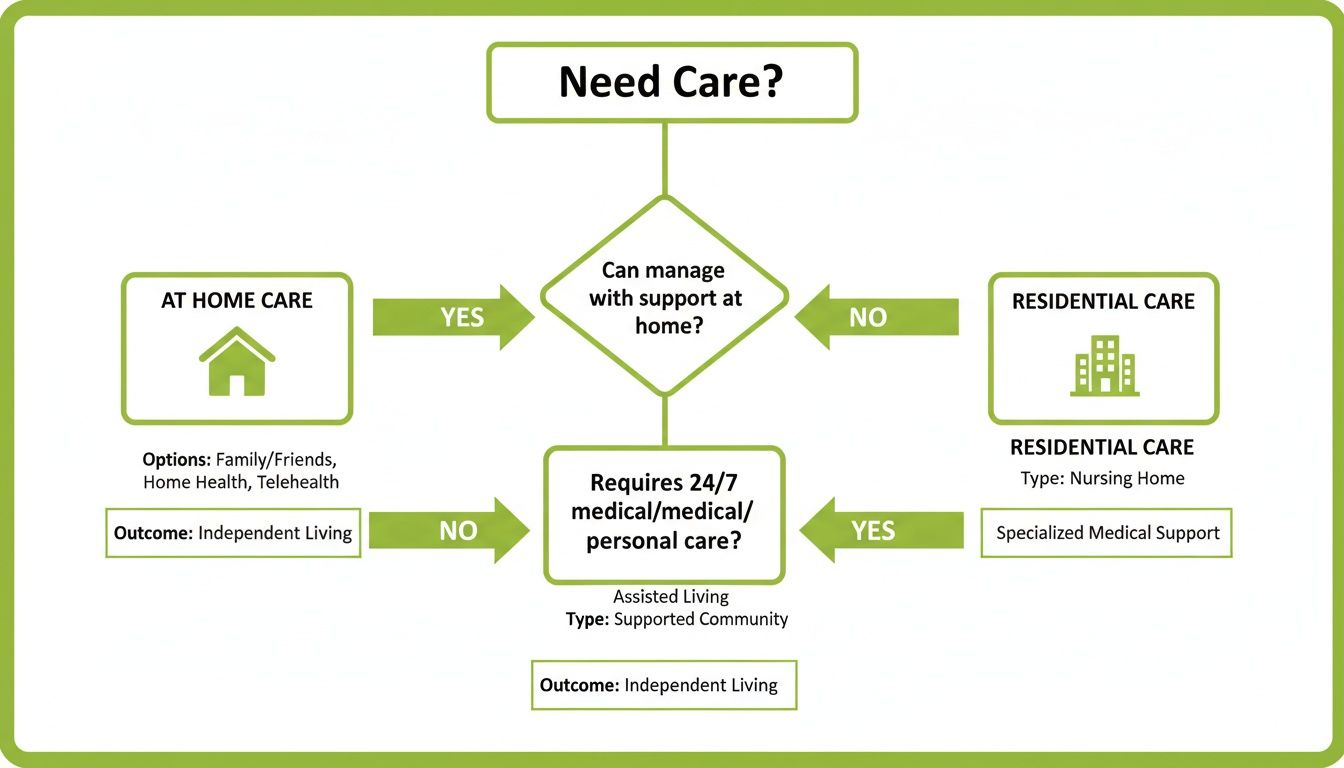
As the flowchart shows, that initial decision point is fundamental, and more and more people are heading down the "At Home" path.
Domiciliary Care vs Residential Care At A Glance
To make that choice clearer, it helps to see the core differences side-by-side. This table offers a quick comparison, highlighting the fundamental distinctions between receiving care at home and moving into a residential facility.
| Feature | Domiciliary Care (At Home) | Residential Care (Care Home) |
|---|---|---|
| Location | In your own familiar home and community. | A new, purpose-built facility. |
| Care Ratio | One-to-one dedicated attention during visits. | Staff care for multiple residents at once. |
| Schedule | Flexible and built around your personal daily routine. | Structured, communal timetables for meals & activities. |
| Independence | Maximised. You maintain control over your home & life. | Reduced. Daily life is managed by the facility. |
| Cost Structure | Pay only for the hours of care you need. | All-inclusive weekly or monthly fees. |
This comparison really throws the unique benefits of home care into sharp relief. It’s a model built around the individual, not the other way around.
Understanding The Home Care Environment
Opting for care at home brings a unique set of advantages that touch on both the practical and the emotional. To truly get a feel for it, it’s helpful to see it from the carer’s perspective. Reading about the experiences of those working in home health care as a CNA gives a brilliant insight into the dedicated, one-to-one support that makes this model so special.
Throughout this guide, we'll dive deeper into the key benefits that really matter:
- Preserving Independence: Keeping control over your own day, your own space, and your own life.
- Personalised Support: Getting dedicated, one-to-one attention that’s built entirely around you.
- Financial Advantages: Often being a more cost-effective and flexible option compared to residential fees.
- Family Peace of Mind: The reassurance of knowing your loved one is safe and looked after by a trusted professional in the place they know best.
Preserving Independence and Personal Routines
Of all the benefits that come with domiciliary care, perhaps the most powerful is the simple respect it shows for a person's freedom. Staying in your own home means life goes on, but with a bit of help. You’re not uprooted or forced to fit into someone else’s schedule; you stick to the familiar rhythms you’ve built over a lifetime. It’s a world away from the often rigid timetables of a residential facility.
Think about the simple comforts that make your house a home. Waking up when you want to, sipping tea from your favourite mug, and watching the news from your own armchair. It’s about being able to pop out to the garden, listen to the radio whenever you fancy, or have your dog snoozing at your feet. These aren't just details; they are the fabric of your life, and domiciliary care is designed to support that life, not replace it.
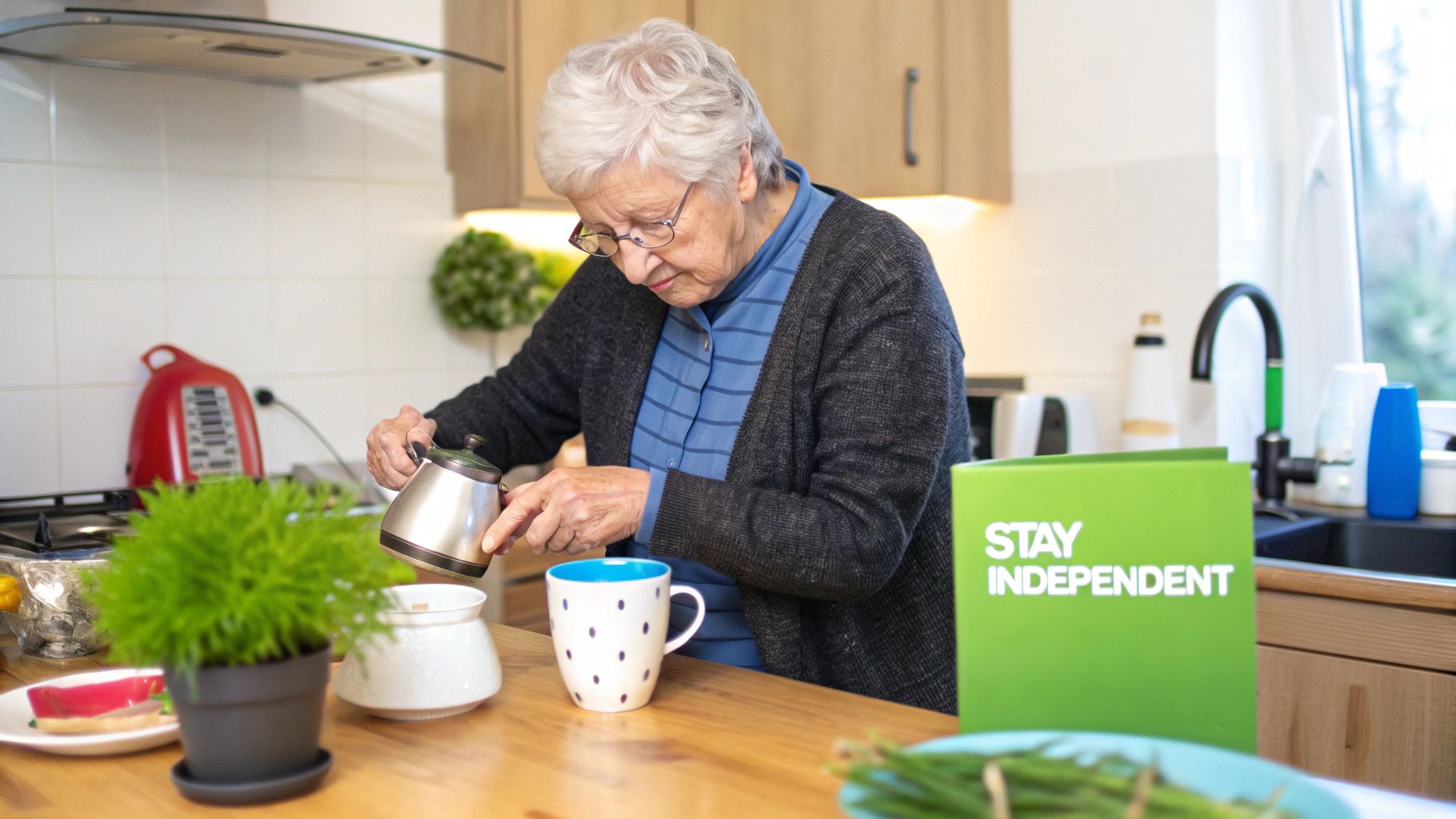
This feeling of control isn’t just about convenience. It’s deeply connected to mental and emotional wellbeing. When people hold onto their autonomy, it nurtures a powerful sense of dignity and self-worth.
The Importance of Everyday Choices
In a care home, many decisions are made for the collective good. Mealtimes, activities, and even when visitors can pop by are often set in stone. With domiciliary care, you’re still in the driver's seat. Keeping that control is absolutely central to ageing with dignity.
Here’s what that looks like in practice:
- Mealtime Freedom: You decide what you want to eat and when. Whether it’s a quick sandwich for lunch or a proper Sunday roast, your tastes come first. A carer can help with the shopping and cooking, but you call the shots.
- Social Connections: Fancy having friends and family over? You can invite them whenever you like, without worrying about facility rules or schedules. Your home remains your social hub.
- Personal Comforts: You’re surrounded by a lifetime of memories—family photos, your comfiest chair, treasured keepsakes. This provides a huge amount of emotional security.
Being able to steer your own ship helps reduce the stress and anxiety that so often come with big life changes.
The ability to make independent choices, no matter how small, is the bedrock of self-esteem. By enabling individuals to stay in familiar surroundings, domiciliary care protects their sense of identity and purpose, contributing significantly to higher morale.
At the end of the day, the goal isn't just to provide a service. It's about empowering people to live their lives as fully as possible. This approach puts the person first, providing support that adapts to them, rather than asking them to adapt to a new, unfamiliar system. The result is a much more positive, confident, and dignified way to receive care.
The Power Of Personalised One-To-One Support
While staying independent is a massive part of the appeal, one of the real game-changers with domiciliary care is the dedicated, one-to-one attention it provides. It's a world away from a residential home, where staff are naturally stretched between many different people. Home care, by its very nature, is built around a genuine personal connection.
This lets us create a care plan that’s not just a list of tasks, but something carefully woven around an individual's specific needs, their daily routines, and even their personality.
Of course, this covers the essentials like medication reminders or help with making a nutritious meal. But where the magic really happens is in the companionship that grows from this focused, consistent support.
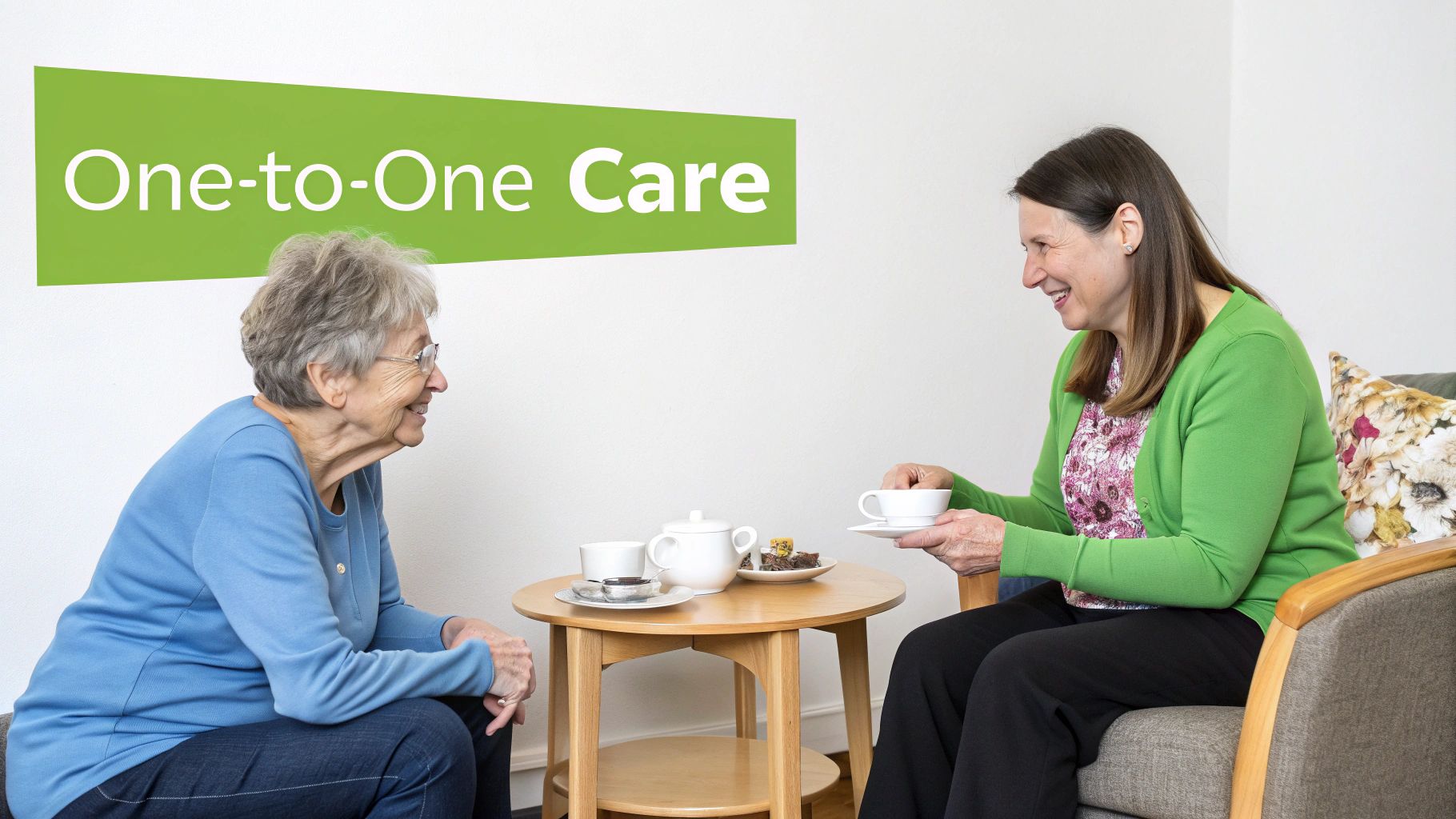
Having that regular, friendly face to look forward to can be a powerful remedy for the loneliness that so many people face in later life.
Beyond Practical Help: A Trusted Friendship
A dedicated carer often becomes so much more than a helper; they grow into a trusted friend. They're someone to share stories with over a cuppa, a partner for a game of cards, or just a familiar face to chat with about the day. This human connection is the absolute bedrock of quality domiciliary care.
Think of someone here in Stoke-on-Trent who adores their garden but can no longer manage the heavy digging. Their carer doesn't just take over; they do it with them, sharing a laugh and enjoying the fresh air together. It’s this shared experience that turns a simple service into a meaningful part of the day. You can find out more about how personalised home care supports independent living and the real difference it makes.
This kind of tailored support means the care plan can be incredibly detailed and flexible.
What A Personalised Plan Looks Like
A truly individualised plan is much more than a basic checklist. It’s a living document that captures all the little details that make someone who they are.
- Respecting Preferences: It will note that someone likes their tea weak with one sugar, prefers listening to Classic FM in the afternoon, or has a particular way they like their towels folded.
- Supporting Hobbies: The plan will build in time for the things they love, whether that’s getting the paints out for an art session, finding a good programme on the telly, or helping to write a letter to a family member.
- Adapting to Mood: A one-to-one relationship means a carer can spot when someone's feeling a bit down. They can then change the plan for the day, maybe suggesting a quiet chat instead of a trip to the shops.
This focus on the individual is what makes domiciliary care so powerful. It’s not about trying to fit a person into a rigid system; it’s about building a system of support that fits perfectly around the person.
This deeply personal approach ensures that care isn't just a service that's delivered, but something that is truly felt. It fosters a sense of being seen, heard, and valued – a partnership that enriches life with both practical help and priceless emotional support.
Understanding The Financial and Practical Advantages
For many families, while the emotional benefits of keeping a loved one at home are obvious, the financial side of things can feel like a minefield. There's a common belief that any kind of professional care comes with an astronomical price tag. But when you look closer, domiciliary care often turns out to be a much more affordable and flexible option than moving into a residential facility.
The real difference is how you pay for it. With home care, you only pay for the specific support you actually need. That might be just one hour a day for a bit of company and help with lunch, or it could be several longer visits for more hands-on personal care. This is a world away from the hefty, all-inclusive fees of a care home, which you pay month in, month out, regardless of how much direct support is actually used.
This "pay-as-you-go" approach means your money is working harder, going directly towards the support that makes a real difference. For many, it's simply the smarter financial choice.
Protecting Your Biggest Asset
Beyond the day-to-day costs, one of the biggest practical wins of home care is avoiding the need to sell the family home. Let's be honest, that's often the most stressful and heartbreaking part of funding residential care. A home isn't just a building; it's filled with a lifetime of memories and it’s something you want to pass on.
Opting for domiciliary care keeps this precious asset safe. It takes away the enormous pressure of a forced sale and the painful task of downsizing a lifetime's worth of belongings. When you're weighing up the finances, it's worth looking at all the possibilities, including financial tools designed for later life, such as specialised mortgages for over 60s.
A Clear View of Support
It's crucial to know exactly what your money is paying for. Domiciliary care is designed to provide a wide range of support, all focused on helping someone live safely and comfortably in their own home.
To give you a better idea, here's a look at the kind of help that's typically available.
Typical Support Provided By Domiciliary Care Services
| Category of Care | Examples of Support |
|---|---|
| Personal Care | Assistance with bathing, dressing, grooming, and continence care. |
| Medication Support | Gentle reminders or direct administration of prescribed medicines. |
| Household Tasks | Light housekeeping, laundry, meal preparation, and shopping. |
| Companionship | Engaging in conversation, hobbies, and accompanying on outings. |
| Mobility Assistance | Help with moving safely around the home. |
This table shows just how varied the support can be, from simple companionship to more complex personal assistance.
By focusing resources directly on the care needed within the home, families often find that their budget stretches further. This provides not only financial relief but also the priceless reassurance that their loved one is receiving dedicated support in the place they want to be most.
Bringing Peace Of Mind To The Whole Family
Choosing a care solution isn't a decision made in isolation. It sends ripples through the entire family, and one of the greatest benefits of domiciliary care is the deep sense of reassurance it brings to everyone. There's a profound comfort in knowing a vetted, compassionate professional is there for your loved one when you can't be.
This is especially true for family members who've stepped into a caregiving role. Trying to balance your own life, work, and the demands of looking after someone can be completely draining, often leading to burnout. Professional home care provides that much-needed breathing space.

It gives you permission to step back from the constant 'doing' and simply be a son, a daughter, or a partner again. It helps turn time that was filled with tasks back into time filled with genuine connection.
From Caregiver Stress To Quality Time
It’s easy for family dynamics to shift when one person takes on the primary caregiver role. Relationships that were once about love and companionship can become strained under the weight of medication schedules, appointments, and personal care routines. Domiciliary care helps to reset that balance.
When you hand over the practical aspects of care to a trained professional, you free yourself to focus on what really counts.
- Enjoying Shared Moments: Instead of rushing to prepare a meal, you can just sit down together for a cup of tea and a proper chat.
- Creating Positive Memories: You get to enjoy a gentle walk, watch a favourite film, or flick through old photo albums without a mental to-do list looming over you.
- Strengthening Bonds: It lets everyone slip back into their familiar family roles, reinforcing relationships that the pressures of care may have tested.
With professional support in place, families often tell us they see a real improvement in their relationships. The weight of being the sole caregiver is lifted, and that makes space for a more positive, loving atmosphere for everyone.
A Partnership In Care
Good local care agencies in Stoke-on-Trent know they aren't just helping one person; they're supporting a whole family. They work in partnership with you, making sure you’re always kept in the loop and feel involved.
This collaborative approach means a care plan is never set in stone. Think of it as a living document that flexes and adapts as your loved one’s needs change. Regular updates and reviews give you the confidence that you’re not facing this journey on your own. Understanding how respite care supports families is a crucial first step in preventing burnout and looking after everyone's wellbeing.
How To Access Domiciliary Care In Stoke-on-Trent
Knowing that domiciliary care is the right choice is one thing; figuring out how to get it started is another. Whether you’re planning for the future or need to arrange support more urgently, the process here in Stoke-on-Trent and Newcastle-under-Lyme is actually quite straightforward. You can either go through the local council or approach a private care provider directly.
Going Through The Council
The official starting point is to request a needs assessment. This is a free conversation with a social care professional from either Stoke-on-Trent City Council or Staffordshire County Council. It’s not a test, but a way for them to understand your day-to-day life, health challenges, and what help you think you need.
If the assessment shows you’re eligible for support, they will then carry out a financial assessment. This simply determines how much, if anything, you would need to contribute towards the cost of your care.
If the council agrees to fund your care, they usually give you two options. You can let them arrange the care provider for you, or you can ask for direct payments. This is where they give you the funds directly, putting you in the driver's seat to choose and manage your own care provider. It’s a great option for maintaining control and flexibility.
Working Directly With a Private Provider
Of course, you don’t have to go through the council. Many people find it quicker and easier to contact a private home care agency themselves. This route gives you complete freedom to research and choose a provider that feels like the perfect fit for your family.
The first step is usually just a friendly, informal chat over the phone.
A good provider will never put you under pressure. That first conversation is all about them listening to you—understanding your situation, answering your questions, and explaining how a care plan could be built around your specific needs.
After that initial call, a care manager will typically arrange a visit to your home. Meeting you and your loved one in a familiar environment is the best way to get a true picture of what’s needed. This is a vital step in creating the care plan together, making sure everyone’s voice is heard.
This collaborative approach ensures the final plan covers everything, from the practical daily tasks to personal hobbies and the need for simple companionship. To get a better idea of what's available locally, you can find out more about what to expect from elderly care in Stoke-on-Trent.
The first few weeks are always a settling-in period. Your provider should be in regular contact to see how things are going and make any small adjustments needed to get it just right.
Got Questions? We’ve Got Answers.
When you're exploring care options, it’s only natural to have a lot of questions. Let’s walk through some of the most common ones we hear from families trying to find the right path forward.
How Can We Be Sure Domiciliary Care is the Right Choice?
This is the big one, isn't it? If your loved one wants to stay in the familiar comfort of their own home but is starting to struggle with daily routines, personal care, or is simply feeling lonely, then home care is often the perfect solution.
Think of it as a helping hand, not a total takeover. It’s ideal for people who are still quite independent but just need that bit of support to stay safe and well. A great starting point is to get a free needs assessment from the local council, or you can have a chat directly with a provider like us to talk through exactly what’s needed.
Does Home Care Cost More Than a Care Home?
It's a common myth that it does, but that’s not always the case. One of the biggest financial benefits of domiciliary care is that it’s completely flexible. You only pay for the time and support you actually need.
If someone doesn't require round-the-clock supervision, home care is almost always more affordable than the fixed, all-inclusive monthly fees of a residential home. Whether it’s a single short visit each day or more involved support, the cost is directly tied to the care plan.
The key thing to remember is that you're in the driver's seat when it comes to costs. It’s a world away from the substantial, set fees of a care home, which makes it a much more manageable financial choice for many families.
How Do You Match Carers With the People They Support?
This is something we take very seriously. A good carer-client match is about so much more than just skills; it’s about personality and connection.
During our first assessment, we spend real time getting to know the person—not just their care needs, but their interests, hobbies, and what makes them tick. This helps us find a carer who is not only a fantastic professional but also someone they’ll genuinely get along with. Building that trust and a positive relationship from the very beginning is what truly high-quality home care is all about.
At Cream Home Care, our whole focus is on providing kind, professional support that champions independence and gives your family genuine peace of mind.
If you’d like to explore how a care plan built around you or your loved one could work in Stoke-on-Trent and Newcastle-under-Lyme, please get in touch with our friendly team today.