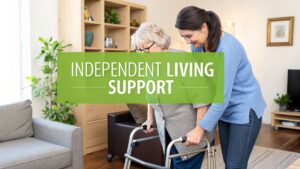
Elderly care at home simply means getting professional, one-to-one support for your loved one right where they feel most comfortable—their own house. It’s all about protecting their independence and wellbeing, letting them stick to the routines and community connections they cherish while getting the exact help they need.
Why Families Are Choosing In-Home Elderly Care
Deciding on care for an elderly relative is one of the most personal choices a family can make, usually driven by a deep need to see them happy, safe, and living with dignity. For a long time, residential facilities were seen as the go-to option, but we’re seeing a major shift across the UK. Today, more families are turning to elderly care at home, a choice that puts comfort and familiarity right at the heart of the journey.

This isn’t just about logistics; it’s about preserving who a person is. A home is a living album of memories, a place filled with a lifetime of stories. Staying within those walls means an individual can hold onto the small but vital routines that shape their day, whether that’s enjoying a morning brew in a favourite armchair in Stoke-on-Trent or pottering in the garden in Newcastle-under-Lyme.
The Comfort of Familiarity
Moving house can be stressful for anyone. But for an older person, particularly someone dealing with memory loss or cognitive changes, it can be completely overwhelming. The familiar layout of their home, the scent of a certain room, or the view from the kitchen window—these are all powerful anchors that provide a constant sense of security.
Professional support at home, like the service we provide at Cream Home Care, is designed to fit into this environment, not take it over. A caregiver becomes a friendly, reassuring face who helps keep those cherished routines going, rather than disrupting them. This continuity is a huge boost for mental wellbeing and cuts down on the anxiety that a big move can cause.
Staying in a familiar setting isn’t just about comfort—it’s a cornerstone of maintaining independence and preserving a person's identity. It allows them to feel in control of their own lives, surrounded by everything they hold dear.
Promoting Independence and Dignity
Perhaps the biggest advantage of elderly care at home is how it empowers people. Instead of having to adapt to the rigid timetables of a residential home, the care is built entirely around the individual’s own preferences and lifestyle. This person-centred way of working reinforces their autonomy and sense of self-worth.
The benefits are clear and compelling:
- Personalised Routines: Care plans are shaped by existing habits, from mealtimes to hobbies, so that life continues as normally as possible.
- One-to-One Attention: Unlike in a care home, a dedicated carer gives your loved one their full attention, which helps build a strong, trusting relationship.
- Maintaining Community Ties: Staying at home means keeping those vital connections to neighbours, local shops, and familiar social groups, which is crucial for preventing loneliness.
Ultimately, choosing home care helps ensure that later life is lived with grace and respect. For anyone exploring their options, it’s worth reading up on how care at home can positively replace care homes, as it offers a solution that truly honours a lifetime of memories.
What Are My Home Care Options?
When you first start looking into care at home for an elderly loved one, the different terms and types of services can feel like a maze. But it’s simpler than it looks. Think of it less like a rigid set of options and more like building a custom support toolkit – you just pick the tools you need for the jobs at hand.
At its heart, professional home care is all about providing the right level of support to help someone continue living safely and comfortably in the place they know best. This support can range from a friendly weekly visit to 24/7 specialist care. Getting to know the main categories is the first step in creating a plan that truly fits your family.
Companionship Care: A Friendly Face and a Helping Hand
We all know that loneliness can take a real toll on health and happiness. Companionship care is designed to tackle this head-on. It’s less about complex medical needs and more about providing that vital social and emotional connection. This is a perfect starting point for an older person who is still mostly independent but might be feeling a bit isolated or just needs a little help with daily tasks to stay confident.
A companion carer becomes a regular, friendly face. They're someone to share a cup of tea and a chat with, play a game of cards, or help with hobbies and interests. They can also lend a hand with the practical things that keep life ticking along smoothly.
- Getting Out and About: Accompanying your loved one on trips to local cafes, parks, or social clubs right here in the Stoke-on-Trent area.
- A Hand at Home: Helping with light housekeeping, whipping up a nutritious meal, or assisting with the weekly shop.
- Appointment Support: Providing transport and a friendly arm for visits to the GP, the hairdresser, or other appointments.
Ultimately, this service is about connection. It's about preventing the damaging effects of isolation and forms the foundation of good, person-centred elderly care.
Domiciliary Care: Practical Support for Daily Living
As a person's needs become a bit more specific, domiciliary care (often called ‘visiting care’) comes into the picture. This service provides practical, hands-on support with personal routines and daily tasks. A trained carer visits at scheduled times throughout the day to help with things that may have become too difficult for your loved one to manage on their own.
Domiciliary care is all about enabling dignity. It gives people help with sensitive tasks in the privacy of their own home, preserving their independence and self-respect.
This type of care is incredibly flexible. You could arrange a short visit in the morning to help someone get up, washed, and dressed, with another in the evening to help them settle down for the night. Key services often include medication reminders, meal preparation, and help with moving safely around the house. For those with more complex mobility needs, it's also helpful to know about specialist equipment like hospital beds for home use that can make a world of difference.
To help you see how these services differ, here’s a simple breakdown:
Comparing Home Care Services for Your Needs
This table breaks down the main types of home care to help you decide which service best fits your family's situation.
| Service Type | Best For | Key Activities Included |
|---|---|---|
| Companionship Care | Individuals who are mostly independent but experiencing loneliness or need a little help with errands and household tasks. | Social outings, hobby support, light housekeeping, meal preparation, accompanying to appointments. |
| Domiciliary Care | Individuals needing hands-on help with personal care routines like washing, dressing, and medication management at specific times of the day. | Personal hygiene assistance, dressing, medication reminders, mobility support, continence care. |
| Respite Care | Family caregivers who need a short-term break to rest and recharge, preventing burnout. | Covers all the duties of the primary carer, from companionship to personal care, for a set period. |
Deciding on the right level of care is a journey, not a one-time decision. Needs often change, and the support plan can always be adjusted to match.
Respite Care: Essential Support for Family Carers
Looking after a family member is a role filled with love, but it's also incredibly demanding. Respite care is a vital service designed to give family caregivers a well-deserved break. It’s your chance to rest, recharge, and look after your own wellbeing, knowing your loved one is in safe, professional hands. This can be arranged for just a few hours, a full day, or even a couple of weeks for a proper holiday.
Think of it not as a replacement, but as a planned part of a sustainable care strategy. By preventing caregiver burnout, respite care ensures you can continue providing the best possible support over the long term. A professional carer can step in seamlessly to continue the established routine, giving you complete peace of mind.
The Hidden Impact of Loneliness on Health
When we think about getting older, it's easy to focus on the obvious physical challenges – managing medications, getting around the house, or dealing with aches and pains. But the emotional side of ageing is just as vital, and one of the biggest, quietest battles many older people face is loneliness.
It's so much more than just feeling sad now and then. Deep-seated social isolation can have a real, measurable, and damaging effect on a person's health, both mentally and physically.
Think about it. When someone is living alone, perhaps after losing a partner or watching friends and family move away, the days can stretch out, long and empty. Without regular chats and social connections, cognitive function can start to slip, feelings of depression can creep in, and the motivation to get up and do things just disappears. This emotional weight often starts to show up as physical symptoms, and it's a tough cycle to escape.
The Connection Between Isolation and Physical Decline
The line connecting loneliness to poor physical health is surprisingly direct. When someone feels cut off from the world, they often lose interest in eating well, might neglect their personal hygiene, or stop doing the very things that keep their mind and body active. This slide into inactivity is a fast track to weaker muscles and poorer balance – two of the main culprits behind falls in older people.
The numbers really bring the scale of this problem home. A staggering 4.3 million people aged 65 and over live alone in the UK, which tells you just how many people are at risk. The fallout is huge: falls among older people now lead to over 4 million hospital bed days per year, costing our NHS an eye-watering £2.3 billion annually. You can explore the full data on pressures facing older people and the NHS to see just how serious it is.
It’s clear that providing consistent social contact isn’t just a ‘nice-to-have’ – it’s a core part of preventative healthcare.
How Companionship Care Creates a Lifeline
This is exactly where dedicated companionship care steps in to make a real difference. It’s not a passive service; it’s an active solution designed to fight the health risks of loneliness by bringing meaningful human connection back into someone’s life. A carer from a provider like Cream Home Care does so much more than just fill a quiet house. They become a trusted friend and a reliable source of warmth and conversation.
A friendly face, a shared story, or a simple cup of tea together can be the most powerful medicine. Companionship provides the emotional scaffolding that supports every other aspect of an individual's health, restoring their sense of purpose and joy.
A good companion brings encouragement and stimulation, which are absolutely essential for keeping someone's mind sharp and their spirits up.
Just a few of the key benefits include:
- Mental Stimulation: Chatting about the news, playing a card game, or working on a puzzle together helps keep the brain ticking over.
- Emotional Support: Having a trusted person to confide in and share worries with can dramatically reduce feelings of anxiety and depression.
- Renewed Motivation: A companion can gently encourage a walk in the garden, a return to a beloved hobby, or even a trip out to a local club.
By building a genuine, caring relationship, a companion helps restore a sense of belonging and self-worth. It’s a simple yet incredibly powerful form of elderly care at home that has a direct, positive impact on health. If you want to dive deeper, our article explaining why companionship is just as important as physical care has some great insights.
This kind of proactive support doesn't just make life more enjoyable; it actively reduces the risk of falls and preventable hospital stays, helping our loved ones stay safer and happier in their own homes.
Navigating Care Assessments and Funding in the UK
Figuring out the financial side of elderly care can feel like one of the biggest and most complicated hurdles. It's a system with a lot of moving parts, but once you know the steps, you can tackle it with confidence. Think of this section as your practical map to the UK's care funding landscape, breaking down exactly how to secure the support your loved one needs.
The journey nearly always starts with one crucial step: a care needs assessment from your local council. This isn't a test or anything to be nervous about. It’s simply a conversation to help the council understand what kind of support is needed for your loved one to live safely and well at home. The outcome is what determines their eligibility for any council-funded help.
The Local Council Needs Assessment
This is a free service run by the adult social services department of your local council. A trained professional, usually a social worker or occupational therapist, will chat with you and your loved one to get a clear picture of their day-to-day life. They’ll look at everything from getting around the house and personal care to social activities and emotional wellbeing.
To get the most out of it, it’s a good idea to jot down some notes beforehand. Think about all the tasks your loved one finds tricky, how their health affects them daily, and what support you think would make the biggest difference. Being open and honest is the best way to make sure the final assessment is a true reflection of their needs.
The goal of a needs assessment is not to judge, but to collaborate. It's an opportunity to create a personalised plan that respects your loved one's wishes and promotes their independence at home.
After the assessment, the council sends a written decision explaining whether your loved one is eligible for support. If they are, the next step is a financial assessment (often called a means test) to work out how much, if anything, they’ll need to pay towards the cost of their care.
Understanding the Financial Assessment
The financial assessment looks at your loved one’s income, savings, and assets to calculate their contribution. In England, the rules are very specific. For the 2023-2024 period, anyone with capital over £23,250 is generally expected to pay for their own care in full. In the world of care, these individuals are often called ‘self-funders’.
If their capital falls between £14,250 and £23,250, they’ll likely get some financial help from the council but will still be expected to contribute from their income and savings. For those with capital below £14,250, the council will usually fund the full cost of the care they've been assessed as needing, though a small contribution from their income might still be required.
It's really important to know that for care provided in someone's own home, the value of their main property is not normally included in this calculation.
This simple flowchart shows how something like companionship care—a vital part of staying well at home—can directly address feelings of loneliness.

As you can see, simply identifying a feeling of loneliness is a clear sign that companionship support could be a positive and direct solution.
Exploring Other Funding Avenues
While council funding is the most well-known route, it’s certainly not the only one. It pays to look into every possibility to make sure you’re getting all the financial support you’re entitled to.
Here are the main ways elderly care at home is funded:
- Local Authority Funding: As we've covered, this is means-tested support from your council for those who are eligible based on both their care needs and their finances.
- NHS Continuing Healthcare (CHC): This is a package of care that is fully arranged and funded by the NHS. It’s for individuals who are assessed as having a ‘primary health need’. This funding is not means-tested at all. Eligibility depends on the complexity and intensity of a person's health needs, and the assessment for it is very thorough.
- Self-Funding: Many families fund care privately. This might be because they aren’t eligible for public funds or simply because they want greater choice and flexibility over the care they arrange. Even if you're self-funding, you are still entitled to a free needs assessment from the council to help you understand your options.
- Attendance Allowance: This is a tax-free benefit from the Department for Work and Pensions (DWP). It's for people over State Pension age who need help with personal care or supervision due to illness or disability. Crucially, it is not means-tested and can be used to help pay for home care services.
Getting your head around these different pathways is the first step towards making a confident decision. By preparing for the needs assessment and looking into all the funding options, you can successfully navigate the financial side of elderly care at home and secure the very best support for your family.
How to Choose the Right Home Care Provider
Choosing someone to care for a loved one in their own home is a massive decision. It’s probably one of the most significant choices you’ll make for your family. This isn't just about finding a service; it's about finding a person, an organisation, you can wholeheartedly trust. The right provider becomes more than just a helper—they feel like part of the family, giving you that priceless sense of peace of mind.
To get there, you need to look past the glossy brochures and ask the tough questions. It’s all about finding a true partner in care, someone who is genuinely invested in your loved one's happiness and wellbeing.

Essential Checks for Every Provider
Before you get into the nitty-gritty of care plans, there are a few fundamental checks that any reputable provider must pass with flying colours. Think of these as the non-negotiables, the foundation upon which safe, professional care is built.
First and foremost in England is the Care Quality Commission (CQC) rating. The CQC is the independent watchdog for all health and social care, and their inspection reports give you an honest, unbiased look at how a provider is performing. You should only be considering agencies with a 'Good' or 'Outstanding' rating.
Next, you absolutely must dig into their recruitment and training processes. How do they vet their staff? Ask specifically about their DBS (Disclosure and Barring Service) checks—these are crucial for safeguarding vulnerable adults. It’s also vital to know how they train their carers. Good providers invest heavily in ongoing professional development, covering everything from dementia care and first aid to safe manual handling techniques.
Choosing a home care provider isn't just a transaction; it's an invitation into your loved one's life. The right agency will demonstrate a clear commitment to safety, continuous training, and transparent communication from the very beginning.
When you're looking at providers, it's also helpful to appreciate the wide range of careers in health and social care that come together to form a great team. An agency that values its staff's professional growth is far more likely to provide a higher standard of support.
The Importance of a Personalised Approach
Once you've ticked off the essentials, it's time to focus on how the provider tailors the care itself. Real person-centred care means the support is built around your loved one’s unique personality, their likes and dislikes, and their daily rhythm—not the other way around.
A good provider will always insist on a comprehensive initial assessment, right there in the home. This first meeting is their chance to understand not just the medical requirements, but the person behind them. What are their hobbies? What makes them smile? It’s also your chance to see how they listen and communicate.
Here are a few questions you should be asking at this stage:
- Who actually writes the care plan? You and your loved one must be at the heart of this process, working alongside a care manager.
- How are carers matched with clients? The best agencies consider personality and common interests, not just who's free, to help build a real bond.
- What’s the plan if the regular carer is off sick? There needs to be a solid, reliable system for providing cover with another carer who has been fully briefed.
- How do you keep us in the loop? Find out about their system for daily notes and how they communicate updates to the family.
Why a Local Presence Matters
Finally, don't underestimate the advantage of choosing a provider that is genuinely part of your local community. An agency like Cream Home Care, rooted here in Stoke-on-Trent, has a natural understanding of the area and its resources. This local insight is incredibly useful for connecting your loved one with community activities, knowing the best transport routes, and being able to respond quickly if something urgent comes up.
A local team often means a greater sense of accountability and a more personal relationship. They’re your neighbours, and that connection reinforces their commitment to providing dependable, understanding, and truly compassionate elderly care at home.
Why Staying at Home is the Future of Elderly Care
The way we think about getting older in the UK is changing, and fast. For a long time, the path for many people in their later years seemed to lead inevitably to a residential care home. But that's no longer the default. We're in the middle of a huge shift, with more and more people choosing to receive professional support right where they feel most comfortable: in their own homes.
This isn't just a passing trend. It's about a fundamental human need for independence, dignity, and familiar surroundings. As our society gets older, people are making a conscious choice to stay put, supported by care that fits around their life, not the other way around. This simple preference is completely changing the face of elderly care.
The Rising Demand for Care at Home
You only have to look at the numbers to see how big this change is. The UK's home care sector is now a major force, valued at an incredible £11.5 billion—that’s a 12% jump since 2020. In England alone, 818,000 people were getting support at home back in 2021/22.
This surge in demand is directly tied to our ageing population. Projections show that the number of people over 65 will climb from 19% to 27% of the population within the next fifty years. You can discover more insights about these UK elderly care statistics to get a sense of the scale here.
Of course, this demographic shift brings its own set of challenges, but it also opens up opportunities. With the NHS and local councils feeling the strain, high-quality elderly care at home isn't just a nice-to-have anymore; it's a critical part of a sustainable health and social care system. It's a proactive approach that helps older people stay safer, healthier, and happier for much longer.
More Than Just Care: The Benefits for Our Communities
The impact of professional in-home support ripples out well beyond an individual’s front door. When we help people stay in their own homes, we're also helping to keep our communities strong and connected. Older residents can keep in touch with their neighbours, use their local shops, and remain part of the social fabric that makes a neighbourhood feel like home. This helps fight loneliness and builds a more inclusive society for everyone.
Domiciliary care is more than just a service; it's an investment in the health of our communities. It gives people the power to live with dignity, eases the burden on our healthcare system, and keeps the vital connections that make our neighbourhoods thrive.
It's also a much more personal and efficient way to provide support. Here’s a quick rundown of why it’s becoming so vital:
- Keeps Independence Intact: It allows people to stay in charge of their own lives and daily routines, which is absolutely central to their sense of self and wellbeing.
- Fewer Hospital Stays: Timely support at home can help manage long-term health conditions and prevent accidents like falls, which in turn reduces emergency hospital admissions.
- Supports Family Carers: Professional care provides families with much-needed respite and expert help, preventing burnout and supporting the whole family.
Looking ahead, it's clear that flexible, person-focused elderly care at home is the most compassionate and sensible way forward. For anyone wanting to dig deeper into how this works, our guide to domiciliary care has all the details. It's a solution that respects a lifetime of independence while strengthening our healthcare system and local communities from the ground up.
Your Questions About Home Care, Answered
Stepping into the world of home care for the first time can feel a little overwhelming, and it's completely normal to have a lot of questions. Getting clear on the practical side of things is often the best way to feel more confident and in control.
Here are some straightforward answers to the questions we hear most often from families just like yours.
How Quickly Can We Get Care Started?
It’s often much faster than people think. The whole process usually kicks off with a simple phone call, giving us a chance to understand what you need right now.
At Cream Home Care, we can typically schedule a full home assessment within a couple of days of you getting in touch. From there, depending on the level of support required, a carefully matched carer and a personal care plan can be in place very quickly. If you're facing a more urgent situation, like an unexpected hospital discharge, we pull out all the stops to make that transition back home as safe and seamless as possible.
What Happens If We Don’t Click with Our Carer?
This is such an important point. The relationship between your loved one and their carer is everything – it’s built on trust and a genuine connection. We spend a lot of time getting the personality match right from the very start, because we know how much it matters.
But people are people, and sometimes a dynamic just doesn't work. If that happens, you just need to tell us. Your loved one's comfort and happiness are what's most important, and we will work with you to find another carer who is a better fit. It's as simple as that.
Is Home Care Just About Washing and Dressing?
Not in the slightest. While help with personal care like bathing or managing medication is a cornerstone of what we do, that's only one piece of the puzzle. Good home care is about supporting the whole person.
The real goal of home care is to provide well-rounded support that addresses not just physical needs but also emotional and social wellbeing. It’s about helping someone to live a full and engaged life in their own home.
This means our support often includes things like companionship over a cup of tea, preparing a favourite meal, a bit of light housekeeping, or running out to the shops. It can also mean accompanying your loved one to a doctor's appointment or a social club, ensuring they stay connected to their community.
How Do I Know the Care is High Quality?
There's a strong, independent system in place for that. In England, every home care provider is regulated by the Care Quality Commission (CQC). The CQC acts as the independent watchdog for health and social care.
They carry out regular, in-depth inspections to make sure providers are safe, effective, and compassionate. Before you commit to any service, you should always look up their latest CQC report on the official website. It gives you a completely transparent view of their standards.
At Cream Home Care, we’re here to provide kind, dependable, and truly personal elderly care at home across Stoke-on-Trent and Newcastle-under-Lyme. If you have more questions or just want to talk through your situation, please give our friendly team a call. You can learn more about how we can help at https://creamhomecare.co.uk.