Keeping the mind and body active is fundamental to a fulfilling life at any age. For our older loved ones, games offer more than just a way to pass the time; they are powerful tools for enhancing cognitive function, maintaining physical mobility, and fostering vital social connections. The right activity can reignite a sense of purpose and joy, turning a quiet afternoon into an opportunity for growth and connection. This is particularly true for seniors receiving in-home support, where structured play can significantly improve their quality of life.
This guide moves beyond generic suggestions to provide a comprehensive resource filled with practical, adaptable games for the elderly. We have organised our curated selection to meet specific goals, from stimulating memory with reminiscence activities to encouraging gentle movement with chair-based exercises. Each entry is designed with both seniors and their family caregivers in mind, offering clear instructions, tips for adapting to different mobility levels, and insights into the specific benefits of each game.
Whether you're looking to introduce new pastimes, adapt old favourites for changing abilities, or simply find more meaningful ways to spend time together, this list provides the actionable ideas you need. We will explore everything from traditional card games and puzzles to creative craft projects and modern tablet-based apps. You will discover how to facilitate engaging play that not only entertains but also supports the overall well-being and happiness of the seniors in your care, strengthening bonds and creating cherished memories along the way.
1. Memory Games and Reminiscence Therapy
Reminiscence therapy involves structured games and guided activities designed to help older adults recall and share significant life events and personal stories. Far more than just a nostalgic chat, these games for the elderly use sensory triggers like old photographs, familiar music, or meaningful objects to stimulate memory. This approach is a powerful tool for improving mood, reducing agitation, and reinforcing a sense of identity, particularly for individuals with varying degrees of memory loss.

This therapeutic technique has been successfully implemented by organisations like Dementia UK and is a cornerstone of person-centred care in many UK care homes. The goal is to create a safe, engaging space where memories can be accessed and valued, which is fundamental to caring for the elderly with dignity.
How to Implement Reminiscence Games
Creating a successful reminiscence session requires thoughtful preparation and a gentle approach.
- Gather Personalised Materials: Before a session, collect items relevant to the individual's life. This could include wedding photos, postcards from family holidays, favourite records from their youth, or even specific scents like lavender or baking bread that might trigger happy memories.
- Create a Calm Environment: Choose a quiet, comfortable space free from distractions. A cosy sitting room or a peaceful garden spot works well. Offering a cup of tea and a biscuit can help create a relaxed, social atmosphere.
- Use Open-Ended Questions: Instead of asking direct memory questions which can be stressful, use gentle prompts like, "This photo looks like it was taken on a special day, tell me about it," or "This song was very popular, what does it make you think of?"
Benefits and Adaptations
The primary benefit of reminiscence therapy is its positive impact on mental well-being and cognitive function. Documenting the stories shared can also create a treasured family record. For those with limited mobility, sessions can be held at a bedside or favourite chair. For non-verbal individuals, sensory objects like textured fabrics or familiar tools can elicit emotional responses and engagement without the need for speech. For a deeper dive into brain-boosting exercises, explore various effective cognitive activities for seniors designed to enhance memory and focus.
2. Gentle Physical Activity Games (Chair-Based and Mobility-Adapted)
Gentle physical activity games are low-impact activities specifically designed for older adults who may have mobility limitations, arthritis, or reduced stamina. These games for the elderly cleverly disguise exercise as fun, incorporating movements like chair-based stretches, adapted bowling, or seated dancing to maintain fitness without putting undue strain on the body. The focus is on improving balance, flexibility, and strength in a safe, enjoyable, and socially engaging way.
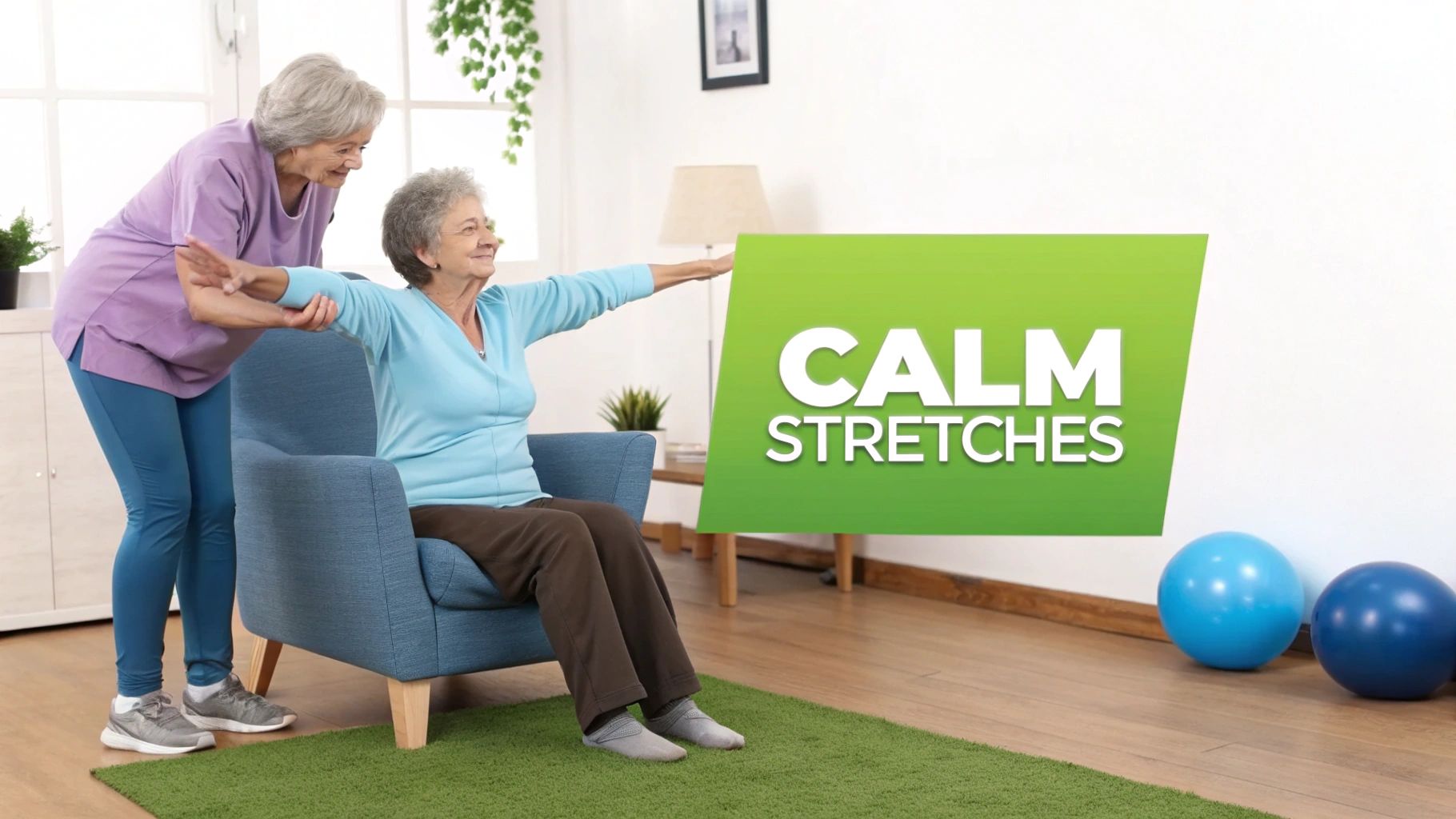
This approach is championed by organisations like the NHS through its fall prevention programmes and Age UK, which promotes 'Sit and Be Fit' style classes. The goal is to make movement accessible and appealing, empowering individuals to stay active regardless of physical constraints. This proactive approach to health is a key part of how personalised home care supports independent living and enhances overall quality of life.
How to Implement Gentle Activity Games
Organising a safe and effective session involves careful planning and consideration for each participant's abilities.
- Choose Suitable Activities: Start with simple, seated games. For example, balloon volleyball (tapping a balloon back and forth from chairs), seated beanbag toss into a laundry basket, or following along to a gentle chair yoga video.
- Create a Safe Environment: Ensure chairs are sturdy, stable, and without wheels. The space should be clear of clutter or trip hazards, and participants should wear comfortable clothing and supportive, non-slip footwear.
- Incorporate Music and Fun: Use upbeat music from their era to create a lively atmosphere. A bit of friendly competition, like keeping score in a beanbag toss, can add to the enjoyment and motivation.
Benefits and Adaptations
The main benefit of these games is the improvement of physical health, including enhanced circulation, better balance, and increased muscle strength, which are all crucial for preventing falls. For individuals who can stand for short periods, games can be adapted to include support from a sturdy chair or walker. For those with very limited movement, even simple hand stretches or passing a soft ball can provide significant physical and mental stimulation. Always monitor for any signs of discomfort and adapt the activity accordingly.
3. Card and Board Games (Simplified and Traditional)
Card and board games are timeless activities that provide significant mental stimulation, strategic thinking, and social interaction. Classics like Bingo, Dominoes, and Uno, alongside simplified versions of traditional board games, are particularly valuable games for the elderly. They help maintain cognitive function and can be easily adapted for individuals with vision or dexterity limitations, making them a versatile and engaging choice for almost any situation.
This form of social recreation is heavily promoted by organisations like Age UK and is a staple in community centres and care homes across the country. Many community centres, such as those in Newcastle-under-Lyme, host weekly game afternoons, while care homes often organise tournament-style events to foster friendly competition and community spirit. The focus is on participation and enjoyment, reinforcing social bonds and keeping minds active.
How to Implement Card and Board Games
A successful game session is about more than just the rules; it's about creating an inclusive and enjoyable experience for everyone involved.
- Select Appropriate Games: Choose games that match the cognitive and physical abilities of the players. A simple game of Snap might be perfect for some, while others might enjoy the strategic challenge of draughts or a simplified version of Scrabble.
- Use Accessible Materials: Opt for large-print playing cards, high-contrast Dominoes, or specially designed board games from manufacturers like Waddingtons or Ravensburger. Card holders can also be a great help for those with arthritis or limited hand strength.
- Create a Regular Schedule: Establishing a regular "games hour" or "games afternoon" creates a sense of routine and anticipation. This consistency turns the activity into a cherished social event rather than a one-off pastime.
Benefits and Adaptations
The main benefit of these games is their dual impact on cognitive health and social well-being. They require concentration, memory, and light strategy, all while encouraging conversation and laughter. For individuals with mobility issues, these games can be played comfortably at a table or even from a bedside. Family caregivers can also use these games as a relaxing respite activity, offering a chance to connect and de-stress together. By playing at the client's pace without time pressure, the focus remains firmly on fun and engagement.
4. Puzzle and Brain Teaser Games
Puzzle and brain teaser games are classic activities that effectively stimulate mental acuity and help maintain crucial cognitive functions in older adults. From traditional jigsaws and crosswords to digital apps like Sudoku, these games for the elderly challenge logic, memory, and problem-solving skills. They offer a tangible sense of accomplishment upon completion, boosting self-esteem and providing structured, engaging mental exercise.
This form of cognitive training is widely recommended by neuropsychologists and incorporated into various senior care settings. Popular publishers like Penguin Books and major retailers such as Marks & Spencer offer a wide array of large-print puzzle books, while digital platforms like Lumosity provide brain-training games tailored for seniors. The goal is to offer enjoyable yet beneficial challenges that can be adapted to any skill level, making them a cornerstone of effective in-home cognitive support.
How to Implement Puzzle and Brain Teaser Games
Choosing and setting up the right puzzle is key to ensuring a positive and beneficial experience.
- Align with Interests and Abilities: Select puzzles that match the individual’s hobbies and cognitive level. A person who loves gardening might enjoy a floral jigsaw, while a former accountant may prefer Sudoku. Start with easier puzzles to build confidence.
- Ensure Accessibility: Use large-print books, jigsaws with big, easy-to-handle pieces, or tablets with adjustable font sizes. Good lighting is essential to prevent eye strain and frustration. For jigsaws, pre-sorting edge pieces can be a helpful starting point.
- Create a Routine: Schedule puzzle time during periods of the day when the individual is most alert and focused, such as mid-morning. Making it a regular activity, perhaps with a cup of tea, turns it into a pleasant and anticipated routine.
Benefits and Adaptations
The main benefit of these games is their ability to enhance concentration, short-term memory, and reasoning skills. For individuals with limited mobility, puzzles are an ideal seated activity that can be done at a table or with a lap tray. For those with cognitive decline, working on a puzzle together with a caregiver transforms it into a social, collaborative activity. Simply completing a small section of a word search or placing a few jigsaw pieces can provide a significant sense of achievement and purpose.
5. Gardening and Horticultural Activities
Therapeutic gardening connects older adults with nature through structured horticultural games and activities. More than just a pleasant pastime, these activities provide gentle physical exercise, sensory stimulation, and a profound sense of purpose derived from nurturing living things. This approach, often called horticultural therapy, is a fantastic game for the elderly that can be adapted for all mobility levels, from tending a large garden plot to caring for a single indoor plant.
This method is championed by organisations like the Royal Horticultural Society and Age UK, and is frequently integrated into NHS well-being programmes and care home settings. The core goal is to engage individuals in the life cycle of plants, fostering responsibility and providing tangible, rewarding results that boost self-esteem and reduce feelings of isolation.
How to Implement Gardening Activities
Successful horticultural therapy is about creating an accessible and enjoyable gardening experience.
- Adapt the Environment: Use raised beds, vertical planters, or lightweight containers placed on tables to eliminate the need for bending and kneeling. This makes gardening accessible for individuals who use wheelchairs or have limited mobility.
- Select Appropriate Plants: Choose low-maintenance, fast-growing plants like herbs, lettuces, or marigolds to provide quick, encouraging results. Sensory plants with distinct smells (lavender, mint) or textures (lamb's ear) can be particularly engaging.
- Provide Suitable Tools: Offer lightweight, long-handled tools with ergonomic grips to reduce strain on joints. Adaptive tools are widely available and make tasks like potting and watering much easier for those with arthritis or reduced strength.
Benefits and Adaptations
The benefits of gardening extend to physical, mental, and social health. Gentle activities like potting, watering, and weeding improve motor skills and flexibility, while the sensory experience of touching soil and smelling flowers can be deeply calming. For those unable to go outdoors, indoor activities like arranging flowers, planting seeds in small pots on a windowsill, or creating a miniature herb garden can provide the same sense of accomplishment. Documenting the garden's progress with photos also creates a wonderful opportunity for reminiscence and conversation.
6. Digital and Tablet-Based Games
Digital games for the elderly have evolved far beyond simple computer solitaire, now offering a vast world of interactive and accessible entertainment on tablets, smartphones, and consoles. These games are often designed with older adults in mind, featuring large, clear interfaces, simple tap-or-swipe controls, and customisable difficulty levels. From brain-training puzzles and digital word games to virtual sports, these activities provide mental stimulation and a modern way to connect with others.
The popularity of this approach has been driven by initiatives from companies like Nintendo with its motion-controlled Wii Sports, which became a staple in many care homes. Similarly, tech inclusion charities like Age UK have championed digital literacy programmes, helping seniors gain confidence with new technology. These games offer a powerful way to keep the mind sharp and bridge generational gaps through shared play.
How to Implement Digital Games
Introducing technology-based games successfully requires a supportive and patient approach to build confidence and ensure comfort.
- Select User-Friendly Options: Choose apps and games designed specifically for seniors. Look for features like large text, high-contrast colours, and intuitive navigation. Games like Scrabble Go, Words with Friends, and specialised brain-training apps are excellent starting points.
- Create an Ergonomic Setup: Ensure the screen is positioned at a comfortable viewing height and angle to prevent neck strain. A tablet stand can be a great help. Adjust brightness settings to suit the user's eyesight and the ambient lighting.
- Conduct Gentle Orientation: Before starting a game, hold a brief, no-pressure orientation session. Demonstrate how to hold the device, tap the screen, and navigate basic menus. Focus on one or two functions at a time to avoid overwhelming them.
Benefits and Adaptations
The main benefit of digital games is their incredible versatility, offering cognitive, social, and even light physical engagement. For those with limited mobility, tablet games can be played from a favourite chair or bed. Many apps include accessibility features like voice commands or audio descriptions, making them suitable for individuals with visual or motor impairments. For group fun, projecting a tablet screen onto a television can turn a solo puzzle into a collaborative social event for the whole family.
7. Trivia and Quiz Games
Trivia and quiz games are knowledge-based activities that challenge players to recall facts on diverse topics like history, entertainment, geography, and general knowledge. These games for the elderly are highly engaging, tapping into a lifetime of accumulated information and offering a wonderful platform for participants to showcase their expertise. The format fosters a lively, stimulating atmosphere that is both fun and cognitively beneficial, making it a popular choice in community centres and care settings across the UK.
Inspired by popular game shows like Eggheads and the enduring appeal of the classic pub quiz, these activities can be easily adapted for older adults. The key is to tailor the content to eras and subjects that resonate with the players, transforming a simple game into a powerful tool for mental stimulation and social connection. This aligns with the principles of providing engaging and meaningful activities as part of comprehensive domiciliary care.
How to Implement Trivia and Quiz Games
Organising a successful quiz session involves careful planning to ensure it is inclusive, enjoyable, and pressure-free for all participants.
- Customise the Questions: Focus on topics relevant to the participants' lives. Create rounds based on music from the 1950s, famous film stars of their youth, or major historical events they lived through. This personal touch makes the game more accessible and enjoyable.
- Create a Social Atmosphere: Set up the game in a comfortable space and serve refreshments like tea and biscuits to replicate a classic pub quiz feel. Emphasise teamwork by dividing players into small groups, which encourages collaboration and social interaction.
- Act as an Encouraging Host: The host's role is crucial. Read questions clearly, allow ample time for answers, and celebrate all contributions, not just the correct ones. The primary goal is fun and engagement, not intense competition.
Benefits and Adaptations
Trivia games provide excellent cognitive exercise, strengthening memory recall, information processing, and executive function. The social aspect also helps combat feelings of isolation and builds a sense of community. For those with hearing impairments, questions can be displayed on a large screen or whiteboard. For individuals with cognitive challenges, multiple-choice questions or picture rounds can offer supportive cues, making the game more accessible for everyone involved.
8. Craft and Artistic Activities
Creative games and artistic activities provide a powerful outlet for emotional expression, cognitive engagement, and maintaining fine motor skills. Activities like painting, drawing, adult colouring books, knitting, and collage-making offer far more than just a way to pass the time. They are therapeutic tools that can reduce stress, foster a sense of purpose, and result in a tangible product of which an individual can be proud.
The rise of adult colouring books, popularised by artists like Johanna Basford, has highlighted the calming benefits of focused creative work. Similarly, occupational therapy programmes frequently use crafts to help older adults improve dexterity and concentration. These games for the elderly are excellent for both solitary enjoyment and social engagement in group settings like community craft circles.
How to Implement Craft Activities
Setting up a successful and enjoyable craft session involves thoughtful preparation to accommodate individual needs and preferences.
- Organise the Workspace: Set up a well-lit, clutter-free area with all materials within easy reach. Use non-slip mats to keep supplies from moving and trays to contain items like beads or threads.
- Provide Adaptive Tools: For those with arthritis or limited grip strength, use ergonomic paintbrushes, large-handled scissors, or pre-threaded needles. Projects can be simplified to match skill levels, building confidence over time.
- Encourage Social Crafting: Organise a small group session with tea and conversation. Working alongside others provides companionship and an opportunity to share skills and stories, turning a simple activity into a meaningful social event.
Benefits and Adaptations
The main benefit of artistic activities is the boost to self-esteem that comes from creating something beautiful and unique. For those new to the world of textile arts, understanding what cross stitch is and its benefits as a relaxing needlecraft can be a wonderful starting point. For individuals with limited mobility, tabletop easels and lap trays make painting accessible from a chair or bed. For those with visual impairments, tactile crafts like pottery, clay modelling, or textured collages offer a rich sensory experience. Finished artwork should be displayed prominently to validate the effort and talent involved.
9. Music and Singing Games
Music and singing games are interactive activities that harness the powerful cognitive and emotional benefits of music. These games for the elderly range from organised sing-alongs featuring beloved songs from their youth to more structured formats like musical bingo or rhythm games. The core principle is leveraging music's unique ability to tap into long-term memory, evoke strong emotions, and facilitate social connection, making it an exceptionally effective and enjoyable therapeutic tool.

This approach is championed by organisations like the Alzheimer's Society through initiatives such as their 'Singing for the Brain' service, which brings people affected by dementia together to sing and socialise. The aim is to create a joyful, stimulating, and supportive atmosphere where individuals can express themselves, connect with others, and experience a profound sense of well-being through the universal language of music.
How to Implement Music Games
A successful music session is less about perfect pitch and more about participation and personal connection. Thoughtful preparation ensures everyone can join in and have fun.
- Curate a Personalised Playlist: Select songs that resonate with the individual's or group's past. Focus on music from their teenage years and early twenties, as these periods often hold the strongest musical memories. Ask them or their family about favourite artists, genres, or songs from special occasions.
- Set the Stage: Ensure you have good quality audio equipment with adjustable volume to accommodate varying hearing abilities. For group sessions, providing lyric sheets in large print can boost confidence and encourage everyone to sing along.
- Vary the Activities: Mix passive listening with active participation. You could start with a 'Name That Tune' game, move into a group sing-along of classics by artists like Vera Lynn, and finish with a gentle rhythm game using simple percussion instruments like shakers or tambourines.
Benefits and Adaptations
The benefits of music-based games are vast, ranging from improved mood and reduced anxiety to enhanced cognitive engagement. For individuals with mobility limitations, these games are ideal as they can be enjoyed from a chair or bed. For those who are non-verbal or shy, simply listening or tapping a foot to the rhythm is a valid and beneficial form of participation. The social aspect of group singing combats loneliness and fosters a powerful sense of community and shared experience.
10. Intergenerational Gaming and Social Games
Intergenerational gaming focuses on connecting older adults with younger generations through shared activities and collaborative play. More than just a simple game, this approach bridges age gaps, fosters mutual understanding, and combats loneliness by creating meaningful, shared experiences. These games for the elderly are designed to be accessible and enjoyable for all ages, strengthening family bonds and building community connections.
This method of social engagement is promoted by organisations like Age UK to reduce isolation and build stronger communities. The primary goal is to create a fun, low-pressure environment where different generations can interact, share stories, and learn from one another. This social connection is a vital component of holistic well-being, highlighting why companionship is just as important as physical care.
How to Implement Intergenerational Games
Organising a successful intergenerational game session involves choosing the right activities and setting a welcoming tone.
- Select Accessible Games: Opt for games with simple, easy-to-learn rules that don’t put anyone at a disadvantage. Classic choices like chess, draughts, or collaborative card games are excellent, as are simple video games on platforms like the Nintendo Switch.
- Schedule Consistent Sessions: Plan regular game times, whether weekly or fortnightly, to create something for everyone to look forward to. Consistency helps build relationships and turns the activity into a cherished routine.
- Embrace Technology Mindfully: Use video call platforms like Zoom or FaceTime to connect with family who live far away. Choose simple, browser-based games that don't require complex software installations to keep the focus on interaction, not troubleshooting.
Benefits and Adaptations
The main benefit of intergenerational gaming is the profound social and emotional enrichment it provides for everyone involved. It helps reduce feelings of isolation in older adults and teaches empathy and communication skills to younger participants. For individuals with limited mobility, many board games and card games can be played comfortably from a favourite chair. For those who are tech-savvy, shared virtual reality experiences can offer exciting new ways to connect and explore together.
10-Item Comparison: Games for Older Adults
| Activity | Implementation complexity | Resource requirements | Expected outcomes | Ideal use cases | Key advantages |
|---|---|---|---|---|---|
| Memory Games and Reminiscence Therapy | Medium — needs skilled facilitation and personalisation | Low–Moderate — photos, era music, prompts | Improved cognition, mood, emotional engagement | One-on-one or group home visits, dementia support | Strengthens emotional bonds and meaningful conversation |
| Gentle Physical Activity Games (Chair-Based and Mobility-Adapted) | Medium — requires physical assessment and safe progression | Low–Moderate — chairs, light props, occasional therapist input | Maintains mobility, balance, reduces fall risk | Home visits, fall-prevention programmes, limited-mobility clients | Safe physical activity adapted to abilities |
| Card and Board Games (Simplified and Traditional) | Low — simple rules, minimal facilitation | Low — large-print or adapted sets | Cognitive stimulation, social interaction, routine | Regular social sessions, group afternoons, respite care | Familiar, low-cost, easy to adapt for abilities |
| Puzzle and Brain Teaser Games | Low — individual or supported formats | Low — puzzle books, large-print, or digital apps | Sustained mental engagement, sense of achievement | Quiet time, cognitive monitoring, rehab programmes | Flexible difficulty; measurable progress |
| Gardening and Horticultural Activities | Medium — requires planning and adaptations for access | Moderate — raised beds, tools, soil, space or containers | Purpose, light physical activity, sensory stimulation | Container gardening at home, therapeutic outdoor sessions | Tangible results and strong sensory benefits |
| Digital and Tablet-Based Games | Medium–High — tech setup and user orientation needed | Moderate–High — devices, apps, connectivity, tech support | Cognitive stimulation, remote social connection, tracked progress | Independent play, remote family sessions, digital inclusion programmes | Accessibility features and multiplayer/remote options |
| Trivia and Quiz Games | Low — easy to prepare and run | Low — question sets, optional audio aids | Intellectual challenge, confidence, social engagement | Themed group events, era-focused sessions, community quizzes | Highly customisable to interests with low physical demand |
| Craft and Artistic Activities | Medium — setup, supervision, and cleanup required | Moderate — materials, adaptive tools, workspace | Fine motor practice, creativity, stress reduction | Craft circles, occupational therapy, home visits | Tangible outcomes and expressive outlet |
| Music and Singing Games | Low–Medium — playlist and facilitation required | Low–Moderate — audio equipment, song lists, lyrics | Emotional engagement, memory activation, social bonding | Sing-alongs, dementia-friendly sessions, home visits | Powerful memory links; effective across cognitive levels |
| Intergenerational Gaming and Social Games | Medium — requires coordination and facilitation | Low–Moderate — simple games or video-call tools | Reduced isolation, strengthened family bonds, mutual learning | Family visits, community programmes, virtual intergenerational sessions | Bridges age gaps and creates lasting social value |
Integrating Play into a Personalised Care Plan
Throughout this guide, we've explored a diverse landscape of games for the elderly, moving far beyond the simple notion of passing time. From stimulating cognitive recall with memory games and reminiscence therapy to promoting gentle movement through chair-based exercises, the power of purposeful play is clear. We have seen how traditional card games can be adapted for dexterity challenges, how digital tablets can open new worlds of engagement, and how simple activities like gardening or crafting can provide profound sensory and emotional benefits.
The central thread connecting all these activities is the principle of personalisation. The most effective games are not chosen from a generic list but are carefully selected to align with an individual’s unique history, passions, and current abilities. A successful approach to incorporating play is one that is fluid, observant, and always prioritises the individual's dignity and enjoyment over rigid rules or outcomes.
From Ideas to Implementation: Your Next Steps
The true value of this comprehensive list lies in its application. Moving from reading about games for the elderly to integrating them into a daily or weekly routine is the most crucial step. Here’s a practical plan to get started:
-
Observe and Discuss: Begin by talking with your loved one or client. Ask about their past hobbies, favourite pastimes, and what they might be curious to try now. Observe their current physical and cognitive strengths to identify the most suitable starting points. A former chess champion might enjoy a simplified board game, while someone who loved dancing might respond enthusiastically to music-based activities.
-
Start Small and Adapt: Introduce one or two new games without pressure. Focus on the experience rather than the result. Be prepared to adapt on the fly; if a puzzle has too many pieces, simply remove some. If a card game's rules are too complex, simplify them. The goal is engagement, not mastery.
-
Create a 'Play Pantry': Just as you stock a kitchen pantry, create a dedicated box, basket, or shelf with a variety of game options. Include a deck of large-print cards, a simple jigsaw puzzle, some modelling clay, and a tablet pre-loaded with brain-training apps. This makes it easy to choose an activity that matches the mood and energy level of the day.
-
Schedule for Success: Integrate play into the routine. Perhaps a quick trivia quiz over breakfast, a gentle game of balloon toss in the afternoon, or listening to and discussing music in the evening. Consistency transforms these activities from novelties into cherished parts of the day.
The Lasting Impact of Joyful Engagement
Mastering the art of integrating play into elderly care is about more than just preventing boredom. It is a powerful strategy for maintaining cognitive function, supporting physical health, strengthening social bonds, and affirming a person's identity. When we engage an older adult in a meaningful activity, we are communicating that they are still seen, valued, and capable of experiencing joy and growth.
This approach transforms the dynamic of caregiving. It shifts the focus from a series of tasks to a relationship built on shared moments and mutual enjoyment. Whether through a competitive game of Scrabble, a collaborative gardening project, or a quiet session of reminiscence, these interactions build a foundation of trust and companionship, enriching the lives of everyone involved. Embracing play is an investment in quality of life, proving that an engaged mind and a joyful spirit know no age limit.
At Cream Home Care, we believe that exceptional domiciliary care goes beyond physical support to include meaningful companionship and mental stimulation. Our caregivers are trained to integrate enriching and enjoyable games for the elderly into their visits across Stoke-on-Trent and Newcastle-under-Lyme, creating a positive and engaging home environment. Discover how our personalised care plans can bring more joy and activity into your loved one's life by visiting us at Cream Home Care.