When it comes to providing care at home, nothing is more important than health and safety. It's the very foundation of professional, compassionate support. This isn't just about ticking boxes; it's a carefully structured approach to spotting, managing, and minimising risks within a person's own home. The goal is to protect both the person receiving care and the carer delivering it, ensuring dignity, promoting wellbeing, and giving families total peace of mind.
Why Health and Safety in Home Care Matters
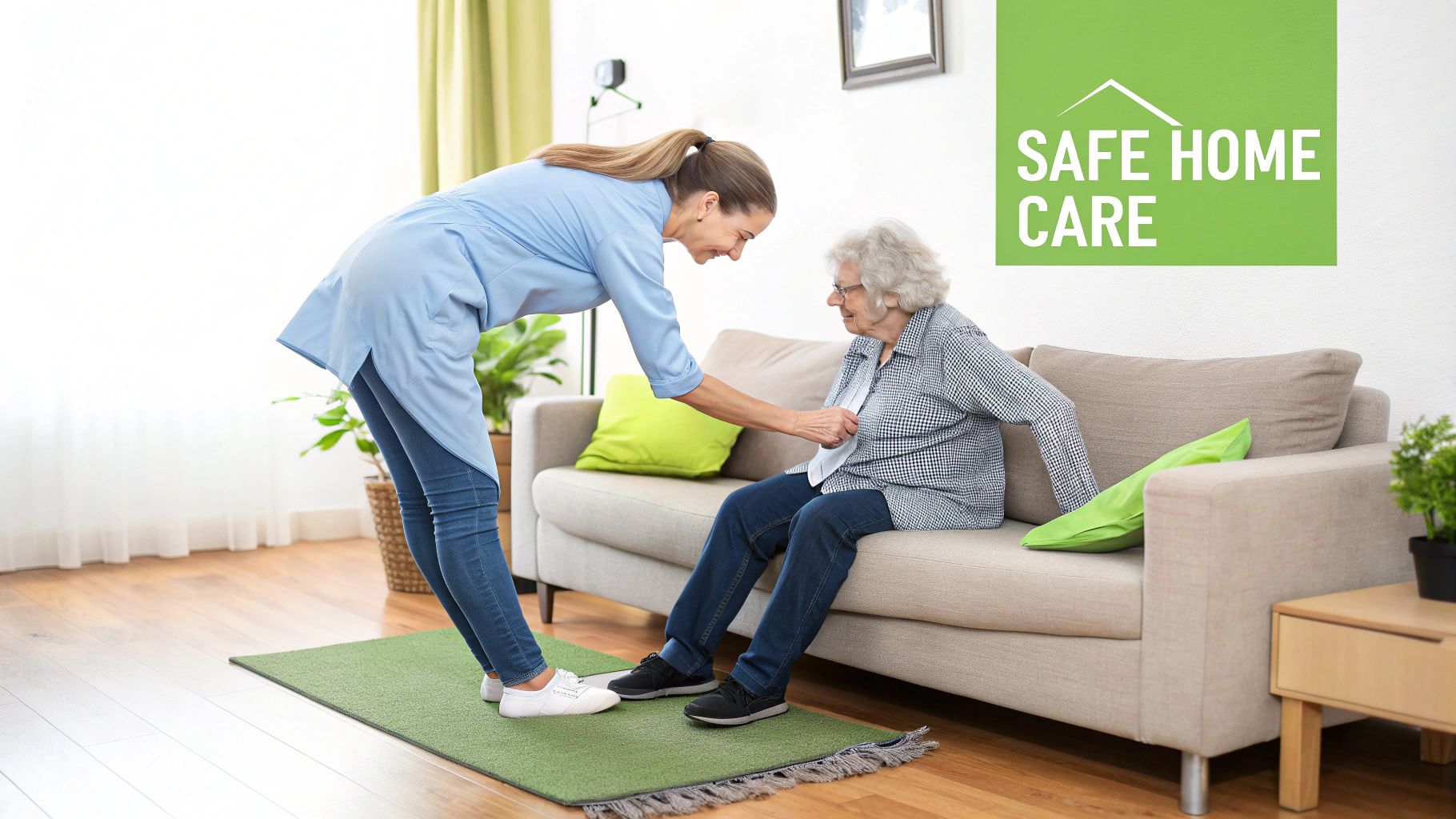
Inviting a carer into your loved one's home is a huge act of trust. Unlike a hospital or residential home, a private house is an uncontrolled environment, filled with its own unique quirks and potential challenges. That’s precisely why a formal, professional approach to health and safety isn’t just good practice—it's an absolute must for any provider worth their salt.
Think of it as creating a protective bubble around the entire care relationship. This bubble is built from layers of safety protocols, all working together to stop harm before it can even happen. It’s what transforms a familiar, personal space into a secure environment where professional support can be given safely and effectively. This proactive mindset is what truly separates professional care from informal help.
The Foundation of Trust and Wellbeing
At its heart, health and safety in domiciliary care is all about helping someone maintain their quality of life and stay independent for as long as possible. The aim is simple: to create a setting where they can flourish, free from preventable accidents or health scares. This requires a genuine partnership between the care provider, the person receiving care, and their family, all collaborating to identify and handle potential hazards.
The scale of this responsibility is immense. Across England, official figures show that around 489,208 people are supported by CQC-regulated domiciliary care services. This number highlights the incredible trust families place in providers to manage often complex needs safely. This trust becomes even more critical as the demand for advanced care at home continues to grow.
A strong health and safety framework does more than just prevent accidents; it builds confidence. It assures families that their loved ones are in capable hands, and it empowers care workers with the knowledge and tools they need to provide the best possible support.
Key Principles of Safe Home Care
Several core principles underpin any well-organised, safe home care service. Getting to know them can help you spot high-quality care when you see it. These aren’t just about physical safety; they're about emotional wellbeing and dignity, too. To learn more, check out our guide on the great benefits of care at home services.
A robust safety plan is built on several key pillars, which we'll explore in detail. These are the fundamental areas that any professional provider must master.
To give you a clear overview, here’s a breakdown of the core pillars that create a comprehensive home care safety strategy.
Core Pillars of Home Care Safety
| Safety Pillar | Key Focus Area | Primary Goal |
|---|---|---|
| Risk Assessment | Identifying and evaluating specific hazards within the home and related to the client's condition. | To proactively prevent accidents and create a tailored safety plan. |
| Infection Control | Implementing hygiene protocols to prevent the spread of infections. | To protect both clients and carers from illness. |
| Medication Safety | Ensuring correct administration, storage, and management of all medicines. | To avoid medication errors and ensure effective treatment. |
| Mobility & Handling | Using correct techniques and equipment to assist with movement safely. | To prevent falls and injuries for both client and carer. |
| Staff Training | Providing comprehensive and ongoing training on all safety protocols. | To ensure carers are competent, confident, and prepared for any situation. |
| Emergency Planning | Establishing clear procedures for responding to accidents or sudden illnesses. | To ensure a swift, calm, and effective response in a crisis. |
Each of these pillars is essential for building a safe and supportive care environment. Here are the key elements you should expect to see in action:
- Personalised Risk Assessments: No two people or homes are the same. A thorough assessment will identify specific hazards, from trip risks like loose rugs to challenges linked to a particular health condition.
- Robust Staff Training: Carers must be experts in essential skills like manual handling, infection control, first aid, and medication management.
- Clear Communication Protocols: There must be a reliable way to report incidents, raise concerns, or update care plans without delay.
- Emergency Preparedness: Everyone involved—the client, the family, and the carer—must know exactly what to do if an accident, sudden illness, or another emergency occurs.
Navigating UK Legal Duties and CQC Standards
Knowing the rules that govern home care isn't just for the professionals—it gives you, as a family member, a powerful tool for spotting what genuinely safe and excellent care looks like. In the UK, health and safety in home care is built on a solid legal foundation, and it’s there to protect everyone involved. This isn’t about ticking boxes on a form; it's about building a culture of safety that you can see in every single thing a carer does.
The bedrock of it all is the Health and Safety at Work etc. Act 1974. It might sound like something for building sites or factories, but it’s absolutely central to domiciliary care. The Act places a firm responsibility on care providers to protect the wellbeing of their staff and, crucially, anyone else affected by their work—which means the person they’re caring for in their own home.
Simply put, a professional provider can't just react to problems. They have a legal duty to proactively look for risks and put sensible, practical measures in place to control them.
The Role of The Care Quality Commission
If the 1974 Act sets the stage, then the Care Quality Commission (CQC) is the director making sure the performance is up to scratch. As the independent regulator for all health and social care in England, the CQC's job is to ensure providers are meeting the fundamental standards of quality and safety we all expect.
Think of it this way: a CQC-compliant care plan is like a pilot's pre-flight checklist. Every detail, from assessing risks in the home to planning for an emergency, is meticulously organised and written down to prevent harm and ensure a smooth journey. The CQC regularly inspects providers to check these standards are being met, and their reports are public, so you can see for yourself how they measure up.
"Safe care is a right, not a privilege. The CQC sets a clear benchmark for what 'good' looks like, giving families the power to hold providers accountable and make informed choices based on proven standards of safety and quality."
One of the CQC’s biggest questions is simply: "Is the service safe?" That single word covers a huge amount of ground, but it boils down to several practical things you should be able to see in any high-quality home care service.
What CQC Safe Care Looks Like in Practice
So, what does all this official guidance actually mean for the day-to-day reality of care in someone's home? A CQC-regulated provider demonstrates their commitment to safety through clear, consistent actions.
Here are the non-negotiables you should always expect to see:
- Personalised Risk Assessments: Before care even begins, a thorough assessment of the home and the person's specific needs must be done. This isn't a generic template; it’s a living document that pinpoints potential hazards—a loose rug, a poorly lit hallway—and clearly states how to manage them.
- Safeguarding People from Abuse: Providers have a legal and moral duty to protect vulnerable adults from harm. This means having crystal-clear policies, training staff to recognise the subtle signs of abuse, and knowing exactly who to call if concerns arise.
- Managing Incidents and Learning Lessons: Sometimes, things go wrong. A safe provider won’t sweep it under the carpet. They will have a robust system for recording, investigating, and learning from any accidents or near-misses to make sure it never happens again.
- Proper Staffing and Training: Safety is impossible without enough well-trained, competent, and confident staff. Carers need ongoing training and support to keep their skills sharp and feel fully equipped to handle any situation.
These legal duties create a comprehensive safety net. While this guide gives a broad overview, there are also very specific rules for certain risks. For a deeper dive into one area, you might want to review the fire safety regulations specifically designed to protect disabled and vulnerable residents. By understanding this framework, you can ask the right questions and feel confident that your chosen provider is truly committed to delivering exceptionally safe care.
Mastering Risk Assessments in the Home
To most of us, home is the safest place on earth. But when you introduce professional care, the dynamic changes. A family home isn't like a hospital or a care facility; it’s an uncontrolled environment, full of personal touches and routines that can, surprisingly, pose risks. This is where a risk assessment becomes the cornerstone of safe and effective home care.
Think of it less as a formal inspection and more as a collaborative conversation. It’s a process where we, the client, and their family work together to look at the home through a safety lens. We’re essentially creating a personalised safety map, one that respects the home's character while making it a secure place for care to be delivered.
This infographic breaks down how UK care regulations translate into the practical safety measures we implement every day.
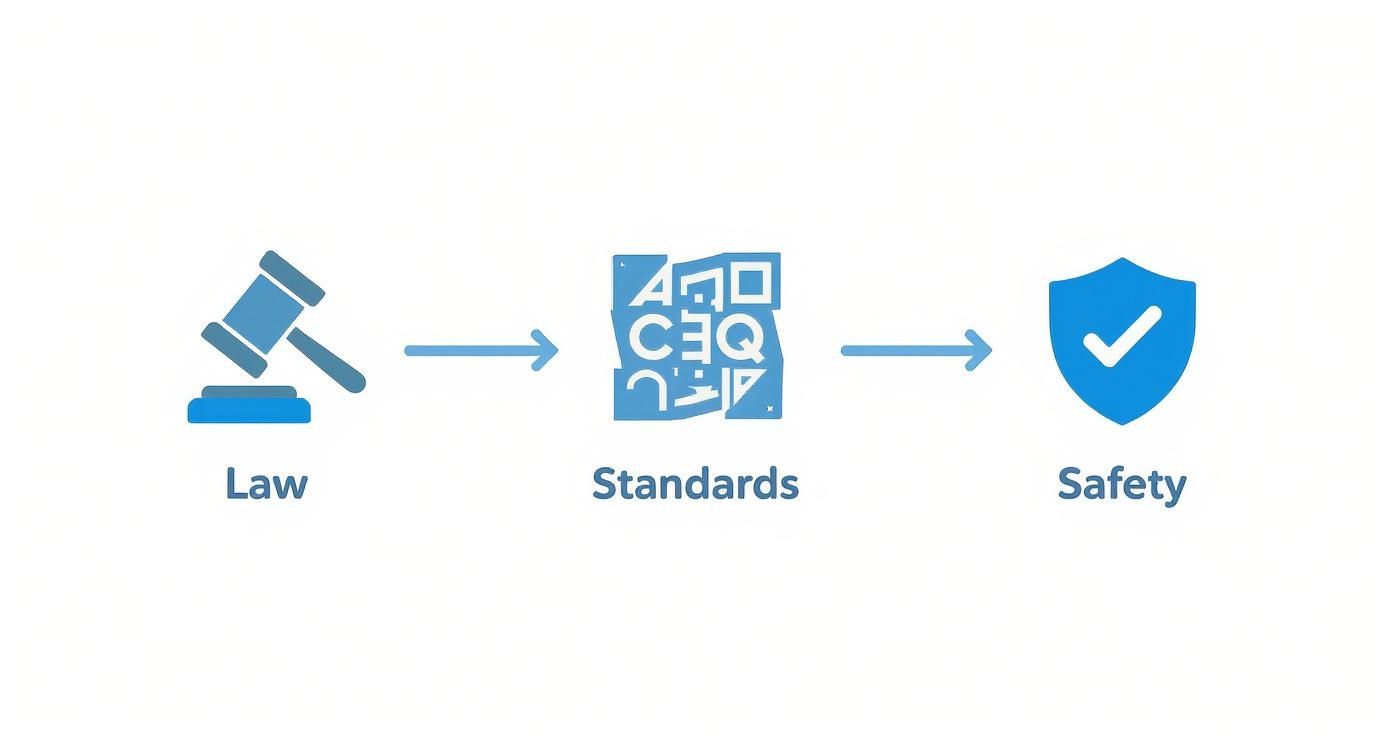
As the visual shows, these aren't just 'good ideas' we've come up with. They are professional standards rooted in legal frameworks and upheld by regulators like the CQC.
The Five Essential Steps of a Home Care Risk Assessment
A proper risk assessment is far more than a quick glance around. It’s a methodical, five-step process that ensures nothing important gets missed.
- Spot the Hazards: First things first, we methodically identify anything in the home or the care routine that could potentially cause harm. This could be anything from a dimly lit staircase to a confusing medication schedule.
- Understand Who Is at Risk and How: With a hazard identified, we then pinpoint who might be affected and in what way. It’s usually the person receiving care, but it can also include the carer or even family members.
- Create Practical Control Measures: This is the problem-solving stage. We work out sensible, practical steps to either remove the hazard completely or minimise the risk it poses.
- Record Everything Clearly: All our findings and agreed actions are carefully documented in the client's care plan. This becomes the go-to guide for every carer, ensuring consistency and safety.
- Review and Update Regularly: People's needs change, and so do their homes. A risk assessment is a living document that we review and update regularly, especially if there's a significant change in health or environment.
A risk assessment is more than just a document; it is a dynamic process of observation, communication, and action. It's the proactive engine that drives a culture of safety, turning potential problems into managed and controlled outcomes.
Common Home Care Hazards and Mitigation Strategies
To give you a clearer picture, here are some of the common issues we look for and the simple, effective solutions we often put in place.
| Hazard Category | Specific Example | Effective Mitigation Strategy |
|---|---|---|
| Falls & Trips | A loose rug in the hallway or trailing wires from a lamp. | Remove the rug, secure it with anti-slip tape, or re-route/tidy the wires. |
| Medication Errors | Multiple pill bottles that look similar, leading to confusion. | Use a dosette box or blister pack organised by a pharmacist; create a clear medication chart. |
| Infection Control | Lack of appropriate handwashing facilities or supplies. | Ensure liquid soap, paper towels, and hand sanitiser are always available for the carer's use. |
| Fire Safety | No working smoke alarm or blocked escape routes. | Test smoke alarms regularly (with permission) and ensure walkways are clear of clutter. |
| Mobility & Handling | Assisting someone to stand from a low sofa without proper technique. | Provide training for carers on safe moving and handling; suggest equipment like riser cushions. |
This table illustrates that managing risk is often about small, common-sense adjustments that make a huge difference to everyone's safety and well-being.
The importance of getting this right is reflected in national data. Patient safety reports from NHS England show that while a majority of incidents (63.98%) thankfully result in no harm, a large number still lead to low (29.67%) or moderate (5.15%) harm. You can explore the data for yourself on the NHS England statistics website. This is precisely why we are so meticulous—our goal is to prevent those avoidable injuries from ever happening.
This structured approach means that safety in the home isn’t left to chance. It’s a deliberate, professional, and compassionate process that provides peace of mind for clients, their families, and our care team. By mastering the risk assessment, we help turn any house into a safe haven for care.
Bringing the Safety Plan to Life: Essential Daily Checks

While a risk assessment creates the safety blueprint, it’s the small, consistent actions during every single visit that truly protect a person. Think of it less as a dusty policy on a shelf and more as a carer’s daily ‘pre-flight check’. Just as a pilot goes through a specific list before take-off, our carers follow proven routines for medication, mobility, and hygiene on every visit.
This isn’t just about ticking boxes. It’s about building a culture of safety where best practice becomes second nature. These daily checks are the non-negotiable foundations of a professional service that families can trust.
Infection Prevention and Control
In any home care setting, keeping infections at bay is a top priority, especially when caring for those with weaker immune systems. This goes so much further than a quick hand wash; it’s a disciplined approach woven into every part of the care we provide.
The most powerful tool we have is simply correct hand hygiene. Our carers are trained to wash their hands thoroughly with soap and water or use an alcohol-based sanitiser at key moments – when they arrive, before and after any personal care, and just before they leave.
Of course, using Personal Protective Equipment (PPE) like gloves and aprons is crucial for certain tasks. It creates a simple but highly effective barrier, protecting both the client and the carer from potential contamination. Just as important is how this equipment is disposed of, ensuring any risk is safely contained.
Safe Medication Management
Getting medication right is absolutely critical. An error can have serious consequences, which is why we follow a strict, systematic process every single time. The goal is simple: ensure the right person gets the right medication, in the right dose, at the right time, and in the right way.
We call this the 'five rights' of medication administration. It's a straightforward mental checklist that guides our carers through a vital safety check each time they help with medication.
Adhering to the 'five rights' isn’t just a guideline; it's a core skill for any professional carer. It turns a routine task into a structured safety protocol, dramatically cutting the risk of mistakes and making sure treatments are followed exactly as prescribed by the doctor.
To back this up, every single dose is logged on a Medication Administration Record (MAR) chart. This creates a clear, up-to-the-minute record that family, GPs, or district nurses can review at any time, providing a crucial layer of accountability and transparency.
Mobility and Manual Handling
One of the biggest risks of injury, for both clients and carers, comes from incorrect moving and handling. Helping someone get out of a chair, walk to the bathroom, or even just shift their position in bed requires real skill and often, specific equipment.
All our carers receive in-depth training in safe manual handling. They learn how to use their posture and body weight to assist someone safely, avoiding strain on themselves and ensuring the movement is secure, comfortable, and dignified for the person they are supporting. It’s all about using proper technique, not brute strength.
A few key principles always apply:
- Assess First: Before any move, the carer takes a moment to assess the situation, making sure the path is clear and any needed equipment is ready.
- Clear Communication: The carer always explains what they’re about to do and encourages the client to help as much as they safely can. This not only makes the process smoother but also promotes independence.
- Correct Equipment Use: If equipment like hoists, stand aids, or slide sheets are needed, carers are fully trained and confident in using them as detailed in the personal care plan.
These skills are fundamental across the board. To get a better sense of how they fit into different care scenarios, have a look at our guide comparing personal care vs home help.
Lone Worker Safety
By its very nature, home care involves our team working alone in the community. As a responsible provider, we have a duty to ensure they are safe. This, in turn, protects our clients, because a supported carer is one who can respond confidently and effectively if something goes wrong.
Our lone worker policies are designed to be a constant safety net. This usually involves:
- Regular Check-ins: Carers get in touch with the office at the beginning and end of their rounds.
- Smart Technology: We use a mobile app that logs when a carer arrives at and leaves a client’s home, acting as an automatic welfare check.
- Emergency Support: Our carers have a clear plan for any emergency and can reach a manager at any time, day or night, with our 24/7 on-call support.
These daily habits aren’t just items on a list; they are the active ingredients that make our home care service safe, reliable, and truly professional.
The Critical Role of Staff Training and Support
A detailed safety policy is just paper until a skilled person puts it into practice. While risk assessments and daily checklists create the blueprint for a safe home, it’s the carer on the ground who brings it all to life. That’s why consistent, high-quality staff training is the real engine of any professional home care service. It's the ongoing investment in a carer's skills and confidence that truly keeps clients safe.
This goes far beyond a quick induction. A basic welcome is just the starting point; true competence is built through continuous professional development. It’s all about creating a culture of learning where carers feel supported, skilled, and genuinely prepared for the realities of their work.
Building a Foundation of Competence
A truly comprehensive training programme is multi-layered. It doesn’t just teach carers what to do, but why they’re doing it. This approach builds real confidence and empowers them to think on their feet when something unexpected happens.
For any professional home care worker in the UK, some training is simply non-negotiable. Key areas include:
- First Aid: Knowing how to respond calmly and correctly in the first few minutes of a medical emergency can make a world of difference.
- Manual Handling: This isn’t just about lifting. Specialised training teaches carers how to help people move safely, protecting the client from falls and their own bodies from strain.
- Infection Prevention and Control: This covers everything from meticulous hand hygiene to the correct use of Personal Protective Equipment (PPE) – an absolute must for client safety.
- Safeguarding Vulnerable Adults: Carers must be trained to spot the signs of potential abuse or neglect and know the exact procedures for reporting concerns safely and confidentially.
- Medication Administration: This highly specific training ensures carers follow strict protocols, like the 'five rights' of medication, to prevent dangerous mistakes.
Beyond these fundamentals, exceptional care requires a deeper, condition-specific understanding. Training in dementia care, for instance, helps carers communicate effectively and manage challenging behaviours with compassion. This deeper insight directly creates a safer, more reassuring environment for the client.
The Importance of Supervision and Ongoing Support
Training isn't a one-and-done event; it's a continuous cycle of learning, doing, and reflecting. Regular supervision and competency checks are vital for keeping standards high. These aren't tests designed to catch people out. Think of them as supportive check-ins to see what’s going well and where a carer might need a bit more guidance or a skills refresher.
This supportive structure is absolutely crucial, especially when you consider the challenges in the UK care sector. There are now over 13,700 CQC-registered domiciliary care services in England, a huge jump since 2017. At the same time, the sector struggles with high staff turnover, which can threaten the consistency of care. When less experienced staff are involved, the risk of a mistake in following safety protocols can rise, making robust support and training even more critical.
Supervision is the bridge between the classroom and the client’s home. It confirms that what was learned in training is being applied correctly in real-world situations, building a carer’s confidence and ensuring safety standards never slip.
A supported carer is a safe carer. Knowing they have a manager they can call for advice gives them the resilience needed to handle difficult situations effectively. In many ways, this proactive support system is just as important as the initial training itself.
To ensure your team is fully equipped, you might find it helpful to create a high-impact health safety course that covers these essential topics in detail. Ultimately, investing in staff isn’t just about ticking a compliance box—it's a direct investment in the safety, wellbeing, and peace of mind of every person we are privileged to support.
Got Questions About Home Care Safety? We Have Answers.
Thinking about home care for a loved one brings up a lot of questions, especially around their safety and wellbeing. It’s completely natural. Knowing what to expect from a professional provider when it comes to health and safety is crucial for your peace of mind. Here are some straightforward answers to the questions we hear most often from families just like yours.
Think of this as your guide to understanding what truly safe, high-quality support at home looks like.
What Should I Look for in a Provider's Safety Policies?
When you’re vetting a care provider, don’t be shy about asking to see their paperwork. A professional, transparent agency will have no problem sharing their health and safety policies. You should also ask for their latest CQC inspection report—it will have an entire section focused on safety.
Specifically, ask to see their public liability insurance, their risk assessment process, medication protocols, and their policies on manual handling. It’s also a great idea to ask them to walk you through their staff training programme, particularly how often they refresh essential skills.
Finally, find out how they handle emergencies and what protocols they have for protecting lone workers. A provider who welcomes these questions and gives clear, confident answers is showing you they take the wellbeing of your loved one, and their own staff, very seriously.
How Are Risks in My Home Assessed?
A thorough risk assessment is the bedrock of safe home care. Before any care starts, a senior member of the team should visit the home to carry out a detailed, person-centred assessment. This isn’t a quick tick-box exercise; it's a deep dive into the specifics of the environment.
They'll look for potential hazards unique to the home, like a loose rug that could be a trip hazard, poor lighting on the stairs, or how easy it is to get in and out of the bath. The assessment also digs into risks tied to specific health conditions, mobility issues, or medication needs.
Based on this hands-on review, they create a personalised care plan with crystal-clear instructions for carers on how to manage every identified risk. And it's not a one-and-done document. It should be reviewed regularly and updated the moment anything changes with your loved one’s health or home setup.
"A home risk assessment isn't about finding fault with a person's home. It's a collaborative process to make a familiar, loved space as safe as possible for professional care to be delivered, respecting both the individual's comfort and their safety."
What Happens if There Is an Accident?
Every professional provider should have a solid, well-practised plan for emergencies. All carers are trained in basic first aid and know exactly who to call and when. In these moments, the client’s care plan is indispensable, as it holds all the critical information—from emergency contacts to relevant medical history.
If a minor incident occurs, like a slip where no one is hurt, the carer will provide immediate support, carefully document what happened, and report it straight to their office. The office will then get in touch with the family right away.
In a serious medical emergency, the carer's absolute first priority is to call 999. Their next calls are to their office and then to the family. After any incident, big or small, a formal report is filled out, and the risk assessment is reviewed from top to bottom to see if anything needs changing to prevent it from happening again.
How Is Safe Medication Administration Ensured?
Making sure medication is handled safely is one of the most important parts of health and safety in home care. Carers who administer medication must have specific training and be formally signed off as competent. Providers follow strict procedures, often based on the 'five rights' of administration, to double-check everything.
Every single dose is logged on a Medication Administration Record (MAR) chart. This creates a clear and undeniable record of what was given and when. All medications are stored securely according to instructions, and the care plan spells out all medicines, dosages, and times in detail.
For people with more complicated medication needs, many providers work directly with local pharmacies to arrange pre-packaged blister packs. This adds another layer of safety and dramatically reduces the risk of errors. Ultimately, you need to feel 100% confident that a robust system is in place for this vital task.
At Cream Home Care, we believe outstanding care is built on an unwavering commitment to health and safety. Our professional team is rigorously trained to manage risks, follow strict protocols, and provide compassionate support that gives you and your family total peace of mind. If you are looking for dedicated and safe home care in Stoke-on-Trent or Newcastle-under-Lyme, contact us today to discuss how we can help.