Home care isn't just a service; it’s a way of life that allows people to stay where they feel most comfortable—their own home. Think of it as a supportive framework built around an individual, giving them the dignity and independence they deserve. It's a compassionate and practical alternative to moving into a residential facility, offering personalised support that can be anything from a friendly chat over a cup of tea to more complex assistance.
What Are Home Care Services Really?

When many people hear "home care," they might picture a helper popping in for an hour or two. But it's so much more than that. It’s a comprehensive approach designed to maintain, and even improve, someone's quality of life within the familiar and comforting walls of their own home. This is becoming an increasingly popular choice across the UK, as more and more people want to remain in the places they know and love.
This desire to stay at home is a powerful one. If you want to get to grips with the philosophy behind it, it's worth understanding what aging in place means and how it empowers people to live independently for longer.
This isn't just a sentimental preference; the numbers back it up. The UK has seen a remarkable 11% increase in new home care services registered in the last year alone, with the total now approaching 18,500. This reflects a significant national shift towards 'care at home first' policies, prioritising home-based support wherever possible.
Who Is Home Care For?
The beauty of home care is its flexibility. It's not just for the elderly; it’s for anyone who needs a bit of extra help to live safely and comfortably at home. The circle of people who benefit is wider than you might think.
- Older Adults: For many seniors, their home is a treasure trove of memories. Home care provides the support needed to stay there safely and happily.
- Family Carers: It offers a vital lifeline for family members who are primary carers, giving them a much-needed break to prevent burnout and recharge.
- People Recovering from Illness or Surgery: Coming home from the hospital can be daunting. Home care provides crucial support for a smoother, faster recovery.
- Individuals with Disabilities: Customised care plans help people with physical or learning disabilities live with greater independence and confidence.
A Glimpse into Key Service Types
To give you a clearer idea, here's a quick look at the main types of services we provide. We'll dive deeper into each of these later on, but this overview helps to show the breadth of support available.
The real purpose of home care is to create a personalised safety net. It’s about building a partnership that flexes and adapts as someone's needs change, ensuring they can continue to live a full and dignified life on their own terms.
Here’s a quick summary of the different types of support that form this partnership.
An Overview of Home Care Service Types
| Service Type | Primary Focus | Ideal For |
|---|---|---|
| Companionship Care | Emotional well-being and social interaction. | Individuals feeling lonely or isolated who would benefit from a friendly face and shared activities. |
| Domiciliary Care | Practical, hands-on help with daily tasks. | People needing support with personal care, meal preparation, medication, or light housekeeping. |
| Respite Care | Temporary relief for family carers. | Primary carers who need to take a break, go on holiday, or simply rest and recharge. |
| Elderly Care | A holistic blend of services for older adults. | Seniors with varied or complex needs, combining companionship, practical help, and specialised support. |
At the end of the day, these different services all work towards the same goal: creating a support system that honours a person’s independence while providing the exact assistance they need to stay safe, well, and happy at home.
Exploring the Different Types of Home Care
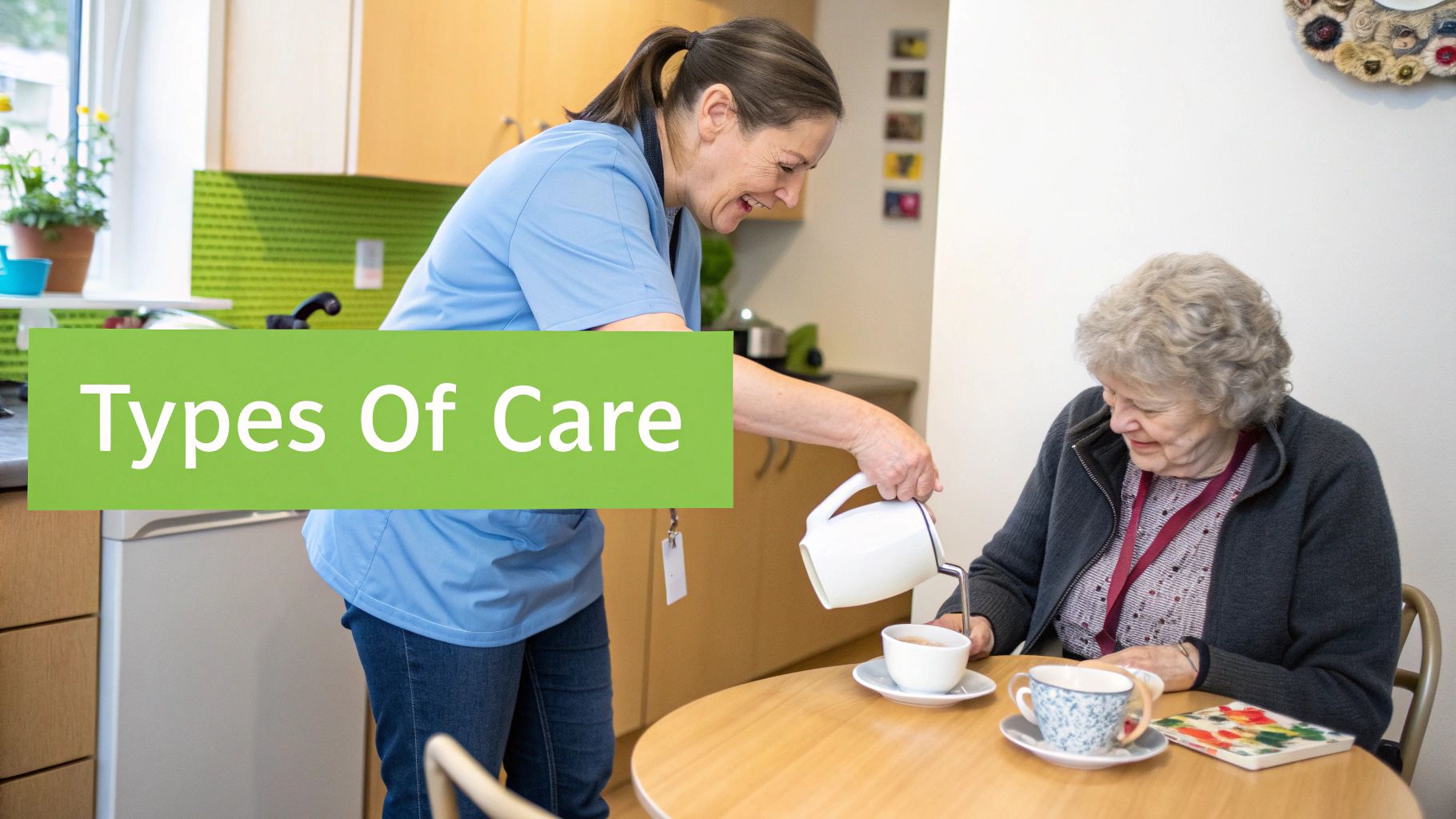
When people talk about home care services, it’s not a one-size-fits-all solution. Think of it like a painter’s palette; each colour has its own purpose, but you can also mix them together to get the exact shade of support you need. The ultimate goal is always the same: making life at home better. But how we get there changes from person to person.
To really get to grips with what home care can do, we need to look past the simple definitions and see how these services actually work in people's lives. Let's break down the four main pillars of support and what they mean in practice.
Companionship Care: Tackling Loneliness
At its heart, companionship care is all about human connection. Loneliness can have a huge impact on our health, particularly for older adults, and this service is designed to bring a friendly, familiar face into someone’s life.
Imagine a carer popping in to see your mum a few times a week. This isn't about ticking off a list of jobs; it's about sharing time together. They might settle in for a good chat over a cuppa, tackle a jigsaw puzzle, or just enjoy a favourite TV show. It’s this simple interaction that provides that vital bit of social stimulation and a friendly ear, helping keep spirits up and minds engaged.
A companionship visit could also involve:
- A gentle walk: Getting some fresh air at a local park or just having a stroll around the garden.
- Trips out: Providing reassurance and company for appointments at the doctor or the hairdresser.
- Enjoying hobbies: Helping with activities like gardening, knitting, or reading a book aloud.
Domiciliary Care: For Practical Daily Support
Domiciliary care, which you might also hear called visiting care, is the hands-on, practical help that makes everyday life safer and more manageable. This type of support is designed to fit right into a person's routine, helping them with tasks that have become a bit of a struggle due to age, illness, or mobility problems.
Picture a carer arriving in the morning to help someone get their day started. This could mean gentle assistance with washing and dressing, all done with complete respect for their dignity. Later, they might prepare a healthy lunch, give a friendly reminder to take medication, or sort out some light housekeeping like putting a load of laundry on. If you want to dig deeper, you can explore the difference between personal care and general home help to see how specific the support can be.
Domiciliary care is the backbone of independent living. It provides the essential, practical help that allows an individual to remain in control of their life and environment, safely and comfortably.
Respite Care: A Lifeline for Family Carers
Looking after a family member is a true act of love, but it can also be physically and emotionally draining. Respite care is there to give primary carers a much-needed break. It's a chance to rest, recharge, or just take care of your own life, knowing your loved one is in safe, professional hands.
Think of a son who has been caring for his father around the clock. With respite care, a professional carer can step in for a few hours, a whole day, or even for a couple of weeks. They’ll follow the established routine perfectly, from meals to medication, so there’s no disruption. This gives the son the freedom to take a holiday, meet up with friends, or simply have a quiet afternoon to himself, helping to prevent burnout and protect his own wellbeing.
Elderly and Specialised Care: A Holistic Approach
Elderly care is rarely just one thing. It's usually a careful blend of companionship, practical domiciliary support, and other, more specialised services. As we get older, our needs often become more complex, so care needs to be flexible enough to adapt with us. This might involve support with mobility, help managing long-term health conditions, or dedicated dementia care.
For those living with a serious illness, specialised care at home can make all the difference. Understanding hospice care and what to expect shows how this support focuses on managing pain and maintaining the best possible quality of life in a comfortable, familiar setting. It ensures that everyone, no matter their health challenges, can receive compassionate, appropriate care right where they feel most at ease.
The Real Benefits of Professional Home Care

When we talk about professional home care services, it's easy to focus on the practical side of things—the daily tasks and physical help. But the true value runs much deeper. It’s about the profound, positive impact it has on everyone involved, enhancing quality of life, delivering peace of mind, and strengthening family bonds.
These benefits don’t just stop with the person receiving support; they create a supportive ripple effect that touches their entire family. From preserving cherished independence to offering a much-needed break for family carers, professional support makes a genuine difference.
Promoting Precious Independence at Home
For most of us, there's no place like home. It’s a space filled with comfort, familiarity, and treasured memories. The desire to stay there, even when facing health or mobility challenges, is incredibly strong. Home care is the key that makes this possible.
Rather than the disruptive experience of moving into a residential facility, a carer provides the specific support needed to navigate daily life safely and confidently. This might be something as simple as a hand with the weekly shop or as vital as help getting in and out of the bath. It’s all about empowering someone to continue living life on their own terms, in their own home.
This isn't just a feeling; it's a clear trend across the country. In a recent reporting week, 499,279 people in England were receiving CQC-regulated domiciliary care, a figure that easily surpasses the 361,628 residents in care homes. You can explore more about these adult social care statistics on the government's official page.
Enhancing Safety and Overall Wellbeing
One of the greatest advantages of home care is the one-to-one attention. A dedicated carer truly gets to know the individual they're supporting—their specific needs, their preferences, and their unique personality, building a genuine, trusting relationship along the way.
This personalised approach is vital for both physical safety and emotional wellbeing. A professional carer is trained to spot potential hazards in the home, which helps reduce the risk of falls or accidents. They ensure medication is taken correctly and on time, and can often recognise subtle changes in health that might otherwise go unnoticed.
"Professional home care is about creating a secure and nurturing environment. It's the peace of mind that comes from knowing someone is not just looked after, but truly cared for."
This focused support also helps to tackle loneliness, which is a serious concern for so many. A carer offers more than just practical help; they provide companionship, conversation, and a friendly face. This vital social interaction can make all the difference, boosting mood and mental alertness. We believe this connection is fundamental, and you can read more about why companionship is just as important as physical care in our dedicated article.
Providing Essential Respite for Families
Family members often step into the role of primary carer out of love and dedication, but the responsibility can be immense. Without a proper break, the risk of caregiver burnout becomes very real, impacting their own health, work, and relationships.
This is where professional home care provides a crucial lifeline.
- Time to Recharge: It gives family carers the chance to take a well-deserved break, whether that's for a few hours a week or for a longer holiday.
- Reduced Stress: Knowing their loved one is in safe, capable hands removes a huge weight of worry and anxiety.
- Restored Relationships: It allows family members to step back from their caring duties and simply be a spouse, son, or daughter again, enjoying quality time together.
Just imagine a daughter who can finally go on a worry-free holiday, confident that her father is happy and well-supported by his regular carer. This is the kind of peace of mind that professional home care services deliver, improving the wellbeing of the entire family.
How a Personalised Care Plan Is Built
Great home care isn't about ticking boxes from a pre-made list. It’s never a one-size-fits-all service. The best support comes from really getting to know someone, working together, and creating a plan that’s as individual as they are.
This isn’t about a care provider telling you what’s needed. It's a partnership. It all starts with a chat—a chance for you to share your story, your worries, and what a good day looks like. From that conversation, we build a plan that truly fits.
The Initial Assessment: Getting the Full Picture
The foundation of any good care plan is a thorough, compassionate assessment. This is so much more than a checklist; it’s about understanding a person's life and figuring out what support will genuinely help them live well and stay independent.
A dedicated care manager will visit the home to get a feel for things, looking at several key areas:
- Physical Needs: This covers everything from help moving around safely to assistance with personal routines like bathing and getting dressed.
- Medical Requirements: We’ll look at any support needed for health conditions, from simple medication reminders to more complex, ongoing care.
- Emotional Wellbeing: It’s not just about the practical stuff. We consider the importance of companionship, social chats, and enjoying hobbies that bring a bit of joy to the day.
- Practical Tasks: This is all about the day-to-day running of the home, like preparing nutritious meals, light housekeeping, doing the shopping, or getting to appointments.
Taking this all-in-one view means the final care plan supports the whole person, not just the obvious physical needs.
Crafting the Plan Together
After the assessment, we pull all that information together to draft the first version of the care plan. Think of it as a detailed blueprint for the support we'll provide. It outlines specific tasks, the timing of visits, and those all-important personal preferences—like how someone takes their tea or what time they prefer to get up in the morning.
A care plan isn't set in stone. It's a living document, designed to be flexible. As needs change, the plan changes with them, ensuring the right support is always there.
We then sit down with you and your family to go through this draft. This is your chance to give feedback, make tweaks, and make sure everyone is completely comfortable and confident with the plan. It's a crucial step for building trust and ensuring the care feels just right from day one. To learn more about this approach, you can read our guide on how personalised home care supports independent living.
This careful, person-first process ensures that the care isn't just effective, but also respectful, dignified, and perfectly suited to an individual’s way of life.
Navigating Home Care Costs and Funding in the UK
Let's talk about the financial side of things. It’s often the biggest question on people's minds, and rightly so. Understanding the costs involved in home care is the first step towards getting the right support in place, and it’s probably not as complicated as you think.
The final cost really comes down to the individual. It's not a one-size-fits-all price tag. The biggest factor is simply how much support is needed. A couple of hours of companionship each week will, of course, be very different from daily visits that include personal or more complex care. Typically, you'll see visiting care priced by the hour, often somewhere between £25 to £35 per hour, though this can vary a bit depending on where you are and the provider you choose.
A few things can nudge that hourly rate up or down:
- The type of care needed: Basic help around the house versus specialised dementia care, for example.
- How often carers visit: The number of hours per day or week.
- When care is needed: Visits at night, on weekends, or on bank holidays might have a higher rate.
- Your location: Costs can differ slightly across different parts of the UK.
Understanding Your Funding Options
The good news is, you don't have to figure this all out on your own. There are several avenues for financial support available in the UK, designed to make home care a genuinely accessible option for those who need it. Knowing where to look is half the battle.
Before you can explore funding, you need a clear picture of what support is actually required. This is where a proper care plan comes in. It’s the roadmap that details everything, making the next steps much clearer.
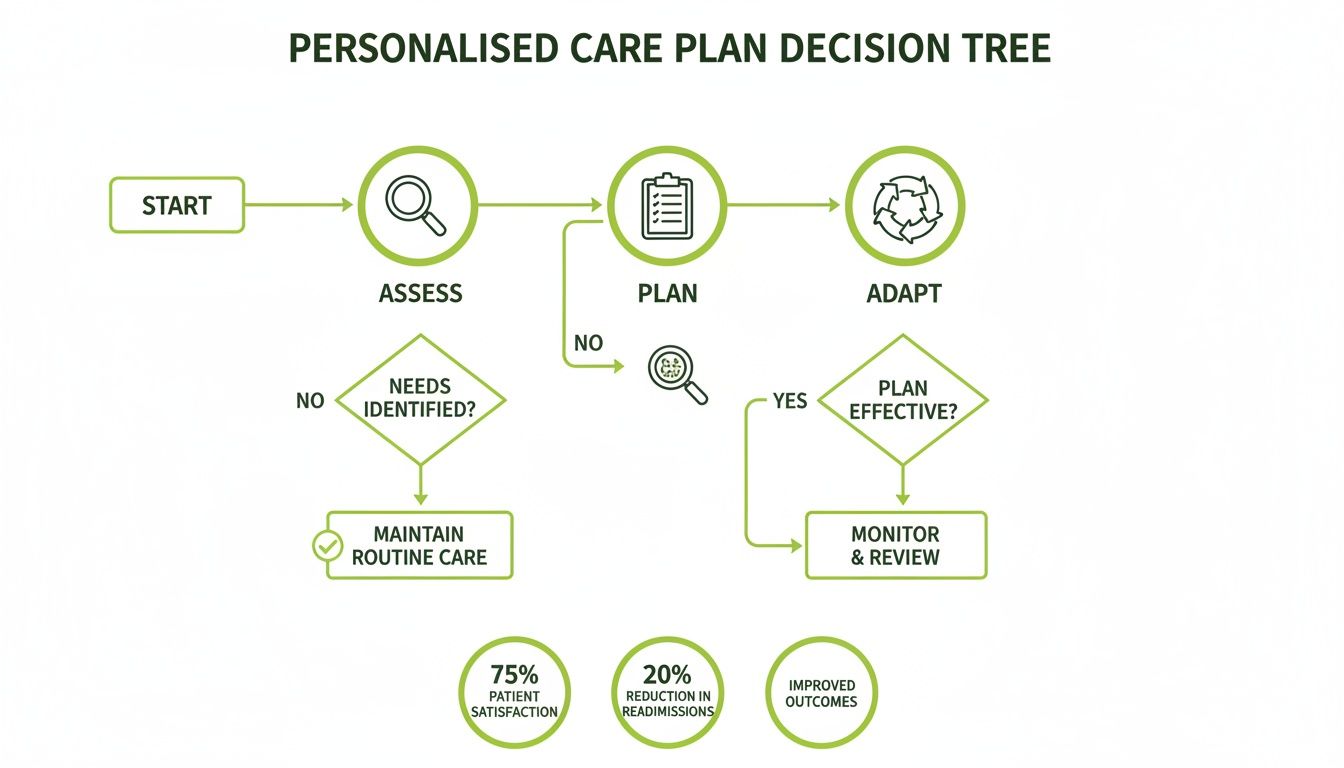
As you can see, a solid care plan always starts with a detailed assessment. From there, it's about planning together and, crucially, being ready to adapt as needs change over time.
Local Authority Funding
A common starting point for financial help is your local council. To see if you're eligible, they'll conduct two key assessments. First is a needs assessment, which looks at what kind of care and support you need. Second is a financial assessment (often called a means test), which reviews your income and savings to see what you can reasonably contribute.
If your savings fall below a certain threshold (this figure is updated each year), your local authority could cover a portion, or even all, of your care costs. Even if you don't qualify for funding, they still have a duty to provide you with information and advice to help you find the care you need.
NHS Continuing Healthcare (CHC)
For people with very significant, long-term health needs, NHS Continuing Healthcare (CHC) is an important route to explore. It's a package of care that is arranged and paid for entirely by the NHS. To qualify, an individual must be assessed as having a "primary health need."
What's key here is that NHS CHC funding is not means-tested. It’s based purely on the complexity and intensity of your health needs, not your bank balance.
Getting CHC funding involves a detailed assessment process, which usually begins with a checklist filled out by a healthcare professional. If the assessment confirms eligibility, the NHS will cover the full cost of the agreed-upon home care.
Key Benefits to Explore
Beyond direct funding from the council or NHS, don't forget about state benefits. Several are specifically designed to help with the extra costs that come with an illness or disability. They aren’t means-tested and can be a massive help in paying for home care services.
Two of the main ones to look into are:
- Attendance Allowance: For people over State Pension age who need a hand with personal care or supervision. It comes in two different weekly rates, depending on the level of support needed.
- Personal Independence Payment (PIP): This is for those under State Pension age with a long-term health condition or disability. It helps cover the extra costs of living.
Navigating the world of funding can feel a little daunting, but understanding these main options is a huge step forward. We've put together a quick-reference table to help you see how they compare.
UK Home Care Funding Options at a Glance
| Funding Source | Who It's For | What It Typically Covers | How to Apply |
|---|---|---|---|
| Local Authority Funding | Individuals with assets below a set threshold who have eligible care needs. | A contribution towards or the full cost of social care needs, like personal care and support at home. | Contact your local council’s adult social services department to request a needs assessment. |
| NHS Continuing Healthcare (CHC) | Adults with a 'primary health need' due to a complex, intense, or unpredictable condition. | The full cost of care, including healthcare and personal care, provided at home. | Speak to your GP or a social worker, who can arrange for a CHC checklist to be completed. |
| Attendance Allowance | People at or above State Pension age with a disability or illness requiring supervision or help. | Not for specific services, but can be used for anything, including paying for home care. | Apply through the gov.uk website or by calling the Attendance Allowance helpline for a form. |
| Personal Independence Payment (PIP) | People aged 16 to State Pension age with a long-term health condition or disability. | Helps with extra living costs. It is not means-tested and can be used to fund home care. | Start a claim by calling the PIP new claims phone line or via the gov.uk website. |
Taking the time to look into these funding streams can make all the difference. It empowers you to make a confident choice and find the very best care package for your situation.
Choosing the Right Home Care Provider
Picking the right home care provider for someone you love is a huge decision. It’s not just about ticking boxes; it’s about finding a partner you can trust to deliver compassionate, reliable, and safe support. The choice deserves careful thought, so knowing what to look for—and what questions to ask—is absolutely vital.
You're looking for a provider who doesn't just meet the practical needs but also aligns with your family's values. Getting this right brings incredible peace of mind, knowing your loved one is in truly capable and caring hands.
Your Essential Checklist for Vetting Providers
When you start looking, it really helps to have a checklist. A great provider will be open, professional, and always put people first. Think of this as your framework for making a confident decision.
Here are the key things to look for in a high-quality service:
- A Positive Care Quality Commission (CQC) Rating: The CQC is the independent regulator for all health and social care in England. Before you do anything else, check a provider’s latest inspection report on the CQC website. A rating of 'Good' or 'Outstanding' is a solid gold indicator of quality.
- Thorough Carer Training and Vetting: Don't be shy about asking how they recruit their team. How are carers vetted? Do they all have enhanced DBS (Disclosure and Barring Service) checks? What about ongoing training for things like dementia care, first aid, and safeguarding?
- Clear and Transparent Costs: A provider you can trust will be completely upfront about their prices. There should be no hidden fees, and their pricing should be simple enough for anyone to understand.
- A Local, Community-Focused Presence: Often, choosing a provider with a local office and real roots in the community—like here in Stoke-on-Trent and Newcastle-under-Lyme—means you'll get a more responsive and flexible service. They know the area and the people.
Crucial Questions to Ask Every Potential Provider
Once you have a shortlist, it’s time to dig a little deeper. The way a provider answers these questions will tell you everything you need to know about their standards and their company ethos.
A provider’s willingness to answer your questions openly is one of the best signs of their commitment to transparency and quality care. Never hesitate to ask for specifics.
Get a list of questions ready so you cover all the important ground:
- How do you create and review personalised care plans? A good provider will work directly with you and your loved one to build the plan, and they’ll review it regularly to make sure it keeps up with any changing needs.
- What is your procedure for emergencies? You need to know how they handle the unexpected, whether it’s a medical emergency or a sudden need for more support.
- How do you match carers with clients? Getting the right personality fit is so important. Find out if they think about personalities, shared interests, and specific experience when they pair a carer with your family member.
- What happens if our regular carer is ill or on holiday? They should have a solid system for providing a suitable replacement, ensuring care continues smoothly without any disruption.
The UK's home care workforce is made up of nearly 809,000 dedicated professionals. But even with that number, Skills for Care reports there are still 152,000 vacancies. This highlights just how important it is to choose an established, reliable provider with a stable team. It means their service is well-managed and their carers are well-supported. You can explore more about the UK home care workforce to understand these industry trends.
Red Flags to Watch Out For
Just as you need to know what to look for, you also need to recognise the warning signs of a provider that might not be up to scratch. Be cautious of any company that:
- Is vague about their costs or seems to have hidden charges.
- Doesn't have a recent or positive CQC report to show you.
- Tries to push a rigid, 'one-size-fits-all' care package.
- Can't give you clear answers about how they train and vet their staff.
- Is difficult to get in touch with or poor at communicating.
At the end of the day, trust your gut. If something doesn't feel right, it probably isn’t. Taking the time to do your homework now will pay off, ensuring you find a provider that gives your loved one the compassionate, top-quality support they deserve.
Your Home Care Questions Answered
When you first start looking into home care, it’s completely normal to feel like you have a million questions. It’s a big decision, and you want to get it right for your family. Feeling informed and confident is the best place to start, so we’ve put together answers to some of the most common queries we hear from families just like yours.
Think of this as a straightforward chat to clear up any uncertainties and reinforce what you should expect from any quality care provider: flexibility, professionalism, and a genuine focus on the person receiving care.
How Is a Carer Matched with a Client?
Finding the right personality fit between a client and a carer is crucial for building a real, trusting relationship. A good provider won't just send whoever is next on the rota. Instead, they’ll take the time to get to know your loved one and then carefully match them with a carer based on personality, shared interests, and of course, the specific skills needed.
The aim is to find someone who isn’t just there to help with tasks, but who becomes a welcome, friendly face. It’s this thoughtful approach that helps create a genuine connection, which makes a world of difference to someone's overall wellbeing.
What Happens If Our Regular Carer Is Away?
Continuity of care is one of our biggest priorities. Any professional home care agency will have a solid plan for when a regular carer is unwell or takes a well-deserved holiday. They will always arrange for another fully vetted and trained carer from their team to step in.
Before they even walk through the door, the replacement carer is given a thorough briefing on the personalised care plan. They’ll know the routine, preferences, and all the little details that matter. This ensures the support continues without a single blip, so your loved one receives the same high standard of care they're used to, minus any disruption or stress.
This is one of the key benefits of using an established provider over a sole trader. You have the guarantee of reliable cover. You’re never left in a lurch, which gives the whole family complete peace of mind.
Can a Home Care Plan Be Changed?
Of course. In fact, it’s essential that it can be. A good care plan should be a living, breathing document, not something carved in stone. Life is unpredictable, and people’s needs can change, sometimes overnight. A quality provider understands this and builds that flexibility in from day one.
Regular reviews should be standard practice. These are opportunities for everyone involved—the client, their family, and the care manager—to sit down and chat about what’s working well and what might need a tweak. Whether needs increase, decrease, or just shift focus, the plan can and should be adapted to make sure the support is always spot-on.
How Are Home Care Services Regulated in the UK?
In England, all legitimate home care services are regulated by the Care Quality Commission (CQC). Think of the CQC as the independent watchdog for all health and social care. Its job is to make sure providers are meeting fundamental standards of quality and safety.
Providers are inspected regularly and given a rating: Outstanding, Good, Requires Improvement, or Inadequate. These inspection reports are all published on the CQC website, making them an invaluable tool when you're choosing a provider. You should always look for a provider rated 'Good' or 'Outstanding'—it’s a clear sign that you’re dealing with a safe, effective, and well-run service.
Feeling a bit clearer on your options? If you're in Stoke-on-Trent or Newcastle-under-Lyme and would like to have a chat about your own situation, the friendly team at Cream Home Care is here to help. Explore our personalised services and get in touch today.