When you're first told about palliative care at home, it’s natural to wonder what that actually involves. The big question—"what can I expect?"—can feel overwhelming.
In simple terms, it means bringing a team of specialists into your home to provide medical, emotional, and practical support. The entire focus shifts to your quality of life, helping you and your family navigate a serious illness from the comfort and familiarity of your own surroundings. This isn't about replacing your existing care; it's an extra layer of support that starts from the moment you need it.
What Palliative Care at Home Really Means
There’s a common misconception that palliative care is only for the very end of life. That’s simply not true. It’s a supportive approach for anyone living with a serious illness, at any stage of their diagnosis. It can run right alongside other treatments like chemotherapy or radiotherapy.
Think of it as bringing a dedicated comfort and support crew onto your team. They don't take over from your current doctors; instead, they work hand-in-hand with them. Their primary job is to make sure your physical symptoms are managed and your emotional wellbeing is looked after, helping you live as well as you can, for as long as you can.
A Focus on Comfort and Dignity
At its heart, palliative care is about looking after the whole person, not just the illness. This means tackling all the different challenges that can pop up, making day-to-day life that little bit easier.
- Symptom Control: This is a big one. The team works tirelessly to manage pain, nausea, fatigue, and any other symptoms that cause distress.
- Emotional and Spiritual Support: It offers a safe space for you and your family. Having trained professionals to talk to about fears, worries, and hopes can make a huge difference.
- Practical Assistance: From coordinating different appointments to helping you get the right equipment, they take care of the practical stuff so you don't have to.
This whole-person approach is all about maintaining your dignity and giving you a sense of control. It empowers you to make decisions that feel right for you. It's a way of caring that more and more people are choosing. In fact, recent UK government data showed that in 2023, over 28% of people died at home, a noticeable increase from 24.4% in 2019. You can explore these palliative care trends and statistics in the official report.
Palliative care isn't about giving up hope. It’s about reframing it. It becomes hope for a comfortable day, hope for precious time with family, and hope for feeling at peace in your own home.
To give you a clearer picture, here’s a quick summary of the core support you can expect.
What to Expect From At-Home Palliative Care
| Aspect of Care | What This Involves |
|---|---|
| Symptom & Pain Management | A specialist team (doctors, nurses) creating a plan to relieve pain, breathlessness, nausea, and fatigue. This includes regular medication reviews and adjustments. |
| Emotional & Spiritual Support | Access to counsellors, therapists, or spiritual advisors to help you and your family cope with the emotional impact of the illness. |
| Practical & Social Help | Support workers helping with daily tasks, coordinating care, and connecting you with community resources like meal delivery or support groups. |
| Family & Carer Support | Providing respite for family carers, offering them emotional support, and teaching them practical skills to help with your care. |
| Advance Care Planning | Helping you articulate your wishes for future medical care and treatment, ensuring your voice is heard. |
This table shows how palliative care wraps a complete layer of support around you and your loved ones, addressing every need that arises.
Clarifying the Difference with Hospice Care
It’s also really important to know that palliative care isn't the same as hospice care. They share the same goals of comfort and support, but they're different. Palliative care can be provided for years, right from diagnosis. Hospice care, on the other hand, is usually for someone who is thought to be in their final months and is no longer receiving treatment to cure their illness.
If you'd like to learn more about the full spectrum of end-of-life care, it can be helpful to read about understanding hospice care and what to expect.
Ultimately, choosing palliative care at home is about adding support, not taking options away. It brings a team into your life whose entire focus is on your comfort, helping you and your family face the challenges of a serious illness with more support and peace of mind.
Meet Your Palliative Care Team
One of the first things you'll realise about palliative care at home is that you are not on this journey alone. A dedicated team of different specialists works together behind the scenes and in your home to provide a complete circle of support. Think of it as a professional support network, with each person bringing their unique skills to help you live as well and as comfortably as possible.
This team approach is at the very heart of palliative care. It’s not just one person trying to manage everything; it’s a coordinated effort built entirely around you and your family's needs.
Your Core Medical Support
At the centre of your day-to-day care are the medical professionals you’ll probably see and speak with most often. They are your go-to people for managing symptoms and answering any health questions that pop up.
- Your GP (General Practitioner): Your own GP remains a key figure, continuing to oversee your general health and prescribe medication. They work hand-in-glove with the specialist palliative team to make sure your care is consistent and joined-up.
- Community and District Nurses: These are the nurses who provide skilled, hands-on care during home visits. They’re experts at managing medications, dressing wounds, monitoring your condition, and providing practical nursing support right where you need it most.
- Specialist Palliative Care Nurses: Often from organisations like Macmillan or Marie Curie, these nurses have specialist training in managing complex symptoms and providing emotional support. They bring an extra layer of expertise, particularly when pain or other symptoms are difficult to control.
This diagram helps to show how the team’s efforts are all geared towards the two main goals of palliative care: managing physical symptoms and providing vital emotional support.
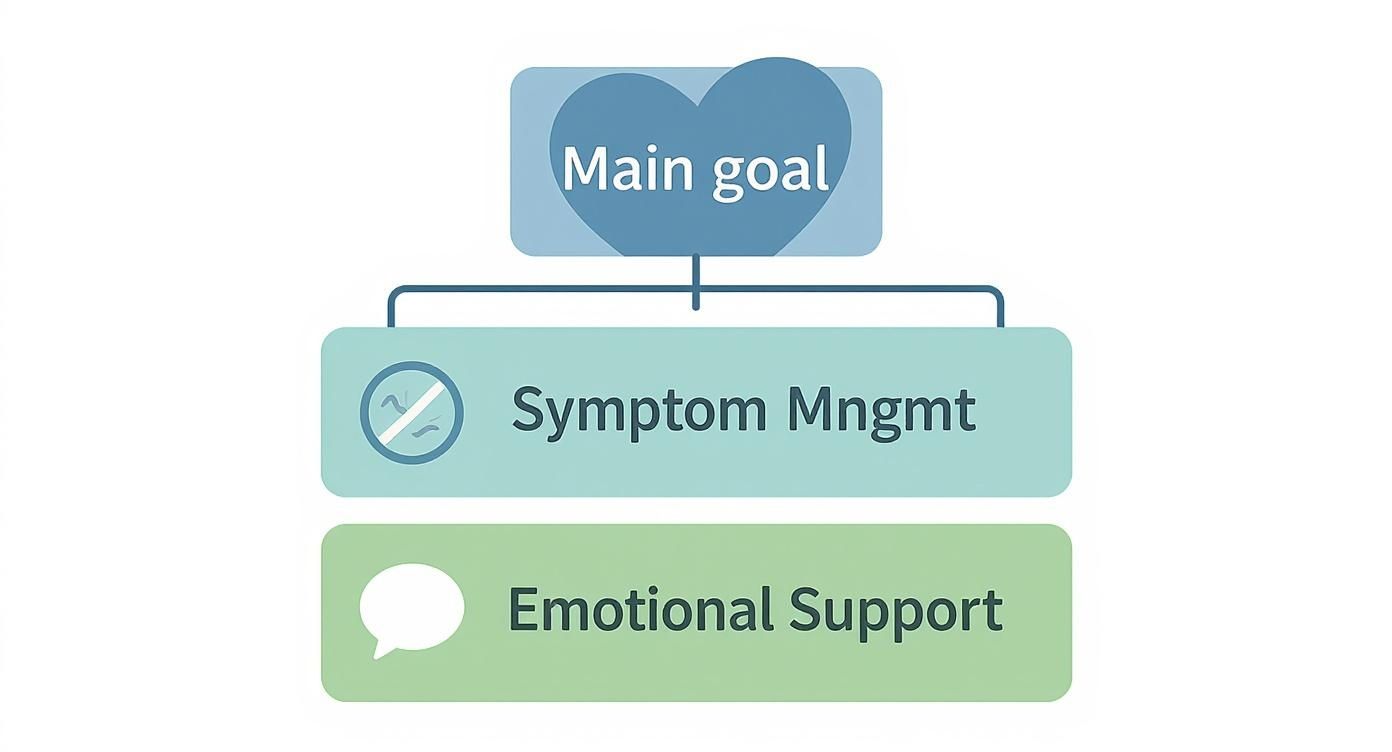
As you can see, every role is focused on improving your quality of life by tackling the physical and the emotional side of things together.
The Wider Support Network
Beyond the purely medical side, your team also includes specialists whose job is to help you stay independent and deal with the practical side of life. They focus on adapting your home and routines to make daily activities feel safer and less of a struggle.
The real strength of a multidisciplinary team is that they see the whole person, not just the illness. By weaving together medical skill with practical advice and emotional support, they create a safety net that covers all bases.
This kind of comprehensive support is more important than ever. With an ageing population, the demand for palliative care in the UK is growing fast. Projections show that by 2035, the number of people needing this type of care is expected to increase by over 60,000 each year, reaching a total of more than 660,000 individuals. You can read the full research about these projections to understand the future landscape of palliative care in the UK.
Specialists for Everyday Living
To complete this circle of care, several other professionals might get involved, all depending on what you need.
- Physiotherapists: If getting around becomes tricky, a physiotherapist can suggest gentle exercises and provide walking aids to help you maintain your strength and move about more safely.
- Occupational Therapists (OTs): An OT is an expert in adapting your home environment. They can assess your living space and arrange for helpful equipment—like a hospital-style bed, a raised toilet seat, or a hoist—to make your home safer and life more comfortable.
- Social Workers: Social workers provide invaluable guidance on both practical and emotional fronts. They can help you navigate the system to access financial support like benefits or grants and connect you with other local community services.
Comfort-Focused Symptom and Medication Management

When we talk about palliative care at home, one of the absolute cornerstones is keeping your loved one as comfortable and peaceful as possible. This is about more than just medicine; it's about preserving dignity and making sure their quality of life is the top priority. Managing symptoms like pain, breathlessness, or nausea isn't just a task to be ticked off a list—it's a proactive, compassionate commitment.
The palliative team works with you to stay one step ahead, anticipating and easing discomfort before it has a chance to take hold. This approach helps to create a calm, reassuring atmosphere in the home, which brings a huge amount of peace of mind to everyone involved.
Creating a Personalised Comfort Plan
There’s no such thing as a one-size-fits-all solution for managing symptoms. It all starts with a detailed conversation, usually with a specialist nurse or doctor, who will sit down and really listen to what your loved one is experiencing. That initial chat is the foundation for their personalised comfort plan.
Think of this plan not as a static document, but as something that lives and breathes, changing as your loved one's needs evolve. The goal is always to find that sweet spot—the right combination of medications and therapies that provides the most relief with the fewest side effects. The team makes sure everyone, especially family carers, understands the plan and feels confident in their role.
Getting pain relief right is so important, yet it remains a huge challenge. Shocking research shows that an estimated 7,329 people die in the UK each year with unrelieved pain in their final months. That’s about 20 people every single day. These numbers really underscore just how crucial proactive, specialist care is. You can learn more about these end-of-life care findings and why accessible palliative services are so vital.
How Medications Are Managed at Home
The team works hard to make managing medication at home as straightforward as possible. The community nursing team often takes the lead here, handling prescriptions and clearly explaining what to give, when, and how.
You’ll likely see a few common strategies in place:
- Regularly Scheduled Doses: To keep pain at bay, medications are often given on a strict schedule. This prevents the discomfort from "breaking through" in the first place.
- 'As Needed' Medication: For those unexpected flare-ups of pain or anxiety, the team will provide extra "breakthrough" medication with clear instructions on how to use it safely.
- Syringe Drivers: If swallowing pills becomes difficult, a syringe driver can be a game-changer. It's a small, portable pump that delivers a continuous, tiny dose of medication under the skin over 24 hours. This ensures constant relief without the need for repeated injections.
You can think of a syringe driver as a gentle, non-stop trickle of comfort. It automates the process, so you don't have to be a clock-watcher, and you can focus on just being present with your loved one.
This professional approach ensures that symptom control is steady and reliable, day and night. The goal is to make comfort a seamless part of daily life, supported by at-home care services that blend right in. If you're curious about how this works more broadly, take a look at our ultimate guide to care at home services.
Your Role as a Family Carer
As a family member, you are an essential part of this process. The palliative care team doesn't just take over; they empower you with the knowledge and support you need to help manage symptoms with confidence.
Here are a few practical things you can do:
- Keep a Simple Medication Log: Jot down what medication was given, when, and the dosage. It’s also great to note any 'as needed' doses. This log is incredibly helpful for the visiting nurses and doctors.
- Watch for Changes: You know your loved one better than anyone. If you notice they seem more restless, or if their symptoms seem different, trust your gut and let the team know.
- Know Who to Call: You will be given a 24/7 contact number for urgent advice. Please, don’t ever hesitate to use it. They are there to support you at any time, day or night.
This close partnership between the professional team and your family ensures that your loved one’s comfort is always the central focus. It’s this teamwork that makes all the difference when you're figuring out what to expect from palliative care at home.
Making Your Home a Safe and Comfortable Haven
When someone is receiving palliative care, one of the most important goals is to keep them comfortable and safe in the place they know best: their own home. This isn't about turning a beloved space into a hospital ward. Far from it. It's about making small, clever adjustments that help daily life run more smoothly and preserve a sense of independence and dignity.
Think of it as a gentle transformation, where healthcare professionals and your family work together. The aim is to blend practical support into the familiar warmth of home, making things simpler and safer for everyone involved.
An Expert Eye: The Occupational Therapist
Often, one of the first people to visit will be an Occupational Therapist, or OT for short. Their job is to look at everyday activities – like getting out of a chair, having a bath, or moving around the house – and find practical ways to make them easier and safer.
The OT will do a friendly walk-through of your home, looking at key areas like the bedroom and bathroom. They’re not there to judge; they’re a helpful expert looking for potential trip hazards or tricky spots. Based on what they see, they’ll suggest solutions and can arrange for any necessary equipment, which is usually loaned for free through the NHS or local council.
Special Equipment That Makes a Real Difference
The right bit of kit can be a game-changer, not just for the person receiving care, but for the family members helping them. It can drastically improve comfort and take the physical strain out of day-to-day tasks. An OT will only ever recommend what’s genuinely needed.
Here are a few common examples:
- A Hospital-Style Bed: Don't let the name put you off. These beds are brilliant because they're electric and fully adjustable. You can raise the height to make it easier to get in and out, or lift the head to make breathing and eating more comfortable.
- Pressure-Relieving Mattresses: If someone is spending a lot of time in bed, there’s a risk of developing painful pressure sores. These special mattresses or mattress toppers are designed to spread body weight more evenly to stop sores from forming.
- Hoists and Slings: When moving becomes very difficult, a hoist is an incredibly safe way to transfer someone from their bed to a comfortable chair. The care team will give you full training and make sure you feel confident using it.
- Commodes and Bathroom Aids: Simple things can make a huge difference. A commode next to the bed can be a lifesaver at night, while grab rails and a raised toilet seat can make the bathroom feel much more secure.
It's helpful to see this equipment not as a reminder of illness, but as a set of tools to enable comfort and freedom. Each piece is chosen simply to make life at home easier and more dignified.
With this kind of practical help, a familiar room can become a true sanctuary, allowing your loved one to rest in the place they feel happiest.
Hands-On Help with Personal Care
Beyond the equipment, you can also expect hands-on support from trained Healthcare Assistants (HCAs) or carers. These are the people who provide the day-to-day personal care that helps maintain comfort and dignity when it's needed most.
HCAs are skilled at helping with personal tasks in a way that is always respectful and sensitive. This could mean assisting with washing and bathing, getting dressed, or helping with mouth care. They’re also there to lend a steady arm, helping your loved one move safely around the house, maybe just from the bed to their favourite armchair by the window.
This support is invaluable. It ensures personal needs are met with professionalism, and it also takes a huge weight off the shoulders of family carers. When you're not having to worry about the physically demanding tasks, you can focus on what really matters: simply being there, holding a hand, and sharing precious time together.
Emotional and Spiritual Support for the Whole Family

When we talk about palliative care, it's easy to focus on the person who is unwell. But the reality is that a serious illness doesn't just happen to one person; it happens to a whole family. That’s why genuine palliative care is about caring for people, not just treating symptoms, and this philosophy extends to everyone involved.
It acknowledges the ripple effect of a diagnosis—the emotional, psychological, and even spiritual challenges that touch partners, children, and close friends. The care team creates a safe space to navigate these complex feelings, allowing everyone to talk openly about their fears, hopes, and anxieties without fear of judgement. This emotional support is a cornerstone of what to expect from palliative care at home.
Support for Navigating Complex Feelings
Living alongside a serious illness can feel like being on an emotional rollercoaster. The palliative team gets this. They have professionals on hand whose entire job is to help you and your family navigate these turbulent waters.
- Counsellors and Therapists: You'll have access to professionals who can offer one-on-one sessions or family meetings. This is your dedicated time to unpack difficult emotions, ask tough questions, and learn practical coping strategies.
- A Listening Ear: Sometimes, what you need most is just someone to talk to who understands. The specialist nurses and social workers on the team are skilled listeners, offering a compassionate ear whenever you need it.
For families facing the profound loss that can accompany palliative care, looking into specialised grief counselling services can be an invaluable source of support, both during the illness and after.
Spiritual Care for All Beliefs
Spiritual wellbeing is a deeply personal part of who we are, and it looks different for everyone. The palliative team honours this by providing support that respects every individual's faith, values, and beliefs—whether they are religious or not.
Spiritual care practitioners or chaplains are available to talk about the big questions of meaning, hope, and legacy. Their role isn't to push any particular belief system. It's simply to offer comfort and help people find a sense of peace in whatever way is most meaningful to them.
Palliative care recognises that emotional and spiritual pain can be just as distressing as physical symptoms. By addressing these needs with the same level of importance, it helps to heal the whole person, not just the body.
This inclusive approach helps ensure that every member of the family feels heard, understood, and supported on their own terms.
A Spotlight on Family Carers
Family carers are often the unsung heroes of the journey, carrying an immense emotional and physical load. Palliative care places a huge emphasis on supporting them, recognising that their wellbeing is absolutely essential for the entire family's stability.
This support comes in many forms, all designed to prevent burnout and offer some much-needed relief.
- Respite Care: This is a lifeline. A qualified carer can step in for a few hours or even longer, giving you a vital break to rest, recharge, or just handle your own life admin. To understand its importance better, you can read about how respite care supports families and prevents burnout in our dedicated guide.
- Carer Support Groups: It can be incredibly helpful to connect with others who truly get what you're going through. The team can point you towards local or online groups where you can share experiences and feel less alone.
- Bereavement Support: The support doesn’t stop when a loved one passes away. The palliative team continues to offer compassionate bereavement support to the family, helping them navigate the difficult journey of grief.
Planning Ahead for Peace of Mind
It’s never easy to talk about the future, especially when you’re dealing with a serious illness. But having those conversations now is one of the most powerful and loving things you can do. It ensures a person's wishes are heard and respected, giving everyone a clear path forward and a shared sense of calm. This whole process is often called Advance Care Planning (ACP).
Think of it like creating a personal roadmap for future care. It’s a way of making sure that if a time comes when someone can't speak for themselves, their voice isn't lost. It lifts the heavy burden of guesswork from family members during what is already an incredibly stressful time.
Key Legal and Medical Decisions
In the UK, two of the most important tools for planning ahead are the Lasting Power of Attorney and the Advance Decision to Refuse Treatment. They do different things, but both are vital for making sure a person’s wishes are honoured.
Here’s a simple breakdown of what they are:
- Lasting Power of Attorney (LPA) for Health and Welfare: This is a legal document where you choose a trusted person (or people) to make decisions about your care if you ever lose the mental capacity to do so. This can cover everything from daily routines, like washing and dressing, to major medical choices.
- Advance Decision to Refuse Treatment (ADRT): You might have heard this called a "living will." It's a legally binding document that allows someone to refuse specific medical treatments in advance. It only ever comes into play if they are unable to communicate that decision when it needs to be made.
These documents aren't about giving up; they're about taking control. By planning ahead, you can find out more about what families need to know about end of life services and feel much more prepared for the road ahead.
"Advance Care Planning is a gift you give to your loved ones. It replaces uncertainty with clarity and anxiety with peace, ensuring that care decisions are guided by personal values, not by crisis."
Navigating Practical and Financial Matters
Looking ahead isn't just about medical wishes; it also involves sorting out the practical side of things. Getting on top of finances and knowing what support is available can make a world of difference to daily life and reduce a huge amount of stress for the whole family.
The social worker on the palliative care team is an absolute lifeline here. They are the experts in navigating the system and can give you clear guidance on what financial support you might be entitled to. For independent advice, organisations like Citizens Advice are also invaluable.
They can help with things like applying for Attendance Allowance—a non-means-tested benefit for people over State Pension age who need help with personal care because of their illness or a disability. They can also point you towards potential grants for home adaptations, which can help cover the cost of making the home safer and more comfortable.
By tackling these practical bits and pieces early on, you free up so much more time and emotional energy to focus on what truly matters: being together.
Your Questions Answered: Making Sense of Home Palliative Care
It's completely normal to have a lot of questions when you first start looking into palliative care. It can feel like a new world with its own language. This section is here to give you clear, simple answers to the things families most often ask, helping you feel more prepared for the road ahead.
Is Palliative Care Just Another Term for End-of-Life Care?
This is probably the most common point of confusion, and it’s an important one to clear up. The short answer is no, they aren’t quite the same thing.
Palliative care is all about providing comfort, managing symptoms, and improving quality of life at any stage of a serious illness. It can start the very day someone is diagnosed.
End-of-life care is one specific part of that journey. It focuses on supporting someone who is thought to be in their final months or year of life.
You could think of palliative care as a large, supportive umbrella. It covers the whole person and their family throughout the illness. End-of-life care is a focused type of support that sits underneath that umbrella, providing specialised care during the final chapter.
How Do We Get Palliative Care Started at Home in the UK?
Getting the right support in place is usually more straightforward than people think. The best person to talk to first is your GP. They know the medical history and can refer you directly to the local community palliative care team or district nurses who can get things moving.
Referrals can also come from other healthcare professionals, including:
- A hospital doctor or consultant you're under.
- A specialist nurse, like a Macmillan or Marie Curie nurse.
- Sometimes, you can even contact local hospices or palliative charities directly.
What Does Palliative Care at Home Cost? Who Pays?
In the UK, you’ll find that the vast majority of palliative care is provided free of charge through the NHS. This covers the core medical support from your GP, district nurses, and specialist teams. Any essential medical equipment needed to make life easier and safer at home, like a hospital bed or a hoist, is also loaned for free.
Some practical help with personal care (often called social care) might be means-tested by your local council. However, many brilliant charities often step in to provide services at no cost. Your GP, social worker, or a palliative care nurse can help you understand exactly what applies in your area.
Can We Still Use the Hospital if We Need To?
Absolutely. Deciding on palliative care at home doesn't lock any doors. It isn't a one-way street, and your loved one's comfort and needs will always be the top priority.
A good care plan will always have clear instructions for what to do if a symptom becomes too difficult to manage at home, or if the person simply feels they would be more comfortable in hospital for a short time. The aim is always to provide the best care, in the place that feels right for the individual at that moment.
At Cream Home Care, we know that every situation is different and every family has its own story. If you have more questions or want to chat about how our compassionate home care could support your loved one in Stoke-on-Trent or Newcastle-under-Lyme, please get in touch. You can learn more about our personalised care services on our website.