Respite care is, quite simply, a lifeline. It's a planned break for you, the family carer, while your loved one with dementia is looked after by a professional. This isn't about taking a holiday; it's about giving you a crucial chance to rest, see to your own needs, and recharge your batteries, confident that the person you care for is in safe hands.
Seeing it as an essential part of a healthy care plan, rather than a luxury, is the first and most important step. It’s what keeps everything sustainable, protecting your wellbeing and, in turn, the wellbeing of the person you love.
Why Taking a Break is Non-Negotiable
Looking after someone with dementia is one of the most demanding roles anyone can take on. It’s a job that requires endless physical, mental, and emotional energy. You’re not just helping with daily tasks; you’re navigating the complexities of memory loss, personality shifts, and the need for constant supervision. It's a marathon, not a sprint, and without a break, burnout is almost inevitable.
Think of it like this: you can't pour from an empty cup. Every day, you pour your energy, patience, and love into caring for someone else. Respite care for dementia is what refills your cup. It gives you that vital time to step back, preventing the exhaustion that leads to stress, poor health, and frustration. Acknowledging you need that time is a sign of incredible strength.
The numbers really bring this home. According to Age UK, a staggering one-third of unpaid carers for people with dementia spend more than 100 hours a week on their caring duties. That's more than two full-time jobs. It's no wonder that 65% of all UK carers report feeling overwhelmed from the sheer lack of a break. The full details are in Age UK’s parliamentary briefing on dementia care, and they paint a stark picture.
The True Cost of Caring Without a Break
When you're always on duty, the cumulative effect of that stress can be immense. So many carers tell us they feel completely isolated, as their world shrinks to fit the needs of the person they're supporting. Friendships can drift, hobbies get forgotten, and your own doctor's appointments are pushed to the bottom of the list.
"Taking a break from caring is not selfish. It is an act of preservation. It allows you to return to your role with renewed energy, patience, and a clearer mind, which is the greatest gift you can give to the person you care for."
This constant cycle of giving without a chance to replenish simply isn't sustainable in the long run. We explore this in more detail in our article on why respite care is crucial for family caregiver wellbeing. It also helps to understand the general respite care principles that guide good practice. Ultimately, arranging support helps you hold onto your own identity and health, which is vital if you're going to be there for the long haul.
Why Taking a Break is Non-Negotiable for Dementia Carers
Taking a step back can feel difficult, but the benefits are felt by everyone involved. It’s not just about getting a rest; it’s about improving the entire dynamic of care. Here’s a quick look at why regular breaks are so important.
| Benefit for the Carer | Impact on Caregiving | Benefit for the Person With Dementia |
|---|---|---|
| Reduces Stress & Burnout | Renews patience and emotional resilience. | Receives care from a more relaxed, positive carer. |
| Improves Physical Health | Provides time for rest, exercise, and medical appointments. | The caregiver is physically healthier and more capable. |
| Prevents Social Isolation | Allows for reconnecting with friends, family, and hobbies. | Carer brings fresh energy and conversation back home. |
| Offers a Fresh Perspective | A short distance can help solve problems more effectively. | May enjoy new social interactions and activities. |
As you can see, the positive effects ripple outwards. A short break allows you to return to your role with a clearer head and a fuller heart, which is the best thing for both of you.
Understanding The Different Types of Dementia Respite Care
Trying to figure out the right kind of respite care can feel like you're staring at a map with a dozen different routes. It’s easy to get a bit lost, but the key is realising that each option is simply a different tool for a different job. What works for a few hours of errands won't be the right fit for a week-long holiday.
Let's break down the main forms of support. Understanding what each one offers will help you match the right solution to your family's unique situation, whether you need a quick breather or a more substantial break.
This simple flowchart says it all – whether you’re at your limit or just being proactive, taking a break is always the right move.
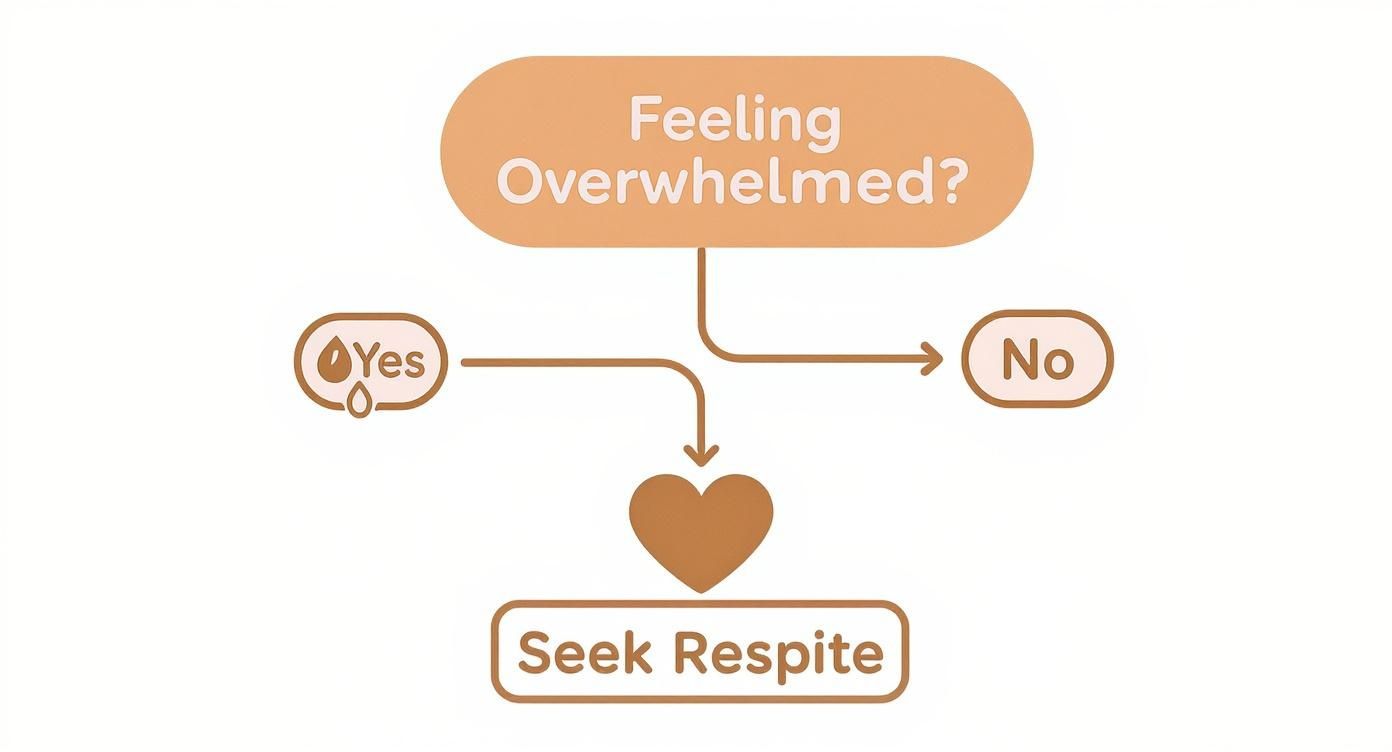
The message is clear: respite isn’t just for crisis moments. It’s a vital part of a sustainable care plan that protects your own health and wellbeing.
Short-Term Respite At Home
For many, this is the most comfortable and flexible place to start. A professional carer comes to your home to look after your loved one for a set period – maybe a few hours, maybe a full day. This gives you the freedom to pop to the shops, see a doctor, or just sit in a café with a book and a quiet cup of tea.
The biggest benefit here is continuity. The person with dementia stays in their own familiar, comfortable space, surrounded by their own things. This helps minimise confusion and anxiety because their routine isn't really disrupted. It’s a fantastic first step for families just dipping their toes into the world of respite care.
Dementia Day Care Centres
Day centres offer a change of scenery and, crucially, a chance for your loved one to socialise in a safe, specially designed environment. They provide expert dementia care during the day, usually for a set block of hours, which gives you a reliable and significant window to work, rest, or handle other responsibilities.
These professionally run centres are much more than just a place to sit. They offer a whole programme of activities designed to engage and stimulate, from music therapy and art classes to gentle exercises.
"Social engagement and structured activities are proven to enhance the quality of life for people with dementia. Day care provides a vital opportunity for stimulation and connection, which can lead to improved mood and slower cognitive decline."
It’s a win-win: you get a proper break, and your loved one gets a fun, stimulating day out that can genuinely lift their spirits.
Residential Respite and Short Stays
If you need a longer break, like for a family holiday or to recover from your own illness, a short-term stay in a care home is often the ideal solution. Your loved one temporarily moves into a residential home that has the right facilities and staff to provide specialist dementia care. These stays can last anywhere from a few days to several weeks.
This option offers total peace of mind with 24-hour support from a team of trained professionals. You can properly switch off, knowing that every aspect of your loved one's personal care, medication, and safety is being managed around the clock.
Arranging a short stay can also be a valuable "trial run." It allows both of you to get comfortable with the idea of a care home, which can make a future transition to permanent care feel much less frightening if that time ever comes.
Emergency Respite Care
Life happens. Sometimes, a sudden illness, family crisis, or another unexpected event means you simply can't be there to provide care. Emergency respite care is the rapid-response service designed to step in when you need help at a moment's notice.
This is a lifeline that ensures the person with dementia is safe and cared for when their main carer is suddenly unavailable. Local authorities and specialist providers like us at Cream Home Care have systems to arrange this support quickly, either by sending a carer to the home or finding a place in a residential setting.
Just knowing this safety net exists can do wonders for reducing the background worry that so many carers live with every single day.
Comparing Your Respite Care Options
With several paths to choose from, this table can help you quickly compare the main types of respite and see which one aligns best with your immediate needs.
| Respite Type | Typical Duration | Location | Best For… | Considerations |
|---|---|---|---|---|
| Short-Term Respite at Home | A few hours to a full day | In the person's own home | Maintaining routine; short breaks for errands or appointments. | Best for those with mild to moderate needs who benefit from familiarity. |
| Dementia Day Care Centre | A set block of hours during the day | A specialist centre | Social interaction, structured activities, and a reliable daily break for the carer. | Transport to and from the centre needs to be arranged. |
| Residential Respite/Short Stays | A few days to several weeks | A residential care home | Longer breaks for the carer (e.g., holidays) or when 24/7 support is needed. | Can be unsettling for some; requires more planning in advance. |
| Emergency Respite Care | As long as needed | At home or in a care home | Unexpected carer illness or family emergencies that require immediate cover. | Availability can vary; it's a reactive solution, not a planned break. |
Ultimately, the "best" option is the one that gives you the break you need while ensuring your loved one feels safe, secure, and well-cared for.
Finding Your Way Through Respite Care Funding
Let's be honest: one of the biggest things that can stop a carer from getting a much-needed break is worrying about the cost. The idea of paying for respite care can feel overwhelming, but please know you don't have to figure it all out on your own. There are several different pots of funding and support available here in the UK, and the first step is simply knowing where to look.
Think of it like planning a journey. You know where you need to get to – a proper break – but there are a few different routes you can take. We'll look at the map together, exploring everything from council support to national benefits, so you can see which path makes the most sense for you.
The financial reality of dementia care is staggering. In 2024, the total cost in the UK is estimated to hit £42.5 billion. A massive 77% of that is covered not by the state, but by the unpaid care provided by families just like yours. These aren't just numbers; they represent the immense personal and financial weight on your shoulders. It's exactly why accessing funded respite is so critical – it helps sustain the incredible work you do.
Your First Port of Call: The Local Authority
The best place to start is always your local council. They have a duty to assess your situation, and this is done through two key processes. Crucially, these assessments are completely free and are based on what you need, not what you earn.
-
A Carer's Assessment: This one is all about you. It's a chance to talk about how your caring role affects every part of your life – your health, your job, your relationships, your ability to just be you. The whole point is to identify your needs and see what support, including funding for respite, could make things more manageable.
-
A Needs Assessment: This assessment is for the person you're looking after. A social worker will have a conversation to understand their care needs and work out if they are eligible for council support. If they are, a care and support plan is drawn up, and that plan can absolutely include arranging respite care to give you a break.
You have a legal right to ask for a Carer's Assessment, no matter how much you earn or how many hours you care for someone. It’s an essential first step to getting the support you’re entitled to.
When the NHS Can Help: Continuing Healthcare
In some situations, the NHS might cover the entire cost of someone's care, and that includes respite. This is called NHS Continuing Healthcare (CHC). It’s not for everyone; it’s specifically for people whose needs are primarily health-related. This means their care is complex, intense, or unpredictable because of their health condition, rather than what’s known as a 'social care' need.
NHS Continuing Healthcare is care that’s arranged and paid for entirely by the NHS. It's for people with significant ongoing health needs who are not in hospital. Eligibility isn't based on a particular diagnosis like dementia, but on the overall picture of a person's day-to-day needs.
Getting CHC involves a detailed assessment. If you feel the person you care for might be eligible because their dementia has led to very complex health needs, your first step should be to ask their GP or social worker to arrange an initial screening.
Checking Your Entitlement to National Benefits
Beyond the council, there are also nationwide benefits that can provide a regular income, which you can then put towards paying for respite services. The two big ones for carers are Attendance Allowance and Carer's Allowance.
-
Attendance Allowance: This is a benefit for people who are over State Pension age and need help with their personal care or need someone to supervise them for their own safety. It isn’t means-tested, so your savings don't matter, it's tax-free, and it can even open the door to other benefits.
-
Carer's Allowance: This is the main state benefit for carers. You could be eligible if you spend at least 35 hours a week caring for someone who gets certain other benefits, like Attendance Allowance.
Getting these allowances can make a real difference, giving you the financial freedom to choose the kind of respite that truly works for you and your family. It's always worth taking ten minutes to check your eligibility on the official government website.
Of course, some families choose to fund care themselves. Even if you don't qualify for public funding, understanding the potential costs and financial landscape is vital. A tool that can help you get a sense of eligibility for various programmes is a Medicaid Calculator. While the name points to the American system, the underlying logic of assessing financial need can offer a useful perspective.
How to Find and Arrange Local Respite Care
Knowing you need a break is one thing; figuring out how to actually find and organise the right local support is another. It can feel like a huge task, especially when you’re already spread thin. But let’s break it down into simple, manageable steps to help you find trusted respite care here in Stoke-on-Trent and Newcastle-under-Lyme.
The process really begins with understanding your rights and knowing where to look for official, regulated providers. With a clear plan, you can move forward with confidence, knowing you’re choosing a service that’s a perfect fit for both you and your loved one.

Start with a Carer’s Assessment
Your local council should be your first port of call. As we touched on earlier, you have a legal right to a Carer’s Assessment. Think of it less like a test and more like a supportive conversation that’s focused entirely on your needs. It’s an opportunity to discuss how your caring role is affecting you and what could make life easier.
Getting one is straightforward. Just contact the adult social care department at either Stoke-on-Trent City Council or Staffordshire County Council (which covers Newcastle-under-Lyme). Explain that you’re an unpaid carer and you’d like to request an assessment. This simple step can be the key to unlocking council-funded support, including respite services.
How to Research Local Providers
With a clearer idea of your needs, it’s time to see who is out there. Your most important tool for this is the Care Quality Commission (CQC). The CQC is the independent regulator for all health and social care in England, making their website an absolutely essential resource.
"The CQC inspects and rates every care provider, from home care agencies like us to residential homes. Their ratings—Outstanding, Good, Requires Improvement, or Inadequate—give you a completely impartial and detailed picture of their safety, quality, and effectiveness."
You can use the CQC directory to search for dementia care services in Stoke-on-Trent and Newcastle-under-Lyme and, crucially, read their latest inspection reports. This is a non-negotiable step for your peace of mind. You could also check local directories like The Hub Staffordshire for lists of community services and support groups in the area.
The Key Questions to Ask Any Potential Service
Finding a provider with a 'Good' or 'Outstanding' CQC rating is the first hurdle. The next is making sure they are the right personal fit. When you call a potential service, don’t ever feel shy about asking detailed questions. A good, confident provider will welcome them.
Here’s a checklist to help guide that conversation:
-
About Their Staff & Expertise:
- What specific dementia training have your carers completed?
- How do you match carers with clients? Do you consider personalities and specific needs?
- Will we see the same person consistently, or will it be different staff each time?
-
About Activities & Engagement:
- What kind of activities do you offer to keep someone with dementia stimulated and happy?
- How do you tailor those activities to my loved one’s own history and interests?
- For a day centre or residential stay, could you walk me through a typical daily schedule?
-
About Communication:
- How will you keep me in the loop about how my loved one is doing?
- Is there one person I can always contact if I have a question?
- How do you manage medical emergencies or sudden changes in health?
-
About the Practicalities:
- Could you provide a clear breakdown of your fees? Are there any hidden costs?
- What is your current availability, and does it align with what we need?
- Would it be possible to speak to other families you’ve supported?
Having these questions ready helps you properly compare services and make a choice you feel genuinely good about. It ensures the respite you arrange not only gives you a well-earned break but also provides a safe, positive, and enriching experience for the person you care for.
Preparing for a Successful Respite Break
Getting a break sorted is a huge step, but the real secret to making it count lies in the preparation. A bit of planning can make all the difference, transforming what could be an anxious time into a smooth and positive experience for both you and the person you care for. It's about getting things organised practically, but also preparing yourselves emotionally.
Think of it like packing for two different trips. One is your own emotional journey towards accepting and enjoying the break. The other is the practical side—making sure your loved one has absolutely everything they need. By tackling both, you build a foundation of confidence that lets you properly switch off and recharge.

Introducing the Idea of a Break
The way you talk about respite can change everything. For someone living with dementia, sudden changes can feel unsettling. It's often much better to introduce the idea slowly and gently, using words that are positive and familiar.
Instead of saying, "I'm going away for a bit," you could try something like, "A really lovely person is coming to spend some time with you while I pop out." Or, "You're going to have a little holiday of your own at a friendly place." If you can, arranging a quick, informal visit with the new carer beforehand can do wonders for building trust and a sense of safety.
Creating a Comprehensive Care Passport
One of the most valuable things you can do is create a ‘care passport’. This is simply a document that pulls together all the vital information about your loved one. It’s your key to ensuring their care continues seamlessly, and it offers incredible peace of mind. You’re essentially handing over a snapshot of their world.
Your care passport should cover things like:
- Daily Routine: What time do they usually wake up and go to bed? When are their meals? Is there a favourite afternoon show they never miss?
- Personal Preferences: How do they take their tea or coffee? What music puts a smile on their face? Are there any topics of conversation that make them happy or anxious?
- Medical Information: A clear list of all medications, when to take them, and dosages. Include the GP’s contact details and a note of any allergies.
- Communication Style: How do they let you know what they need? Are there certain phrases, gestures, or non-verbal cues to watch out for?
This personal guide gives the respite carer the tools they need to provide support that feels familiar and comforting, which can massively reduce any potential distress.
A well-prepared care plan is more than just a list of tasks; it's a bridge of understanding between the primary carer and the respite provider, ensuring the person with dementia receives care that respects their individuality and history.
Managing Guilt and Embracing the Benefits
It’s completely normal to feel a pang of guilt when you plan a break. You've been their constant, after all. But it’s so important to try and reframe this feeling. The statistics on carer wellbeing show just how urgent this is. Research from Carers UK found that over a third of carers (35%) reported their mental health was bad or very bad.
Crucially, 49% of those carers said they desperately needed more breaks, and 54% believed regular breaks would make a significant difference to their wellbeing. You can see the full picture in the full Carers UK report.
This isn't about luxury; successful respite for carers dementia is a critical tool for protecting your own health. You can find out more in our guide on how respite care supports families and prevents burnout. By taking time for yourself, you aren’t abandoning your role—you’re sustaining it. You’re making sure you can come back refreshed, with more patience, energy, and positivity to give.
Local Respite Services in Stoke-on-Trent and Newcastle-under-Lyme
When you’re looking for support, knowing that it’s right on your doorstep can turn the idea of respite care from a vague hope into a tangible plan. For families across Stoke-on-Trent and Newcastle-under-Lyme, arranging professional respite for carers dementia means finding a team that truly gets our local community and is there when you need them most.
That's where we come in. Here at Cream Home Care, we're not just a service provider; we're your neighbours. Our team lives and works in the area, offering specialist dementia care that gives you genuine peace of mind. We focus on flexible support that works around you, whether that’s for a few hours each week or for a longer, much-needed break.
Your Local Dementia Care Experts
We believe the best care happens in a familiar, comfortable setting, which is why we specialise in providing respite right in your own home. This approach helps keep things consistent for your loved one, making your time off truly restful.
Our support includes:
- In-Home Sitting Services: One of our friendly, dementia-trained carers can pop in for a few hours so you can get to appointments, do the weekly shop, or just enjoy a quiet coffee.
- Short Breaks and Live-in Care: If you’re planning a holiday or need time to recover yourself, we can arrange for a carer to provide continuous support, keeping daily routines on track.
As a dedicated local provider, we’re proud of the real relationships we build with the families we support. We know the local area inside and out and are committed to delivering compassionate, reliable care you can count on.
Choosing a local service means you get a faster response and a team that genuinely understands our community. To find out more, have a look at our guide to reliable respite care in Newcastle-under-Lyme.
Ready to see how we can help? Get in touch for a friendly, no-obligation chat about what your family needs.
Your Questions About Respite Care Answered
Even when you know you desperately need a break, taking that first step can feel daunting. It’s completely normal to have a hundred questions and worries swirling around your head. Let’s walk through some of the most common concerns we hear from carers just starting to look into respite care.
How Can I Stop Feeling Guilty About Needing a Break?
This is, without a doubt, the question we hear most often. The guilt can feel immense, but it’s so important to see this differently. Taking a break isn't a selfish act; it's a necessary one. It’s what allows you to keep going, to keep providing that loving care for the long haul. Think of it like putting on your own oxygen mask first—you can't help someone else if you're running on empty.
If the idea feels overwhelming, start small. A two-hour break to grab a coffee or walk in the park can make a world of difference. It gives you a chance to see how it feels for both of you. You can always check in with a quick phone call if you need that reassurance, while still getting the space you need to breathe and reset.
What if the Person I Care for Refuses Help?
It’s very common for someone with dementia to resist the idea of a new person or a change in their routine. This often comes from a place of confusion or a deep-seated fear of the unknown. The best approach is a gentle and gradual one.
Try to avoid clinical-sounding words like ‘carer’ or ‘respite’. Instead, you could introduce the support worker as a 'new friend' or a 'companion' who is just popping by for a cuppa and a chat.
Giving your loved one a sense of control, even in small ways, can also work wonders. If it’s appropriate, you could let them meet a couple of potential support workers or look at photos of a day centre together. A short, informal ‘taster’ visit, with no pressure to commit, can be a great way to build familiarity and trust over time.
"By introducing respite slowly and framing it positively, what once felt like an intrusion can become a welcome and enjoyable part of the week for everyone."
How Much Should I Expect to Pay for Respite Care in the UK?
Costs really do depend on the type of care you choose and where you live, but here are some ballpark figures to give you a clearer picture.
- In-Home Respite: This is usually paid for by the hour. You can expect rates to be somewhere in the region of £20 to £30 per hour, depending on the provider and the level of support required.
- Residential Respite Stays: For a short stay in a care home, the cost is often worked out daily or weekly. A typical week could cost anywhere between £800 and £1,500.
It’s crucial to remember that you don't have to face these costs alone. Make sure you explore all the funding options available. The person you care for might be entitled to Attendance Allowance, and you might be able to claim Carer's Allowance. Neither of these benefits are based on your savings, and they can make a real difference in making regular breaks affordable.
At Cream Home Care, we've supported countless families through these very same questions. We’re here to provide professional, compassionate respite support across Stoke-on-Trent and Newcastle-under-Lyme. Let us help you find an arrangement that gives you complete peace of mind. To start with a friendly, no-obligation chat, just get in touch with our team at https://creamhomecare.co.uk.