At its core, home care is all about providing personalised support that allows you or your loved one to carry on living safely and comfortably in the one place that feels most like home. It’s a genuine partnership, built to protect independence, dignity, and those familiar daily routines, all with the help of a professional carer.
Understanding Home Care and How It Works
So, what does home care actually look like day-to-day? Think of it as a flexible service that brings a professional helping hand right to the front door. Instead of the upheaval of moving into a residential home, you get one-on-one support in familiar surroundings. This could be anything from a friendly visit for a few hours a week to having someone there around the clock.
The entire approach is built around the person. The main goal is to help people keep living life on their own terms, surrounded by their own things, their memories, and their community. You won't find any cookie-cutter solutions here; every care plan is carefully put together to fit specific needs, personal tastes, and daily schedules.
The Philosophy Behind Domiciliary Care
Domiciliary care—it’s just another name for home care—is based on a simple but deeply human idea: there’s no place like home for feeling safe and secure. By helping with everyday tasks, it protects that sense of normality and control that is so important for our overall wellbeing.
Home care isn’t about changing someone’s life; it's about supporting the life they already have. It's a team effort to make sure that the challenges that come with age, illness, or recovery don't force a choice between safety and independence.
The level of support can be incredibly varied, and it’s designed to adapt as things change. A key part of making it all work is ensuring everyone involved is on the same page. To understand this better, it's worth reading up on the principles of effective care coordination.
How a Care Plan Is Created
It all starts with a proper chat. A care manager will visit to sit down with the individual and their family to talk through everything. This isn't just a checklist; it’s a conversation about health conditions, mobility issues, right down to favourite hobbies and what time they like to have dinner. This discussion is what lays the groundwork for a truly personal care plan.
This plan will then clearly set out the specific support needed. For example, it might include:
- Personal Care: A bit of help with bathing, getting dressed, or grooming.
- Household Help: Support with light cleaning, making nutritious meals, or doing the weekly shop.
- Medication Reminders: A gentle prompt to make sure medication is taken at the right time.
- Companionship: Simply being there for a chat, social company, and emotional support.
Having this personalised plan in place ensures the care provided is always right for the person, respectful of their wishes, and completely focused on making their life better.
Exploring the Different Types of Home Care Services
Home care isn't a one-size-fits-all solution. Instead, think of it as a spectrum of support, with different options designed to meet a wide range of needs. Getting to grips with these distinctions is the first real step in finding the right kind of help for you or your loved one.
It’s clear that more and more people are choosing to receive care in the comfort of their own homes. The numbers speak for themselves: in England alone, the count of CQC-registered homecare services has jumped by 11% in the last year. When you add in Scotland, Wales, and Northern Ireland, that figure climbs to around 16,001 providers across the UK. This isn't just a trend; it's a real shift towards valuing the flexibility and personal touch that home care offers over a residential setting.
Domiciliary Care: Everyday Practical Support
When most people think of home care, they’re often picturing domiciliary care, sometimes known as home help. This is all about providing practical, day-to-day assistance that helps someone manage their household and daily routines safely and with confidence.
It's the perfect fit for someone who is still quite independent but might be finding certain tasks a bit of a struggle due to age, limited mobility, or a mild health concern. A carer might pop in daily or just a few times a week to help out with things like:
- Meal Preparation: Making sure there are nutritious, tasty meals ready to go.
- Light Housekeeping: Lending a hand with laundry, tidying up, or doing the washing up.
- Shopping and Errands: Nipping out to get groceries, collect prescriptions, or run other essential errands.
- Medication Reminders: Giving a gentle nudge to make sure medication is taken on time.
At its heart, this kind of care is about protecting independence by taking the weight of those newly challenging tasks off someone's shoulders. If you're wondering how this differs from more hands-on assistance, you can learn more from our detailed comparison of personal care vs home help.
No matter the task, any good home care service is built on the core values of independence, comfort, and dignity. These principles are the bedrock of quality care.
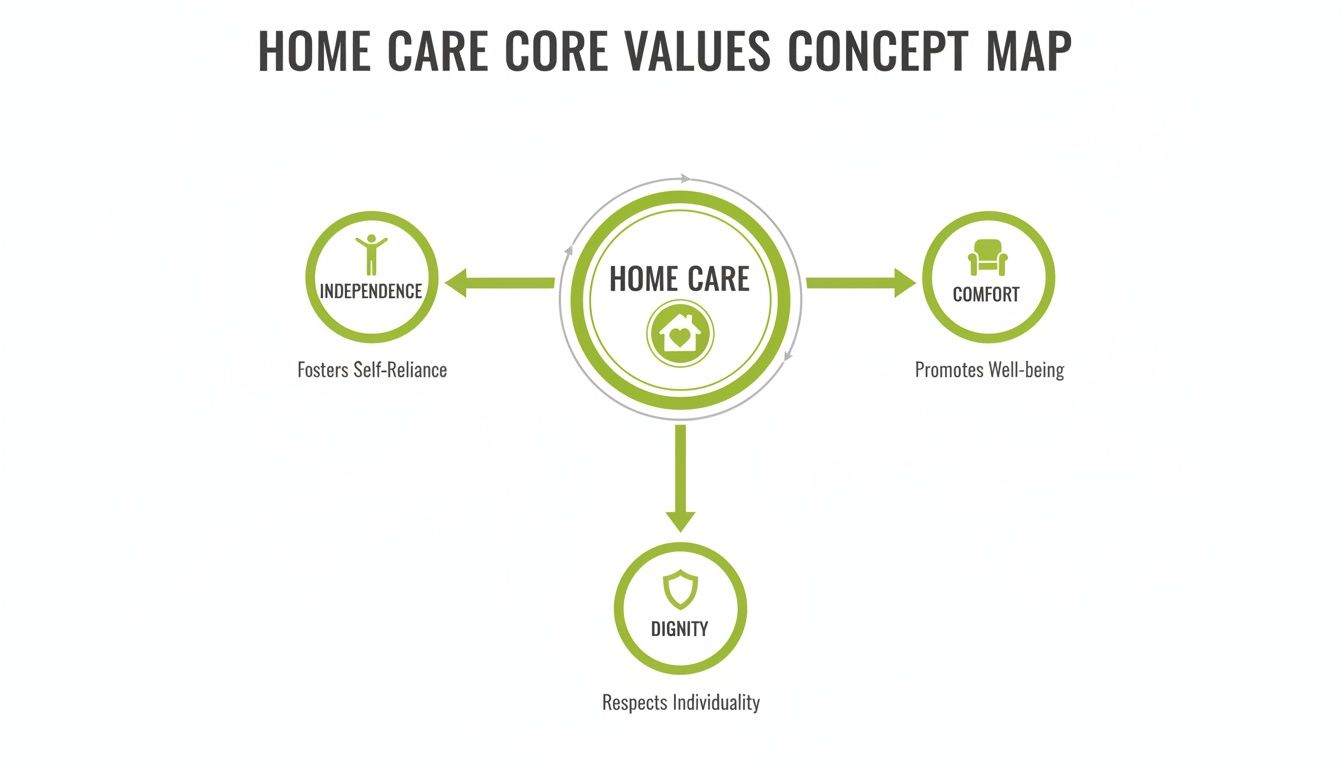
As you can see, every element of home care, from the practical to the emotional, is designed to empower a person in the place they know and love best.
A Quick Comparison of Home Care Services
To help you see how these services differ, this table gives a simple breakdown of the main types of care available. It's a quick way to see which one might be the best fit.
| Service Type | Primary Goal | Ideal For | Common Activities |
|---|---|---|---|
| Domiciliary Care / Home Help | To provide practical support with daily tasks and household chores. | Individuals who are mostly independent but need help with specific activities. | Cooking, light cleaning, shopping, running errands, medication reminders. |
| Companionship Care | To combat loneliness and provide social and emotional support. | People who feel isolated or would benefit from regular social interaction. | Sharing conversations, playing games, going for walks, accompanying to clubs. |
| Specialised Care | To manage complex health conditions with expert knowledge and skills. | Those with conditions like dementia, Parkinson's, or recovering from surgery. | Condition-specific personal care, mobility support, managing symptoms. |
| Respite Care | To give temporary relief to primary family caregivers. | Family members who need a break to rest and avoid burnout. | Any of the above services, provided on a short-term basis. |
This table is just a starting point, of course. The best care plans often blend elements from different services to create a truly personalised package of support.
Companionship Care: Nurturing Emotional Wellbeing
Practical help is one thing, but emotional and social wellbeing are just as vital. Loneliness can take a serious toll on a person's health, and that’s precisely where companionship care comes in.
This service is all about providing friendly social interaction. It’s a wonderful option for anyone who feels isolated or would simply enjoy having a friendly face to chat with and share their day. A companionship carer does more than just help; they become a trusted friend who can brighten the day, share a hobby, and be a crucial link to the wider world.
Common activities might be as simple as sharing a cup of tea, playing a board game, going for a gentle walk, or heading out to a social club together. The focus is purely on keeping spirits high and minds active.
Specialised and Respite Care
Beyond day-to-day support, home care extends to cover more complex situations.
Specialised care is designed for individuals living with conditions like dementia or Parkinson's, or for those who need support after a hospital stay. Carers in this field have specific training to manage these needs with expertise and real empathy.
Respite care, on the other hand, is an absolute lifeline for family caregivers. It provides temporary, professional cover so that a primary carer can take a much-needed break to rest and recharge. Knowing their loved one is in safe hands allows them to step away without worry, which is essential for preventing burnout and keeping the whole family unit healthy.
The Real-World Benefits of Receiving Care at Home
Opting for support at home offers some truly profound advantages that go well beyond simple convenience. Perhaps the most significant is allowing someone to stay in the familiar comfort of their own home—a space filled with a lifetime of memories, cherished belongings, and daily routines. This feeling of continuity is so important for emotional and mental wellbeing.
Instead of having to adjust to the rigid timetables and unfamiliar surroundings of a care home, at-home support is built entirely around the individual. This preserves their dignity and, crucially, their control over their own life. It means breakfast when they fancy it, their favourite armchair to relax in, and the freedom to see friends and family whenever they please.
This person-first approach also makes genuine one-to-one attention possible. A strong, trusting relationship can blossom between a client and a consistent carer, which allows the carer to spot subtle shifts in health or mood that might otherwise go unnoticed. This kind of dedicated support is something that simply can't be matched in a group setting where staff have to split their attention between many residents.

Promoting Independence and a Better Quality of Life
One of the most powerful aspects of home care is how it champions independence. The goal isn't to take over someone's life, but to offer just the right amount of support so they can continue living safely on their own terms.
Think of someone who adores their garden but now struggles to bend down. With a carer's help, they can carry on with this beloved hobby. This kind of targeted support makes all the difference, enabling people to keep doing the things that bring them joy and a sense of purpose. It’s a core reason why personalised home care supports independent living so effectively.
The growing preference for this model of care is undeniable. Recent figures show that in the UK, an estimated total nearing 1 million individuals now rely on publicly-funded home care. This includes roughly 640,000 people in England, 110,020 in Scotland, 28,596 in Wales, and 40,363 in Northern Ireland, cementing its role as a cornerstone of modern adult social care. For more details on these statistics, you can read the full government report on adult social care.
Providing Peace of Mind for Families
Home care doesn't just benefit the person receiving it; it offers enormous peace of mind for their family, too. Knowing a professional, compassionate carer is there to help provides deep reassurance that your loved one is safe, happy, and being looked after properly.
For families, especially those who might live far away, home care creates a vital connection. Regular updates from a carer can ease a great deal of worry and keep everyone in the loop about their loved one's wellbeing.
This support system allows family members to step back from their caregiving duties and simply be sons, daughters, and partners again. They can go back to enjoying quality time together, confident that the practical and personal care needs are in expert hands. This significantly reduces stress and helps preserve positive, healthy family relationships.
Who Can Benefit From Home Care Support?
It’s easy to assume home care is only for the elderly or people with severe medical needs, but that’s a common misunderstanding. The truth is, professional support at home can be a game-changer for a whole host of people in all sorts of situations.
The support isn't about a specific age or diagnosis. It's all about providing just the right amount of help to allow someone to live more safely and comfortably in the place they love most – their own home.
Seniors and Ageing Gracefully at Home
Seniors are probably the first group that comes to mind, and for good reason. For many older adults, the thought of leaving a cherished home packed with memories is deeply upsetting. Home care offers a practical, dignified alternative to moving into a residential facility.
This support can be as simple as a few hours of companionship a week or as comprehensive as daily help with personal care and household chores. A key goal is always to empower individuals; there are many effective strategies to help the elderly maintain their independence right where they feel most comfortable.
Post-Surgery Recovery and Rehabilitation
Getting back on your feet after an operation or a serious illness is tough. The road to recovery often requires plenty of rest and a bit of professional help. For anyone coming home from the hospital who isn’t quite ready to manage on their own, home care is the perfect bridge.
A carer can step in to assist with:
- Mobility Support: Helping you move safely around the house and reducing the risk of a fall.
- Personal Care: Giving a hand with tasks like bathing and dressing that can be tricky after surgery.
- Household Management: Taking care of meals, shopping, and light cleaning so you can focus 100% on getting better.
Individuals with Disabilities or Chronic Conditions
Adults living with long-term physical disabilities, learning disabilities, or chronic illnesses often find home care makes a world of difference. It's a way to maintain independence and truly enhance their quality of life, with support that’s entirely personalised to their daily routines and needs.
The real beauty of home care lies in its flexibility. A care plan is built around the person, not the condition. The focus is always on what they can do, helping them live a full and meaningful life.
A Lifeline for Family Caregivers
Finally, let's not forget the family. The support provided by unpaid family carers is immense, but it can also be physically and emotionally draining. This is where respite care comes in, offering these dedicated people a much-needed break.
Having a professional carer take over, even for a short time, allows family members to rest, recharge, and take care of their own health. It’s a vital service that prevents caregiver burnout and helps keep the family dynamic positive and strong for everyone involved.
How to Choose the Right Home Care Provider
Choosing someone to care for a loved one is a huge decision, one that weighs heavily on any family. It’s not just about finding a service; it’s about finding a trusted partner who understands your family’s values and needs. Let’s break down how to approach this, so you can feel confident you’re making the right choice.
This isn't just a box-ticking exercise. You're looking for the perfect fit—someone who clicks with your loved one's personality and can seamlessly become part of their daily life. The whole process can feel a bit overwhelming at first, but taking it step-by-step makes it far more manageable. To get a feel for the journey, you can see a great overview of arranging home care services in 5 simple steps.

Check Regulation and Reputation
Your starting point should always be the Care Quality Commission (CQC). As the independent regulator for health and social care in England, any provider worth their salt must be registered with them.
You can find their inspection reports online, and they offer an honest, unbiased look at how a provider measures up on safety, effectiveness, and leadership. Aim for providers rated as ‘Good’ or ‘Outstanding’, but don’t just stop at the headline rating. Dive into the details to see if their strengths align with what matters most to you.
A strong CQC report is a fantastic indicator of quality. But don't forget to layer that with personal recommendations and online reviews, which give you a real flavour of what day-to-day life is like for other families using the service.
Enquire About Carer Recruitment and Training
At the end of the day, the quality of care boils down to the quality of the carers themselves. Don't be shy about asking some probing questions on how a provider finds, checks, and trains their team. A professional agency will have a really solid process.
Here are a few essential things to ask:
- Vetting Procedures: What sort of background checks do you carry out? An enhanced Disclosure and Barring Service (DBS) check is the absolute minimum you should expect for every carer.
- Training and Qualifications: What training do your carers get, both when they start and on an ongoing basis? You'll want to see evidence of training in key skills like first aid, safeguarding, medication management, and, if it’s relevant, specialised dementia care.
- Staff Retention: What do you do to support your carers and keep them happy? A high staff turnover can be really unsettling for the person receiving care, so continuity is key.
The UK's domiciliary care workforce is a massive 809,000 people, yet the industry is grappling with a 13% job vacancy rate in England. With forecasts from Skills for Care suggesting that up to 480,000 more roles will be needed by 2035, finding a provider that truly values and retains its staff is more crucial than ever.
Understand the Care Planning Process
A personalised care plan is the blueprint for excellent home care. It’s vital to ask potential providers how they put these plans together and, just as importantly, how they keep them up to date.
This should always be a team effort, created with the full involvement of your loved one and the rest of the family. A good care plan isn't a static document; it should be reviewed regularly and tweaked as needs evolve. That’s how you know the support will always be right on the mark.
Clarify Communication and Costs
Finally, let's talk about communication and money. Clear, open lines of communication are non-negotiable, especially if you don’t live nearby. Find out how the agency will keep you in the loop. Will you get regular phone calls or written updates from the carer or a care manager?
And on the financial side, make sure you get a complete, transparent breakdown of the costs. Ask for a clear schedule of fees covering everything—hourly rates, travel expenses, and any other potential charges. A trustworthy provider will be upfront about their pricing, so you won’t have any nasty surprises later on.
Your Home Care Questions Answered
Even when you've got your head around the basics, it’s completely normal to have more questions pop up. Thinking about home care for the first time can feel like navigating a maze, so let's clear up some of the most common queries we hear from families.
How Is the Cost of Home Care Calculated and What Funding Is Available?
Getting a clear picture of the finances is always one of the first, and most important, steps. Home care costs are usually worked out in one of two ways: either an hourly rate for visiting care or a set weekly fee for a live-in carer. Any good provider will be completely upfront about their pricing from your very first conversation.
When it comes to paying for care in the UK, there are a few avenues you can explore:
- Local Authority Funding: Your local council might be able to help with the costs, but this depends on a care needs assessment and a financial assessment (often called a means test).
- NHS Continuing Healthcare (CHC): For people with significant and complex long-term health needs, the NHS may cover the full cost of their care through this funding package.
- Self-funding: It's also very common for people to pay for their care privately, using their own savings, income, or other assets.
The most important thing is to have an open chat with potential providers about costs. A trustworthy agency won't shy away from this; they'll give you a clear, detailed breakdown of all charges so there are no surprises down the line.
What Happens If Our Regular Carer Is Unwell or on Holiday?
This is a big worry for many families, and for good reason. You want to know that your loved one will always be looked after. This is where using a regulated care agency really shows its value—they have robust systems in place for exactly this scenario. If a regular carer is ill or takes a well-earned break, the agency handles everything.
They will arrange for a suitable replacement carer who is also fully qualified, vetted, and properly briefed on the existing care plan. This ensures the transition is seamless, keeping your loved one’s routine and comfort intact without any disruption.
Having that professional safety net in place brings enormous peace of mind. You know that support will always be there, no matter what happens. It's a huge advantage over hiring a private carer directly, where finding cover can become a major source of stress.
Can We Customise the Care Plan If Our Needs Change?
Absolutely. In fact, the best home care services are built around being flexible. A care plan should never be a rigid, set-in-stone document. Think of it as a living guide that’s designed to adapt right alongside an individual's changing circumstances. Needs can shift for all sorts of reasons—a quicker-than-expected recovery, the progression of an illness, or even just a change in personal preferences.
A reputable provider will schedule regular reviews of the care plan, bringing together the client, their family, and the care manager to talk things through. It’s a chance for everyone to discuss what’s going well and what might need tweaking. Whether it's adjusting visit times, adding more support, or introducing new tasks, the plan is updated to make sure the care is always a perfect match for the person's current needs. This person-centred approach is what makes home care so effective.
At Cream Home Care, we believe that clear communication and personalised support are the cornerstones of excellent care. If you have more questions or wish to discuss your family's needs in Stoke-on-Trent or Newcastle-under-Lyme, please get in touch with our friendly team. Find out how we can help at https://creamhomecare.co.uk.