You notice the small things first. Your father leaves tablets beside the kettle, forgets an appointment he carefully wrote down, or stops taking the bus to his usual café. Your mother insists she's managing, yet the shopping is irregular and the house no longer looks like her. You want to raise care, but you're afraid that one badly chosen sentence will sound like criticism, an attempt to take control, or a demand to leave home.
The safest approach is rarely one dramatic family meeting. Talking to elderly parents about care works better as a staged process, beginning with observation, curiosity and practical choices. The conversation should protect their identity and independence while acknowledging a difficult UK reality: family support is carrying more responsibility, and formal services may not arrive automatically when a crisis occurs.
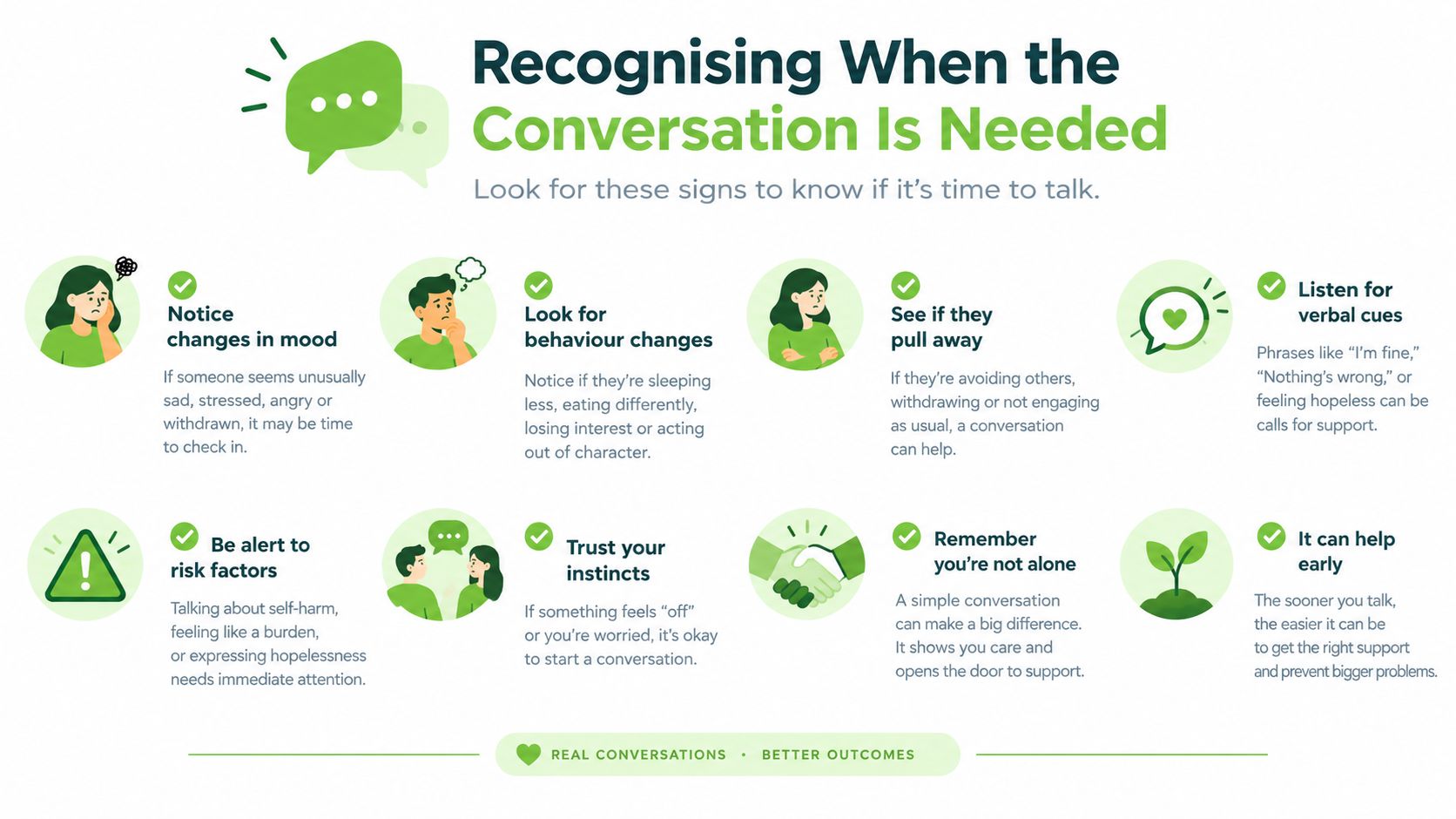
Recognising When the Conversation Is Needed
A daughter might notice that her mother is still cooking, paying bills and answering the phone. Nothing appears urgent, so she says nothing. Then she finds unopened medication packets, a scorched saucepan and several unpaid letters. The problem wasn't a single dramatic failure. It was a gradual widening gap between what her mother wanted to manage and what she could reliably manage alone.
Normal ageing can include slower movement, occasional forgetfulness and changes in appetite. A care conversation becomes necessary when difficulties are repeated, consequential or hidden by extra effort. Missing one shopping trip is different from repeatedly having no food at home. Taking longer to dress is different from falling while dressing. A quieter social life may reflect preference, but withdrawing because transport, fatigue or anxiety has made ordinary activities difficult needs attention.
NHS England reported that in 2021, 24% of men and 28% of women aged 65 and over needed help with at least one Activity of Daily Living, while 21% of men and 29% of women needed help with at least one Instrumental Activity of Daily Living. The need rises sharply with age, from 21% of adults aged 65 to 69 to 52% of those aged 80 and over. The same summary records an unmet-need gap, with 22% of adults aged 65 and over needing help with at least one ADL and 15% needing help with at least one IADL without that need being met. These figures come from Age UK's later life factsheet.
Separate evidence from family anxiety
Write down what you've observed, including dates and consequences, rather than labelling your parent as confused or incapable. Useful observations include:
- Medication changes: doses missed, repeated or taken at the wrong time.
- Safety incidents: falls, near-falls, leaving appliances on or difficulty getting up.
- Household decline: spoiled food, neglected washing, unusual clutter or unopened post.
- Personal care changes: wearing the same clothes, avoiding bathing or losing weight without an understood reason.
- Reduced participation: cancelled appointments, stopped hobbies or reluctance to leave home because tasks have become difficult.
Changes in appetite or weight can have many explanations. For a useful distinction between normal vs concerning metabolism changes, look for guidance that helps you consider ordinary ageing alongside signs requiring professional attention. If memory concerns are prominent, a home test for dementia may help you organise questions, but it shouldn't replace assessment by a GP or another qualified professional.
A hospital discharge is a poor setting for a first discussion. Everyone is tired, decisions feel compulsory and there's little time to explore what your parent values. Raise the subject while life is relatively stable, then return to it as needs change. Early care planning can turn a frightening event into one consideration within an existing plan.
Preparing for the First Conversation
Preparation changes the tone before the first sentence. Families often wait until they feel emotionally ready, but the better test is whether they have chosen a calm moment, gathered basic information and agreed how they'll avoid speaking over the parent.
Helping Hands reported that 15% of adults had spoken with older relatives about future care expectations, 28% had only casual discussion and 57% had not raised the topic. Among people whose parents later needed care, only 38% said the conversation happened at the right time. Independent Age-based reporting adds that about 7 million people aged 65 and over had never discussed future care and housing needs with family. Those findings are reported by Helping Hands in its discussion of delayed care conversations.
Choose the conditions, not just the words
Avoid beginning after an argument, immediately after a fall, or when either of you is rushing to work. A quiet kitchen table can feel less confrontational than a formal sitting-room meeting. One trusted family member may be more effective than several relatives arriving with a shared agenda.
Beforehand, find out what local domiciliary care, companionship and respite services provide. “We can get help” is vague. “Someone could visit while you do your shopping, help with lunch or give me time to work” gives your parent something concrete to assess. Researching how an independent care adviser works can also clarify how an impartial person may help a family compare options without turning the discussion into a sales pitch.
If siblings are involved, agree privately on the facts you've observed and the questions you want answered. Don't present a united front designed to win. Do agree who will listen, who will take notes and who can explain practical options. Public disagreement between children makes the parent feel responsible for managing the family as well as their own situation.
Prepare an opening that invites information
Try:
“I've noticed the stairs seem harder recently. How are you finding things at home?”
Or:
“I want to understand what would make daily life easier, while keeping you in control. What's been more tiring lately?”
Avoid “You can't cope” and “We've decided you need care”. Those statements turn an exploratory conversation into a judgement. A practical guide to caring for an ageing parent can help you think through the wider family discussion before you begin.
Keep the first conversation modest. You aren't trying to settle funding, staffing, housing and long-term care in one sitting. Aim to understand what your parent wants to preserve, what currently feels difficult and whether they'll agree to one practical next step.
Starting the Discussion Without Triggering Resistance
Resistance often protects something important. A parent may hear “care” as “you're failing”, “you're becoming a burden” or “your home is no longer yours”. If you argue against the refusal, you may win a point while losing access to the conversation.
UK adult social care guidance says the first step is to start a conversation with the person and family about wishes, feelings, environment and other agencies involved. A local authority practice guide identifies active listening, the right environment, strengths, recording strengths, needs and risks, and matching action to the right level at the right time. The guidance is set out in this adult social care practice guide.

Start with capability
Name what your parent still does well. This isn't flattery. It shows that you're seeing the whole person rather than building a case against them.
“You've kept the garden going and managed your appointments for years. I'm wondering whether the heavier jobs are becoming a nuisance.”
Then ask a question that leaves room for disagreement:
- “Which parts of the week are easiest?”
- “Which jobs take more out of you than they used to?”
- “What would you never want a helper to change?”
- “Would you consider trying support with one task?”
A strengths-based approach preserves authority. It also produces better information because your parent doesn't have to spend the entire conversation proving competence.
Use a calm pivot when the answer is no
If your parent says, “I don't need a carer,” don't reply with a list of evidence. Try, “I hear that you don't want a carer. Is the concern the word, having someone in the house, the cost, or being told what to do?”
That question identifies the actual barrier. If the issue is privacy, discuss a short visit for shopping or household tasks. If it's cost, agree to investigate funding before assuming family members will pay. If it's dignity, ask what control they'd need over the timing, tasks and choice of worker.
Plain language matters. NICE recommends personalised communication, information in smaller manageable portions, and revisiting emotionally difficult discussions rather than overwhelming someone with a large bundle of decisions. Resources on practical special needs moving tips offer useful communication principles for situations where change, unfamiliar people or altered routines may cause distress, even though the context may differ.
Practical rule: Don't ask your parent to accept “care” as an abstract future. Ask whether one specific form of help would make one specific part of the week easier.
Use “support”, “company”, “a hand with the shopping” or whatever language your parent finds acceptable, provided you aren't disguising a serious risk. If danger is immediate, honesty and professional advice matter more than finding a perfect phrase. For a fuller explanation of person-centred care, focus on the principle that support should fit the person's preferences, routines and goals.
Building a Care Plan That Respects Independence
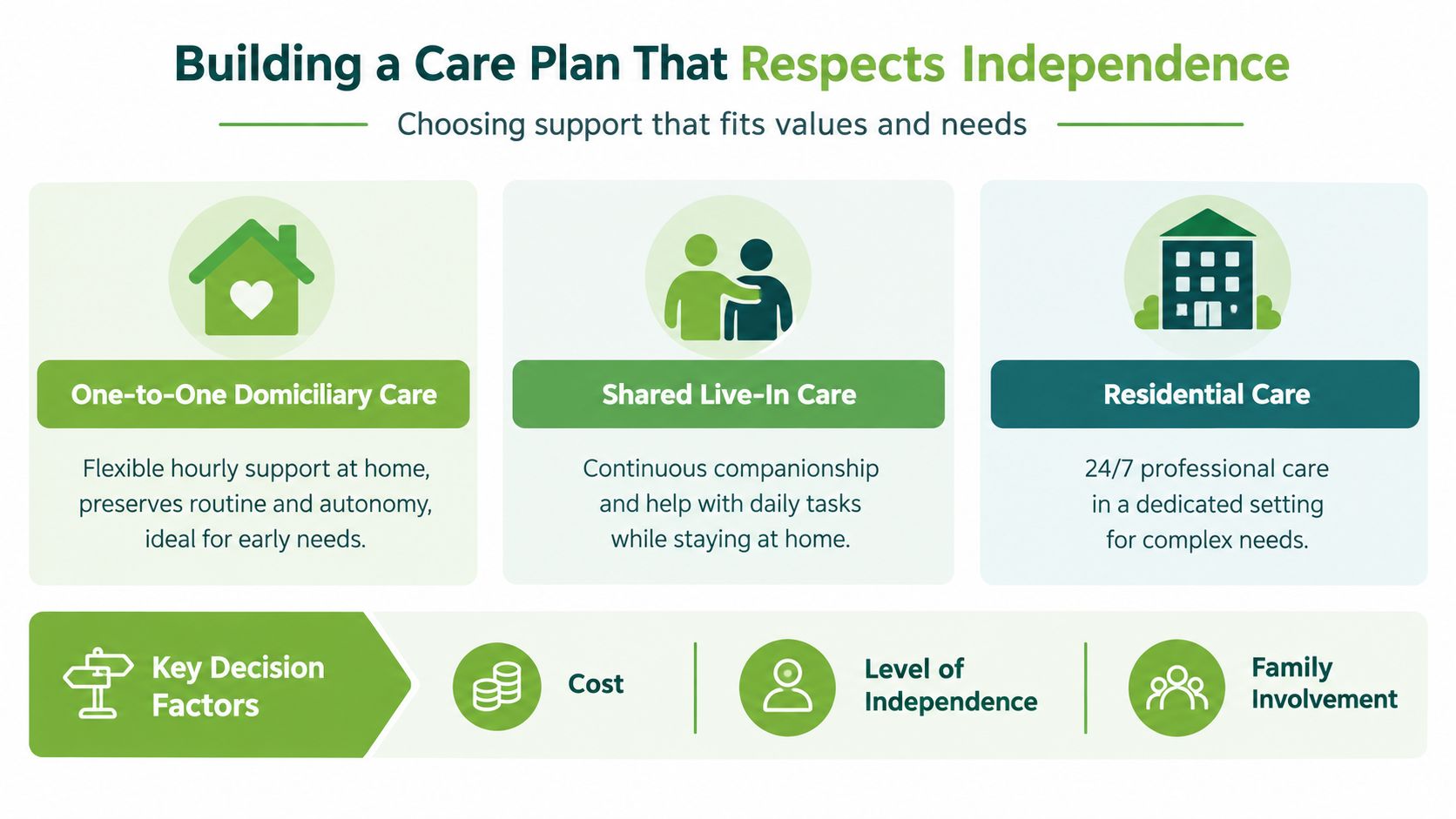
A workable plan starts with the life your parent wants to continue, not with the service a provider happens to offer. If the priority is staying at home, maintaining a morning routine or continuing to see friends, support should remove the barriers threatening those priorities.
One-to-one domiciliary care may suit someone who needs personal care, medication prompts or help with household tasks at selected times. Companionship visits can address isolation or make meals and appointments easier without taking over. Respite care gives a family carer planned relief, which is different from waiting until exhaustion makes an emergency arrangement unavoidable. Equipment or small environmental changes may reduce the need for hands-on help, although an assessment is sensible before purchasing items.
Compare support against real capacity
| Option | May suit | Trade-off to discuss |
|---|---|---|
| Domiciliary care | A parent who wants to remain at home with scheduled help | Visits must fit changing needs and availability |
| Companionship support | Someone who needs social contact, prompting or confidence with activities | It may not meet complex personal or clinical needs |
| Respite care | A family carer who needs planned recovery time | It requires advance planning and a clear handover |
| Residential care | A person whose needs cannot be safely managed at home | The move changes routine, surroundings and family involvement |
The family's available hours are not an unlimited resource. Carers UK reports that nearly half of working carers, 47%, are considering reducing their hours or leaving work, while 79% of UK adults view flexible working and paid carer's leave as essential. Carers UK's 2025 figures say 5.8 million people across the UK provide unpaid care to family members and friends, and Age UK reports around 2.1 million carers are aged 65 and over. These figures are available through Carers UK's report on combining work and care.
Discuss money without making it a moral test
Say plainly what the family can and cannot provide. Separate emotional commitment from practical capacity. “We'll help” may mean weekly visits, administration, transport or paying for some support. It shouldn't become an expectation that one person gives up work.
Ask your parent what they understand about likely costs and public support, then check facts before making promises. A plan might begin with a limited service, a review point and an agreed response if needs increase. Involving your parent in each choice turns care into a way of preserving independence, rather than evidence that independence has ended.
Accessing Formal Support Through the Local Council
Families often assume the GP must approve social care before the council will listen. In England, the starting point when an older person may need help coping day to day is a needs assessment through the local council's social services. The assessment is free, anyone can request it, and it considers support such as help at home, equipment, healthcare or residential care. The process is described by GOV.UK guidance on applying for a needs assessment.
Make the request
The older person can ask, or someone helping them can make contact. The NHS advises contacting the social services department at the local council and requesting a needs assessment, by phone or online, as explained in its guidance on getting a needs assessment.
Use specific examples rather than saying only that your parent is struggling. Describe what happens on an ordinary day, what has changed, what risks exist and what help is already being provided. Include your parent's view, even where it differs from yours. The assessment is intended to understand needs and desired outcomes, not to decide whether someone should move into residential care.
Know what each route is for
| Route | What it can clarify | Who to contact |
|---|---|---|
| Council needs assessment | Day-to-day needs and possible support at home, equipment, healthcare or residential care | Local council social services |
| Carer's assessment | The impact of caring on the family member and possible support | Local council, with guidance from Carers UK |
| NHS or GP input | Health changes, medication concerns, mobility or cognitive symptoms | GP or relevant NHS service |
| Independent advice | Comparing providers, arranging services and understanding choices | An independent care adviser or reputable provider |
A needs assessment may lead to services or direct payments. Carers UK explains that where a council thinks a carer may need support, it must offer an assessment, and a carer can request one if that doesn't happen. Its needs assessment guidance explains the carer's route.
Expect questions about personal care, meals, mobility, medication, relationships, work, housing and the outcomes your parent wants. Keep a written record of the request, the concerns shared and any agreed follow-up. The council assessment doesn't remove your parent's voice. It gives the family a structured way to discuss what support is proportionate and what cannot safely remain informal.
Maintaining Ongoing Communication and Review
The first conversation may produce only a limited agreement. Your parent might accept help with shopping while refusing personal care. Start there, then check whether the arrangement works. Treat care decisions as provisional, not permanent, and return to them before a small problem becomes a crisis.
NICE recommends plain language, personalised communication and regular review of family or advocate involvement, at least every 6 to 12 months, as described in its cited guidance through BBC reporting on parent-carer experiences. Put the review in the calendar, but keep it an ordinary check-in rather than an inspection. Choose a quiet setting, allow enough time, and avoid raising difficult changes during an argument or immediately after an incident.
Use a simple review rhythm
Ask these questions each time:
- What is working? Has support protected a routine or reduced a particular worry?
- What feels intrusive? Is the timing, task or carer creating resistance?
- What has changed? Check for falls, medication problems, reduced eating, confusion or greater difficulty managing at home.
- What does your parent want next? Keep choices visible, including pausing and reassessing where safety allows.
- What does the family need? Include work, sleep, travel and emotional strain in the plan.
The family carer cannot function as an unrecognised spare worker. Research reported by the BBC found that 81% of surveyed parent-carers felt society treated caring for a parent as “just what you do”, while 96% said they were “always on alert”, even when not physically present. A plan based on constant vigilance will eventually fail someone, particularly as formal council support becomes harder to secure and caregiver strain grows.
Escalate promptly after a fall, hospital discharge, significant medication problem or sudden cognitive change. Contact the GP or local council rather than waiting for another crisis. Keep brief notes of changes, requests and agreed actions, so each conversation starts with facts instead of blame.
Small, respectful reviews keep your parent involved and let the family adjust support before exhaustion makes the decision for them.
Cream Home Care offers companionship, domiciliary care, respite care and elderly care in familiar surroundings across Stoke-on-Trent and Newcastle-under-Lyme. Families can visit Cream Home Care to discuss practical support that protects routine and independence.