The first evening home after a stroke can feel more difficult than the discharge meeting suggested. A relative may be physically safe in the house, yet still need help standing, washing, communicating, eating, taking medication and managing fatigue. Family members often find themselves trying to remember several professional instructions while also working out who to call when something changes.
Stroke recovery care at home needs to be more than a short-term safety arrangement. Recovery can continue for years, and the right support changes as mobility, communication, confidence, swallowing and daily routines develop. A practical plan combines specialist rehabilitation with dependable domiciliary assistance, careful observation and regular reviews.
Preparing the Home Environment for a Safe Discharge
A safe discharge starts before the front door opens. Ask the hospital team to walk through the person's likely first day at home, from getting through the entrance to using the toilet, preparing a drink and returning to bed. A room may look tidy but still create difficulty if the survivor has reduced balance, one-sided weakness, visual problems, poor concentration or difficulty understanding instructions.
Early Supported Discharge can work well for suitable patients, but it is not just a faster route out of hospital. It depends on a coordinated stroke team delivering equivalent specialist rehabilitation at home. A Care Quality Commission review estimated that approximately 40% of stroke patients could benefit from Early Supported Discharge, while provision was available in only 37% of local areas. The review also found that many people waited over a week for essential home equipment. The Care Quality Commission's review of life after stroke explains why a discharge plan must include clinical coordination, not just a package of basic care.
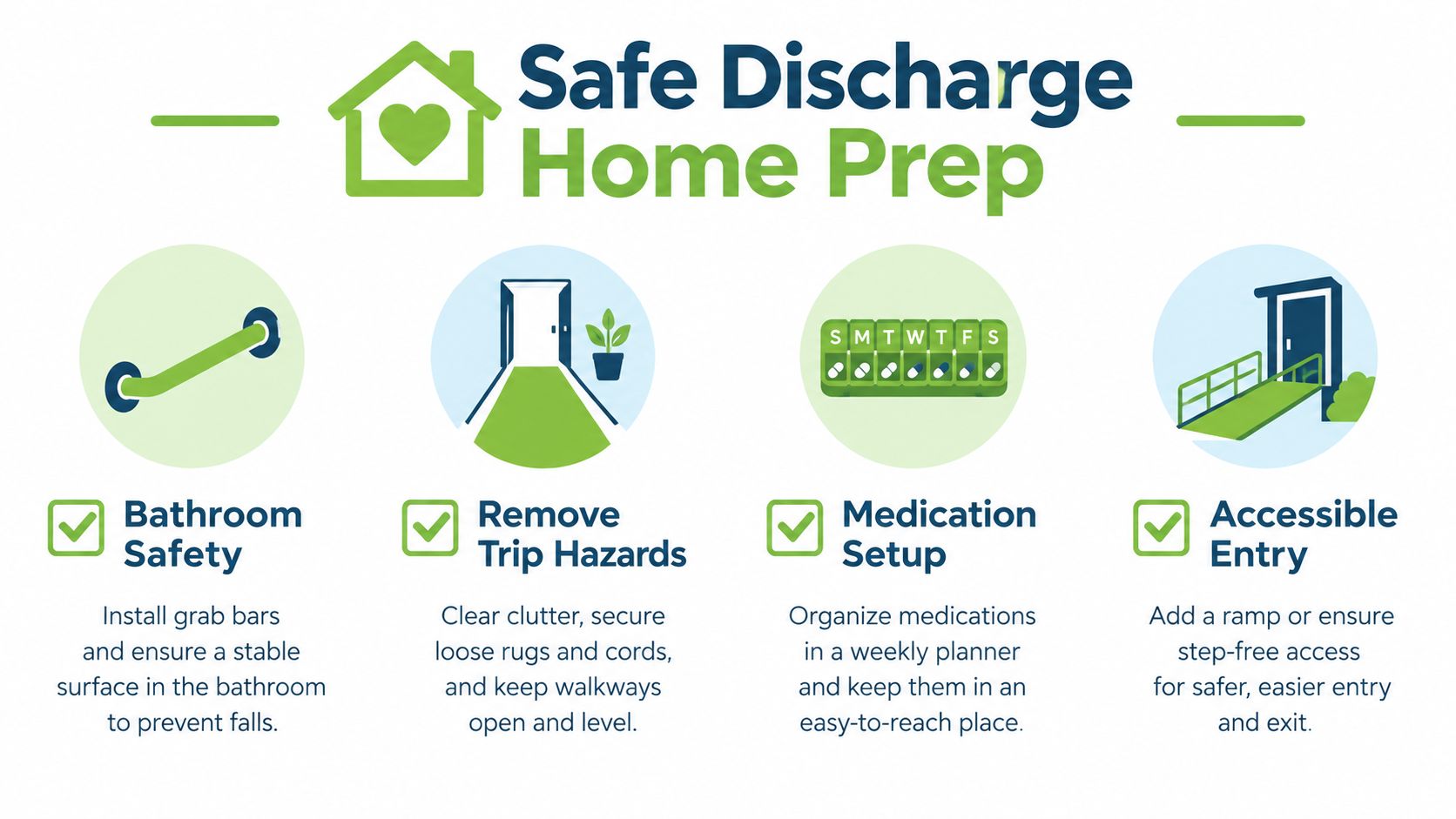
Check the home by activity
Walk through the property in the order the survivor will use it.
- Entry and access: Check steps, thresholds, narrow passages and door widths. Confirm whether a ramp, rail or temporary mobility aid is required.
- Bedroom: Leave enough space for safe transfers and position commonly used items within easy reach. Keep the route to the toilet clear at night.
- Bathroom: Ask the occupational therapist whether the person needs a raised toilet seat, shower chair, grab rails or a different bathing method. Don't install equipment based only on a catalogue photograph. The person's transfer technique and weight-bearing ability should guide the choice. Families comparing wider accessibility work may find this guide to Melbourne handicap bathroom costs useful for understanding the types of modification that can be considered, although local clinical advice must come first.
- Kitchen and living areas: Remove loose mats and trailing cables, improve lighting and place chairs where the person can rest. A clear route matters more than making every room look completely different.
Secure a useful clinical handover
Before discharge, request written information covering baseline mobility, cognition, communication, swallowing, continence, medication, falls risk and equipment. Ask who is responsible for physiotherapy, occupational therapy, speech and language therapy, equipment delivery and follow-up. Record direct contact details rather than relying on a general hospital switchboard.
The handover should also describe the help the survivor needs, not just the diagnosis. “Requires assistance” isn't specific enough. Families need to know whether the person needs verbal prompting, physical support from one carer, support from two carers or supervision without hands-on assistance.
Keep the discharge paperwork beside the medication list and emergency contacts. A structured hospital discharge care plan can help families organise responsibilities, appointments, equipment and escalation arrangements in one place.
Practical rule: Don't accept “someone will contact you” as the whole plan. Ask who will call, what they will provide and what the family should do if that contact doesn't happen.
Building a Daily Rehabilitation and Care Routine
A stroke survivor's rehabilitation continues between appointments. The most useful practice is usually task-specific repetition, carried out safely and linked to a real goal. That might mean practising a bed-to-chair transfer, placing a sleeve over the weaker arm, standing at the kitchen worktop or using a communication strategy during a conversation.
Care staff and relatives should reinforce the therapist's programme, not invent a harder one. Excessive help can be as unhelpful as too little. If a carer lifts, pulls or completes every task because it is quicker, the survivor loses opportunities to practise movement and decision-making. Conversely, unsupervised transfers or walking can create a fall risk and undermine confidence.
UK stroke guidance recommends that adults with physical disabilities after stroke should receive at least three hours of therapy each day and be supported to remain active for six hours a day, including therapy time. The National Clinical Guideline for Stroke plain-language summary also emphasises opportunities to practise ordinary daily activities. These are demanding targets, so the day needs to include rest, short practice periods and activities that match the person's tolerance.
Turn care tasks into practice
Start with the therapist's goals and translate each into a small daily opportunity.
| Everyday task | Useful practice | What the carer should monitor |
|---|---|---|
| Getting out of bed | Follow the agreed sequence for rolling, sitting and standing | Dizziness, knee buckling, impulsive movement |
| Dressing | Encourage the survivor to select clothes and manage the easier steps | Frustration, one-sided neglect, fatigue |
| Meals | Practise safe positioning, communication and appropriate utensil use | Coughing, pocketing food, reduced alertness |
| Toileting | Reinforce the same transfer method each time | Slips, rushing, loss of balance |
| Communication | Allow time to respond and use agreed prompts | Word-finding difficulty, distress, cognitive fatigue |
The aim isn't to turn every moment into a test. A person may manage a transfer in the morning and need more support later because fatigue has accumulated. Record the level of assistance, pain, shakiness, near-falls and recovery time. That information helps the clinical team adjust the plan.
For approved strengthening work, families can use resources such as leg-strengthening exercises for seniors, but exercises should be appropriate to the individual and consistent with professional advice. A general online exercise isn't a substitute for assessment of balance, tone, sensation or cardiovascular tolerance.
NICE evidence supports needs-based rehabilitation, initially providing at least 45 minutes of each relevant therapy on a minimum of five days per week, with higher-intensity rehabilitation reaching at least three hours per day across at least five days per week when tolerated. The NICE evidence summary supports the principle of coordinated, goal-directed rehabilitation rather than generic companionship presented as therapy.
Pace the day around fatigue
Use the survivor's strongest periods for transfers, personal care and planned practice. Keep instructions short, reduce background noise and allow extra time for aphasia or slower processing. Stop when technique deteriorates, not only when the person says they feel tired. Rest is part of a safe routine, not a sign that the day has failed.
Managing Medications, Nutrition and Symptom Monitoring
Medication and eating problems can undermine recovery without being obvious to a visitor. A person may appear settled while missing doses, taking tablets at the wrong time, becoming dehydrated or struggling with swallowing without showing it. The safest approach is a written routine that shows what was offered, what was taken and what changed.
Use the pharmacy-labelled packaging or an agreed dosette system, but don't alter tablets, crush medication or hide it in food unless a pharmacist or prescriber has confirmed that this is safe. A carer can provide reminders and observe whether medication has been taken. They shouldn't decide independently to stop a drug because the survivor seems better or because a side effect is suspected.
Make food and fluids part of the clinical plan
UK research reports that more than 60% of stroke survivors are supported by unpaid carers, while a review found a median 9.3% of survivors reported an unmet need for dietary advice. The evidence also highlights gaps in personalised and culturally sensitive guidance. This review of nutrition and unpaid caring after stroke shows why “eat healthily” isn't enough practical advice for many households.
Swallowing difficulty may affect thin drinks, mixed textures, pills or familiar meals. Follow the speech and language therapist's instructions about food texture, fluid consistency, posture, supervision and the pace of eating. Do not test a restricted diet with a favourite food just to see whether it works. If coughing, wet-sounding speech, repeated throat clearing, breathlessness after meals or unexplained chest symptoms appear, contact the relevant clinician promptly.
Culturally familiar food can support appetite and dignity, but it may need careful adaptation. Ask the dietitian or speech and language therapist how traditional dishes, spices, breads, rice, soups or drinks can be prepared safely. Record what the person eats and drinks, any coughing, changes in appetite, bowel problems, weight concerns and unusual tiredness. Families can then give the GP, community nurse or therapist a pattern rather than a vague impression.
Use a simple daily record
A notebook or shared digital record should include:
- Medication: Time offered, whether taken and any immediate concern.
- Eating and drinking: Amounts broadly consumed, assistance required and swallowing observations.
- Symptoms: Pain, dizziness, headache, confusion, breathlessness or a noticeable change in speech.
- Function: Transfers, walking tolerance, falls or near-falls and unusual fatigue.
- Questions: Anything that needs clarification at the next review.
This record isn't a diagnostic tool. It gives professionals reliable information and helps carers recognise gradual change before it becomes a crisis.
Supporting Emotional Wellbeing and Preventing Caregiver Burnout
A stroke can alter a person's role in the family, their confidence and the way they communicate. Anxiety may appear as repeated reassurance-seeking, avoidance of walking or fear of being left alone. Depression may look like withdrawal, irritability, loss of interest or a refusal to attempt activities that once mattered. These changes deserve clinical attention, not criticism.
Among stroke patients assessed at six months in the 2024–25 SSNAP reporting period, 64% still had difficulty carrying out usual activities, 62% experienced mobility problems and 47% reported anxiety or depression. The Stroke Association's report on post-stroke support illustrates why practical independence and emotional wellbeing must be addressed together.
Protect communication and participation
Aphasia can make an intelligent adult appear confused or disengaged. Speak directly to the survivor, use ordinary adult language and allow time for an answer. Offer choices that can be answered by pointing, writing, gesture or a communication aid. Don't finish every sentence or discuss the person as if they aren't present.
Social participation should be graded. A quiet visit, familiar music, a short garden activity or a supported trip to a local café may be more successful than a crowded gathering. Occupational therapists and speech and language therapists can suggest ways to adapt activities around fatigue, communication and sensory overload.
Respite is part of the care plan
Family carers often postpone help because they believe professional support means they have failed. The opposite is usually true. A rested carer is more able to follow transfer guidance, notice a change in swallowing, remain patient during communication and make safe decisions under pressure.
Warning signs include disrupted sleep, persistent anger, dread before care visits, missed medication tasks, social withdrawal and the feeling that no one else can do things properly. Arrange planned respite before exhaustion becomes the reason for an emergency. This may involve a regular domiciliary visit, a sitting service, help with personal care or a short period of replacement care.
A guide to preventing caregiver burnout can help families identify strain and build breaks into the week. For a survivor or relative experiencing persistent low mood, anxiety or loss of hope, speaking with a GP or an appropriate counselling service is a sensible next step. Families outside the UK may also find this resource on counselling for depression in Vernon useful as an example of the kind of professional emotional support available.
Support should be arranged before the family reaches breaking point. Respite protects the relationship as well as the carer.
Recognising Red Flags and When to Seek Urgent Medical Help
Recovery has difficult days, but a sudden change should never be dismissed as ordinary fatigue. Carers know the survivor's usual speech, movement, alertness and breathing better than anyone. That baseline makes it easier to notice when something is wrong, provided concerns are acted on quickly.
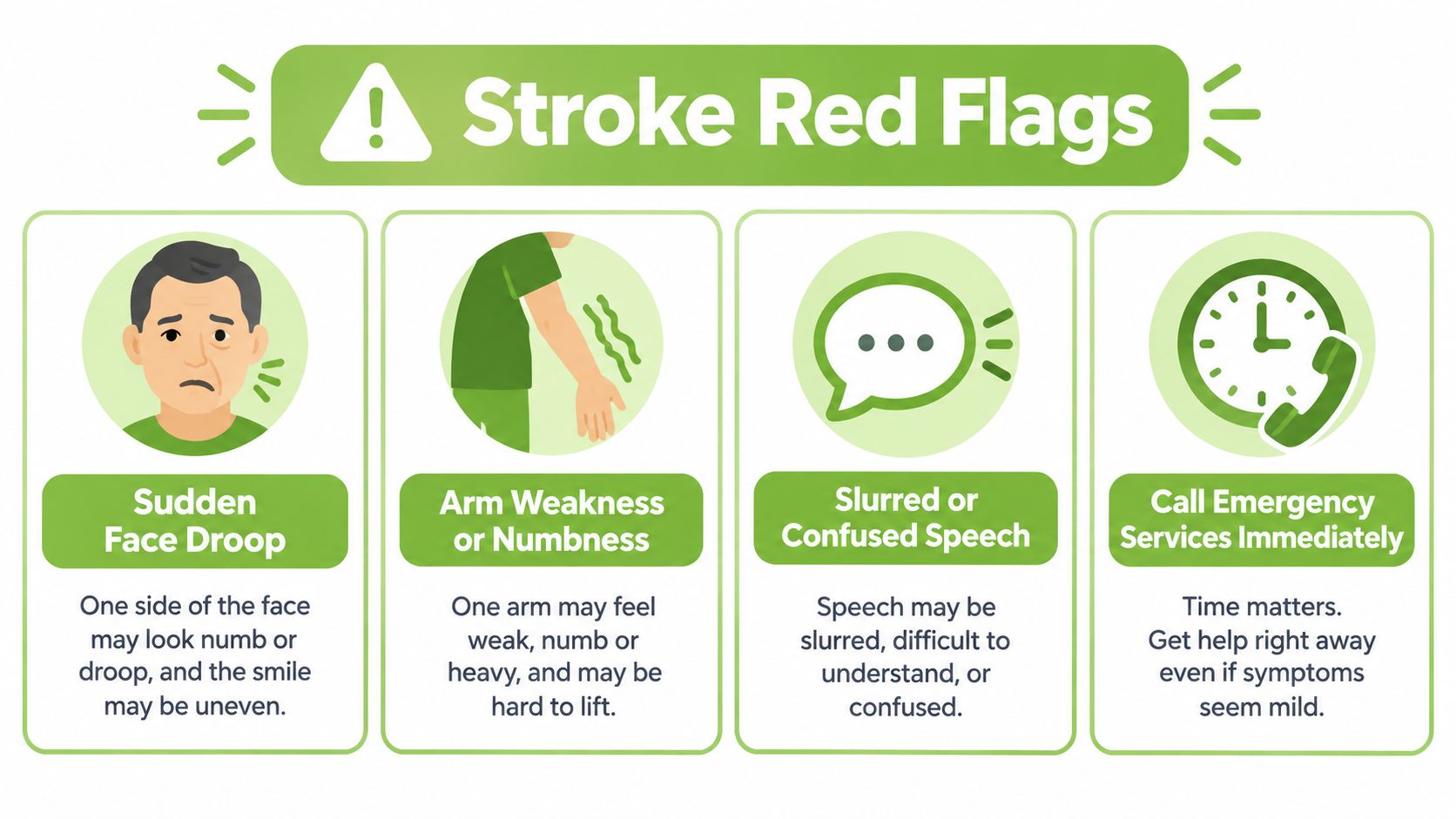
If there are new signs of stroke, call 999 immediately. Use the FAST approach: look for a sudden facial droop, ask the person to raise both arms and listen for slurred or confused speech. Note when the person was last known to be well and tell the ambulance service. Don't drive the person yourself if emergency services are needed, and don't wait to see whether symptoms improve.
Know which changes require urgent action
Sudden neurological changes include new weakness or numbness, facial asymmetry, worsening speech, new difficulty understanding, loss of vision, severe imbalance or an abrupt severe headache. Treat these as an emergency even if the symptoms are brief or the survivor insists they feel fine.
Possible aspiration or serious swallowing difficulty includes choking that doesn't settle, repeated coughing during meals, a wet or gurgly voice, blue lips, unusual breathlessness or a sudden decline in alertness. Stop the meal, keep the person upright and seek clinical advice. If breathing is severely affected, call 999.
Possible deep vein thrombosis may involve new swelling, warmth, redness or pain in one leg, particularly when accompanied by breathlessness or chest pain. Breathlessness, chest pain, collapse or coughing blood requires emergency help.
Possible infection can present as a marked change in behaviour, new confusion, feverishness, worsening cough, painful urination, reduced urine, shaking or a sudden loss of function. Contact the GP, NHS 111 or the community team according to severity. A rapid deterioration shouldn't wait for a routine review.
Keep escalation information visible
Write down the community stroke team, GP, district nurse, speech and language therapist, pharmacy and equipment service contacts. Keep the medication list, allergies, discharge summary and emergency instructions together. During a call, explain what changed, when it started, what the person can no longer do and whether there has been a fall, choking episode or missed medication.
Don't ask a domiciliary carer to make a clinical diagnosis. Their role is to observe, record and escalate through the agreed pathway. Repeated falls, worsening continence, increasing assistance needs or a persistent mood change may not require an ambulance, but they do require reassessment rather than indefinite coping at home.
Integrating Professional Domiciliary Care for Long-Term Recovery
Approximately 60% of people who have a stroke are discharged from hospital to their own homes, where many need continuing community-based rehabilitation. The NHS evidence brief on community rehabilitation teams and roles supports an important distinction: leaving hospital is a change of setting, not the end of recovery.
Professional domiciliary care works best when it has a defined purpose. During an early phase, carers may support washing, dressing, transfers, meals, medication prompts and safe mobility. As strength and confidence improve, the same visits can shift towards graded independence, household tasks, communication practice and supported community participation. If needs later increase, the plan can be reviewed rather than forcing relatives to manage a sudden gap.
Choose continuity over task completion
A care worker shouldn't just complete every task because it is faster. The agreed approach might be to lay out clothing, prompt the survivor to begin dressing and provide hands-on help only where balance or weakness makes it unsafe. In the kitchen, the worker may support meal preparation while preserving choice, safe positioning and appropriate swallowing instructions from the clinical team.
Ask a provider how it records changes and shares concerns. Useful notes include assistance level, mobility, appetite, mood, falls, skin concerns, communication and any departure from the usual routine. Care staff don't replace physiotherapists, occupational therapists or speech and language therapists, but they can make the specialist plan more consistent across the week.
Remote monitoring may support communication in some care arrangements, but it must complement direct observation and professional judgement. Families exploring the terminology and practical considerations can read this RPM guide from XO, while remembering that a device can't assess dignity, effort, distress or the quality of a transfer in the same way as an attentive person.
Review support at each stage
At an early review, ask whether equipment is still suitable, whether the survivor is receiving the planned therapy and whether carers understand escalation contacts. At a later review, consider unmet needs that may be less visible, such as fatigue, loneliness, medication management, confidence outside the home or help with household tasks. Independence doesn't mean doing everything without support. It means retaining control and doing as much as possible safely.
A local provider such as Cream Home Care can coordinate personalised domiciliary, companionship and respite visits around established routines in Stoke-on-Trent and Newcastle-under-Lyme. The family should still expect clear boundaries, consent-based care, communication with relevant professionals and regular review when the survivor's abilities or risks change.
Long-term support is not a last resort. It can give family members time to work, sleep and maintain relationships while helping the survivor practise everyday skills in familiar surroundings. The strongest arrangements combine clinical direction, consistent carers, measured assistance and the willingness to change the plan when recovery moves forward or setbacks occur.
Cream Home Care provides personalised domiciliary, companionship and respite support for people recovering at home, including help with personal care, mobility, medication prompts, meals and daily routines. Visit Cream Home Care to discuss a care plan for your relative in Stoke-on-Trent or Newcastle-under-Lyme and arrange support that protects independence while giving family carers dependable relief.