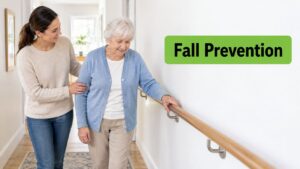
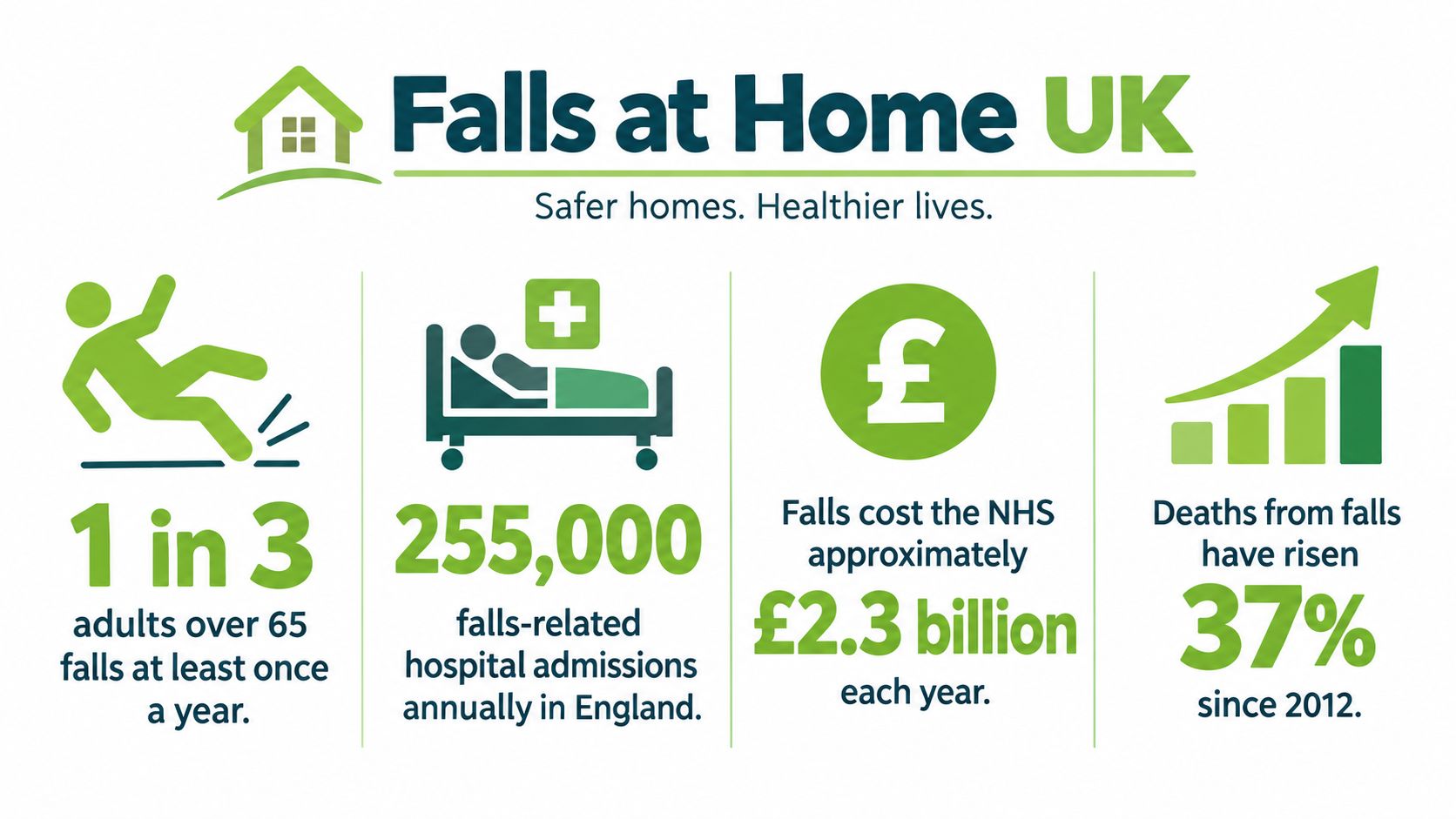
Around 30% of people aged 65 and over who live at home in the UK, about 2.5 million people, experience at least one fall each year. Approximately 1 in 20 older people living in the community suffers a fracture or needs hospital treatment after a fall. NHS data makes the point clearly: falls prevention for elderly at home isn't a minor housekeeping exercise. It protects mobility, confidence and the ability to remain independent.
In Stoke-on-Trent and Newcastle-under-Lyme, the answer is rarely a dramatic renovation. Families usually make the greatest difference by finding the specific risks at one front door, changing the hazards that can be changed immediately, and referring the issues that need an occupational therapist, GP, pharmacist or falls service. This guide gives you that order of attack.
Why Falls at Home Deserve Urgent Attention
More than 4 million hospital bed-days each year in England are linked to falls and fractures among people aged 65 and over, with an estimated annual cost of £2 billion, according to the NHS scorecard on falls. Those figures make prevention a practical care priority. Action belongs in the home before an emergency, not only after hospital discharge.
A fall often starts during an ordinary task. Someone misses the final stair on a dim landing, slips on a wet kitchen floor, or turns too quickly while getting out of bed. The injury can then change daily life. Fear may lead the person to avoid the stairs, delay using the bathroom at night, or sit for longer, which can reduce strength and confidence.
Treat every fall as information
Reassess the situation after every fall, even when there is no obvious injury. Ask what the person was doing, whether they felt dizzy, whether their footwear slipped, and whether the room or flooring played a part. A near-fall deserves the same attention because it can expose a change in balance, gait, vision, medicines or confidence.
Practical rule: Treat the home as part of the care plan before a broken hip forces the issue.
Walk through the property this week. Clear the route from bed to bathroom, improve poor lighting, secure loose flooring and inspect the stairs. Record changes in walking or confidence so carers can monitor them safely between professional visits. In rented housing, report repairs to the landlord. In owner-occupied homes, agree who will pay before ordering adaptations, and involve the older person in each change to reduce resistance. Families comparing alerting technology, including French-language guides to détecteurs de chute pour personnes âgées, should treat a detector as one part of a wider safety plan. It can support a response, but it cannot remove the hazard that caused the fall.
Spotting the Personal Risk Factors First
Population figures tell you why the issue matters. A useful home plan starts with the individual. NICE guideline NG249, published in April 2025, covers everyone aged 65 and over and people aged 50 to 64 with additional risk factors, and recommends an individualised multifactorial assessment covering strength and balance, home hazards, vision and medicines. NICE guidance supports looking at several causes together rather than blaming every fall on age.
Sit with the person when they feel rested and ask direct questions:
- Walking and balance: Have they started holding furniture, shuffling, veering or hesitating at doorways?
- Strength: Can they rise from their usual chair without pushing hard on the arms?
- Recent events: Have they fallen, nearly fallen, felt faint, or come home from hospital?
- Sight: Are they misjudging steps, struggling with glare, or leaving lights off because they can't reach the switch?
- Medicines: Did dizziness, sleepiness or unsteadiness begin after a new medicine or dosage change?
- Continence: Are they rushing to the toilet, especially at night, or walking quickly without their aid?
- Confidence: Have they stopped using a room, stairway or outdoor path because they fear falling?
Separate a household fix from a referral
Families can usually remove a trailing cable, clear a walkway, replace unsuitable footwear and put everyday items within easier reach. They shouldn't independently stop prescribed medicine, change a walking aid, prescribe challenging balance work or decide that a new limp is harmless.
Refer to a GP, pharmacist, physiotherapist, occupational therapist or local falls service when there is a new or worsening change, repeated near-falls, dizziness, fainting, unexplained weakness, a recent hospital discharge, or fear that is restricting movement. Record the date, activity, footwear, symptoms and outcome of each fall or near-fall. That simple record gives the professional a much clearer starting point than “they seem less steady”.
Making the Home Itself Safer
The safest home isn't necessarily the one filled with equipment. It's the one where the person can complete familiar tasks without reaching, rushing, stepping over clutter or relying on an unstable surface. That applies equally to a terraced house in Hanley, a bungalow in Newcastle-under-Lyme and a flat with a communal entrance.
A 2025 UK mixed-methods study involving 359 community-dwelling adults aged 55 and over found that acceptable solutions included improved staircase lighting, additional handrails, education and practical skills training, rather than only removing rugs or installing grab rails. The Centre for Ageing Better highlights an important point: the older person must accept and use the change.
Start with the route used most
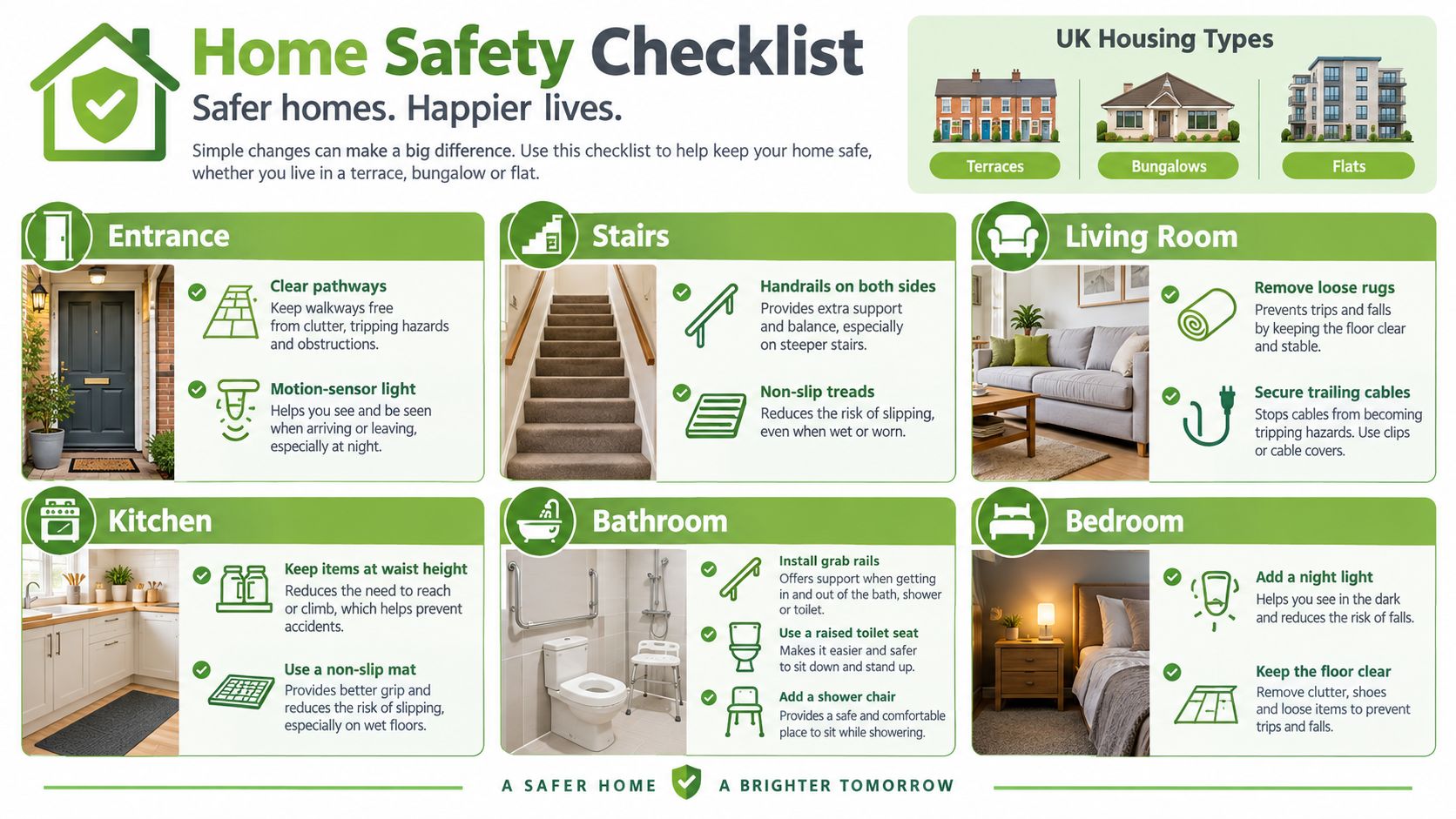
Clear the path from the bed to the toilet, then inspect the entrance, sitting room, kitchen and stairs. Remove loose rugs or secure them properly, tape down frayed carpet, move trailing wires and clean spills immediately. Fit a bedside or motion-activated light so the person doesn't cross a dark room to reach a switch.
In the kitchen, place frequently used items between waist and shoulder height. Don't encourage someone unsteady to climb on a chair or step stool. In the bathroom, keep the floor dry and consider whether a shower chair, grab rail or raised toilet seat needs professional assessment. For practical bathroom options, see bathroom solutions for elderly people.
Stairs deserve particular attention. Check that the handrail is secure, improve contrast at the edge of steps if needed, and don't use a stairgate as a substitute for supervision where memory problems or pets create additional risk. Supportive, well-fitting footwear is safer than walking in socks or loose slippers.
Decide who needs to be involved
| Action | Who can usually do it | Typical next step |
|---|---|---|
| Remove clutter, loose rugs and trailing wires | Family member or carer | Recheck the route during ordinary daily activities |
| Improve bulbs, night lighting and storage height | Family member, with the person's agreement | Ask an electrician or landlord if wiring or fixed fittings need work |
| Add a shower chair or non-slip equipment | Family can research suitable options | Seek occupational-therapy advice when transfers are difficult |
| Install grab rails or additional stair rails | Approved installer or landlord | Request an assessment before drilling into walls |
| Alter stairs, bathroom layout or access arrangements | Occupational therapist, council, landlord or specialist contractor | Confirm funding, permission and safe installation |
Owner-occupiers may need to fund work themselves or ask their council about local support. Renters should speak to the landlord before fixed alterations, while an occupational therapist can help establish what is required. Don't buy equipment because it looks reassuring. A poorly positioned rail can encourage an unsafe twist or pull.
Building Strength and Balance That Works
Falls-focused exercise must match the person, the home and the risks already showing up at the front door. Someone who struggles to rise from a chair needs more than general advice to stay active. The programme should challenge balance, build strength progressively, and reflect medical conditions, previous falls and current ability.
UK surveillance evidence found that home-based exercise reduced fall rates by 32% and the proportion of people falling by 22%. Effects were stronger when balance was challenged, strength was progressed, and sessions were frequent and sustained. The UK falls and fracture consensus resource pack supports structured exercise rather than occasional unsupported activity.
Use a safe progression
The practical target is individually prescribed resistance and standing balance work, completed at least 2 to 3 times weekly for a minimum of 50 accumulated hours. Begin beside a stable kitchen worktop or with a trained professional present. Use secure footwear, keep the floor clear, and make sure the person can summon help.
A suitable starting pattern may include:
- Sit-to-stand: Rise from a firm chair, using the arms only when necessary.
- Supported heel raises: Hold the worktop, lift the heels slowly, then lower with control.
- Weight shifting: Move weight from side to side while keeping both hands close to support.
- Heel-to-toe walking: Use a clear corridor with supervision, progressing only when steady.
- Step practice: Rehearse one low step or the first stair with a rail and close support.
These movements are examples, not a prescription. Stop for chest pain, faintness, unusual breathlessness, sudden weakness, significant pain or marked deterioration. After a recent fall or hospital discharge, seek clinical clearance where indicated. Start with supervised transfers, gait and balance work before adding resistance or harder standing tasks.
For general context on building muscle after 50, families can train with Full Circle for muscle, then ask a physiotherapist to adapt the activity to the person's needs. A guide to leg-strengthening exercises for seniors can help families discuss practical options, but online instructions do not replace assessment for someone who is frail or recently injured. Carers should record which exercises were completed and report worsening steadiness between professional visits. In rented homes, use a clear, stable area without altering fixtures unless the landlord or clinician has approved the arrangement.
Medicines, Vision and Other Hidden Contributors
A clear floor won't compensate for a medicine that causes dizziness, blurred vision or sleepiness. Nor will a new grab rail solve the problem if the person can't see the stair edge, becomes desperate to reach the toilet, or stands suddenly after not drinking enough.
NHS guidance for the North West reported that almost 1,000 people died following a fall at home across the region in 2020, including 730 people aged over 75. The NHS North West falls guidance reinforces why medication, vision and hydration checks belong in the prevention plan.
Know what to report
Keep an up-to-date medicine list and tell the GP or pharmacist about every prescription, over-the-counter medicine and supplement. Report a new fall, dizziness on standing, unusual drowsiness, confusion, blurred vision or unsteadiness after a prescription starts or changes. Don't stop a medicine yourself.
A medication review is especially important when several medicines are involved or when the person's walking changes without an obvious household cause. Families can also use medication reminder systems that work to support reliable routines, while remembering that a reminder system cannot assess side effects. For a dispensing option, families may also discuss Dosette boxes for medication with an appropriate professional.
Vision needs equal attention. Arrange an eye check when the person misjudges steps, bumps into furniture, struggles with contrast or reports a sudden change. Encourage regular drinks and meals unless a clinician has set fluid or dietary restrictions. Plan for continence urgency by improving the route, lighting and access to the toilet rather than telling someone to walk more slowly.
Escalate sudden changes
Call for medical advice promptly after fainting, a new severe headache, sudden confusion, marked weakness, inability to stand, repeated vomiting, serious pain or a suspected head injury. Parkinson's disease, dementia and other health conditions can alter movement and judgement over time, so a previously suitable routine may need review.
The Routines and Conversations That Hold It All Together
Home safety succeeds between professional visits, not only during them. A relative, neighbour or carer may notice that someone now reaches for the wall, avoids the stairs, leaves a walking aid behind, or takes much longer to answer the door. Those small observations often appear before the person admits that anything has changed.
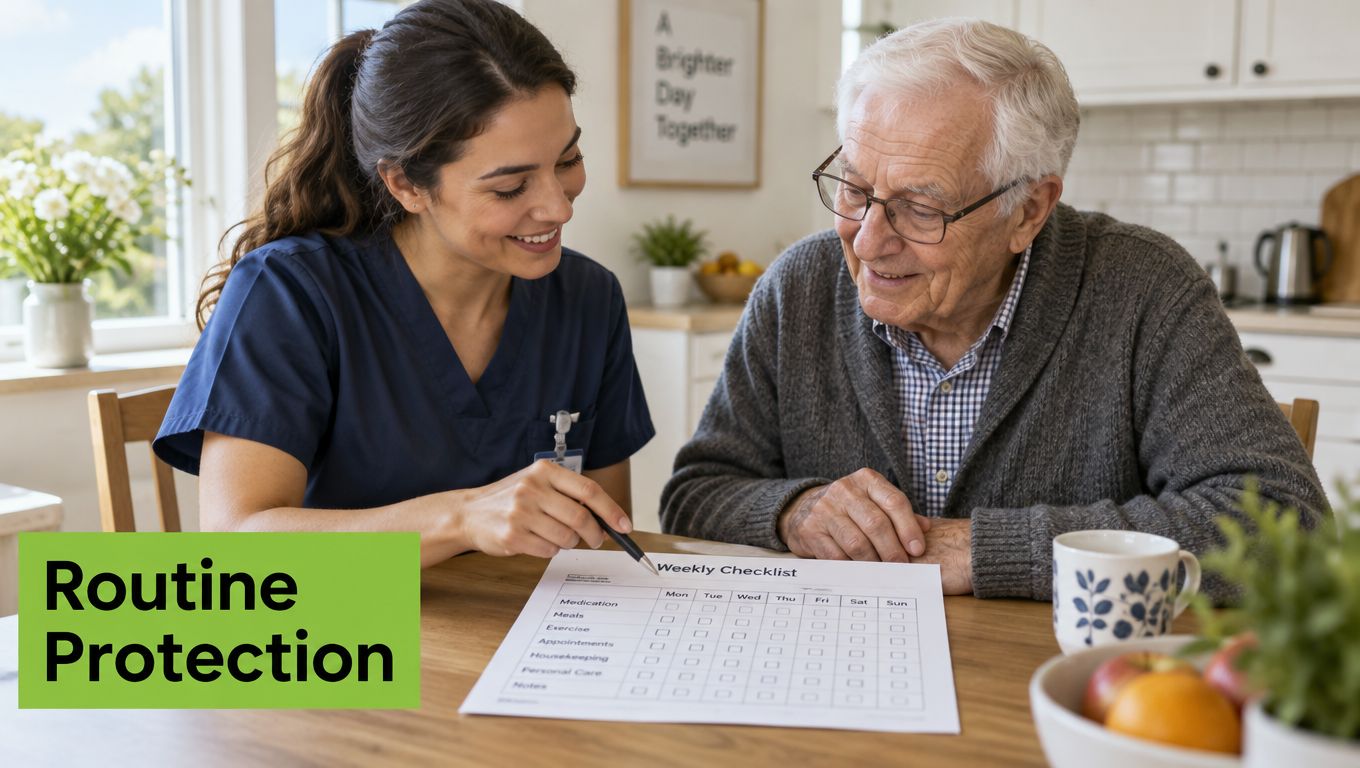
Use a short shared record. Note walking confidence, near-falls, pain, dizziness, footwear, hydration, toilet urgency and any medicine change. Home-care staff should pass relevant observations to the family and agreed professionals, while relatives should avoid changing the care plan informally.
Talk about fear without taking control away
Saying “You mustn't walk there” can make a person feel managed rather than supported. Ask, “Which part feels unsafe?” and “What would help you practise that safely?” Then agree on a small task, such as walking to the kitchen with the correct aid while someone stays nearby.
The 2025 MAINTAIN process evaluation found that a home-based programme for people with dementia who had fallen was feasible and acceptable, with regular home visits improving engagement and motivation while identifying falls-anxiety support as an unresolved issue. The MAINTAIN evaluation supports regular encouragement and graded activity rather than indefinite restriction.
Fear changes behaviour. Good support restores choice without pretending that risk has disappeared.
A home-care provider can support transfers, personal care, medication reminders, meal routines, mobility practice and companionship while preserving the person's say in everyday decisions. Cream Home Care is one local option for domiciliary care, respite care and support with daily living in Stoke-on-Trent and Newcastle-under-Lyme. The right arrangement should specify what the carer assists with, what the person does independently, and what signs require escalation.
Your Falls Prevention Action Plan and When to Seek Help
Don't attempt to change everything at once. Use a staged plan that produces an early safety improvement while leaving medical and structural decisions to the right professional.
A practical first month
- This week: Clear the main walking routes, secure or remove loose floor coverings, improve bedside and stair lighting, check footwear and record any near-falls.
- Next: Arrange a GP, pharmacist, optician, physiotherapy or falls-service conversation based on the risks you've identified. Take the medicine list and fall record.
- Then: Agree a supervised strength-and-balance routine. Start below the person's limit and progress only when technique and tolerance are reliable.
- Keep monitoring: Review the route during real tasks, not only during a formal check. Ask about confidence, rushing, dizziness and any change in stair use.
- Plan support: If family visits are inconsistent, arrange domiciliary care, companionship or respite support around the times of greatest risk.
Refer promptly after a second fall, a new fear of walking, hospital discharge, a new diagnosis, worsening mobility or a medication change followed by unsteadiness. Seek urgent medical help for serious pain, suspected fracture, head injury, loss of consciousness, sudden confusion, inability to stand or other acute deterioration.
Falls prevention for elderly at home works best when families act early, listen carefully and review the plan whenever the person's health or confidence changes.
Cream Home Care can help older people in Stoke-on-Trent and Newcastle-under-Lyme with mobility assistance, personal care, medication reminders, companionship and respite support within a personal home-care plan. If falls, reduced confidence or daily tasks are becoming harder to manage safely, visit Cream Home Care to discuss practical support at home.