When you or a loved one needs more consistent support, the thought of leaving home can be daunting. Live-in care offers a powerful alternative to a residential home, providing dedicated, one-to-one support right where you feel most comfortable. It’s all about maintaining independence and dignity, with a professional carer who lives with you, offering continuous support and companionship that fits your life, not the other way around.
Understanding Live-In Care and How It Works

Many families automatically think of care homes or a rota of hourly visits when the need for support arises. But live-in care presents a completely different, highly personal approach. The entire focus is on preserving your lifestyle in the place you know and love best—your own home.
Think of your live-in carer less as an assistant and more as a dedicated partner in your health and wellbeing. They provide consistent, around-the-clock support, which creates a deeply stable and reassuring atmosphere. This is a world away from the often task-focused nature of hourly visits, where you might see different faces for short periods to complete specific jobs.
It’s All About the Relationship
At its heart, live-in care is built on a strong, trusting relationship. Your carer truly gets to know you—your personality, your little quirks, what makes you smile, and your daily rhythms. This allows them to provide support that feels completely natural and respectful.
This one-to-one attention means your needs are always the priority. Whether it’s help getting dressed in the morning, preparing meals just the way you like them, or simply sharing a cup of tea and a good chat, they are there for you.
The support is incredibly flexible and adapts to whatever you need. This could include:
- Personal Care: Dignified help with bathing, dressing, and getting around safely.
- Companionship: Sharing hobbies, enjoying conversation, and going on outings together.
- Household Help: Keeping on top of light housekeeping, laundry, shopping, and cooking.
- Medication Support: Gentle reminders to ensure prescriptions are taken on schedule.
- Complex Care: Specialised support for conditions like dementia or recovery after an operation.
The real value of having a professional living in your home isn't just the practical help. It’s the profound emotional comfort of knowing someone is always there. This constant, reassuring presence brings immense peace of mind to both the person receiving care and their family.
Keeping Your Life, Your Way
In a care home, life often runs on a set schedule. With live-in care, your life runs on your schedule. There are no restrictive visiting hours for family, no rigid mealtimes, and absolutely no need to part with a beloved pet. Your routine is yours to decide.
Want to spend the morning in the garden? Fancy having friends over for lunch? You can. Your carer is there to make it happen safely, not to take over. They provide the support network you need to live life confidently on your own terms.
Ultimately, live-in care empowers you to thrive in the familiar surroundings that hold a lifetime of memories, helping you enjoy a much higher quality of life.
The Real-World Benefits of Choosing Live-In Care
When you’re exploring options for long-term support, the ultimate goal is always a better quality of life. Live-in care delivers on this in a way that goes far beyond just ticking off a list of daily tasks. It’s about fostering genuine wellbeing, independence, and the simple comfort of being in your own home.
The magic really lies in the one-to-one support. Think about it: instead of a stream of different hourly carers or the busy, shared environment of a residential home, you have one dedicated person. This consistency allows a real, trusting relationship to form. Your carer gets to know you properly, anticipating your needs and creating a truly stable and secure home life.
Keeping Your Independence and Cherished Routines
For many people, the thought of leaving their home is what causes the most distress. Your home is more than just bricks and mortar; it’s a lifetime of memories, a place of comfort, and the heart of your independence. One of the most powerful advantages of live-in care is that it allows someone to continue staying independent at home.
This means all the little routines that make up your day are protected. You can carry on with life as you know it.
- Wake up and go to bed whenever you like.
- Enjoy your favourite meals, cooked just how you prefer them.
- Have friends and family over anytime, without worrying about visiting hours.
- Spend time in your garden, keep up with hobbies, and stay connected to your neighbourhood.
This freedom is so important for maintaining a sense of self. Your carer is there to help you live your life, not to take it over. They provide the support you need to do things on your own terms. We explore this in more detail in our guide on how personalised home care supports independent living.
Companionship and Emotional Wellbeing
Beyond the practical side of things, the emotional benefits are huge. Loneliness can take a serious toll on a person's health, but having a familiar face around every day provides constant companionship and a friendly ear. It helps push back against isolation and offers the simple reassurance that someone is always there, day or night.
Having a dedicated carer means more than just having help; it means having a friend. It’s the shared laughter over a cup of tea, the comfort of a familiar face, and the peace of mind knowing you are never truly alone.
This is especially true for pet owners. The heartbreaking choice to give up a beloved pet when moving into a care home simply doesn't happen with live-in care. Your furry companions can stay right where they belong—by your side, offering the same comfort they always have.
Total Peace of Mind for the Whole Family
For family members, the relief that comes from knowing a loved one is safe, happy, and properly looked after is immeasurable. The constant worry about falls, missed medication, or emergencies in the middle of the night just melts away.
Instead of trying to juggle a complicated rota of different carers, you have one professional who knows your loved one inside and out. It’s a much simpler, more personal approach.
The numbers show just how much people value this. In the week ending 15 December 2025, an incredible 499,279 people in England were receiving regulated care in their own homes, which includes live-in services. This figure, based on reports from just 84.2% of providers, clearly shows a strong preference for staying at home—far more than the 361,628 people living in care homes during the same period. It proves that services like those we offer at Cream Home Care in Stoke-on-Trent and Newcastle-under-Lyme are meeting a vital need.
Ultimately, live-in care is a complete solution. It supports a person physically, mentally, and emotionally, creating a much better and more fulfilling quality of life.
Comparing Live-In Care with Other Care Options
Choosing the right care is one of the biggest decisions you and your family will ever make. It’s a path filled with questions, and to find the right answers, you need to see clearly how live-in care measures up against the more traditional routes, like moving into a residential care home or arranging for hourly visits. Each option works differently, and each has a profound impact on independence, daily life, and overall well-being.
Often, the best choice becomes clear when you focus on what's most important: personal needs and priorities. This simple decision tree can help you visualise whether having consistent, dedicated support at home is the right direction for you.
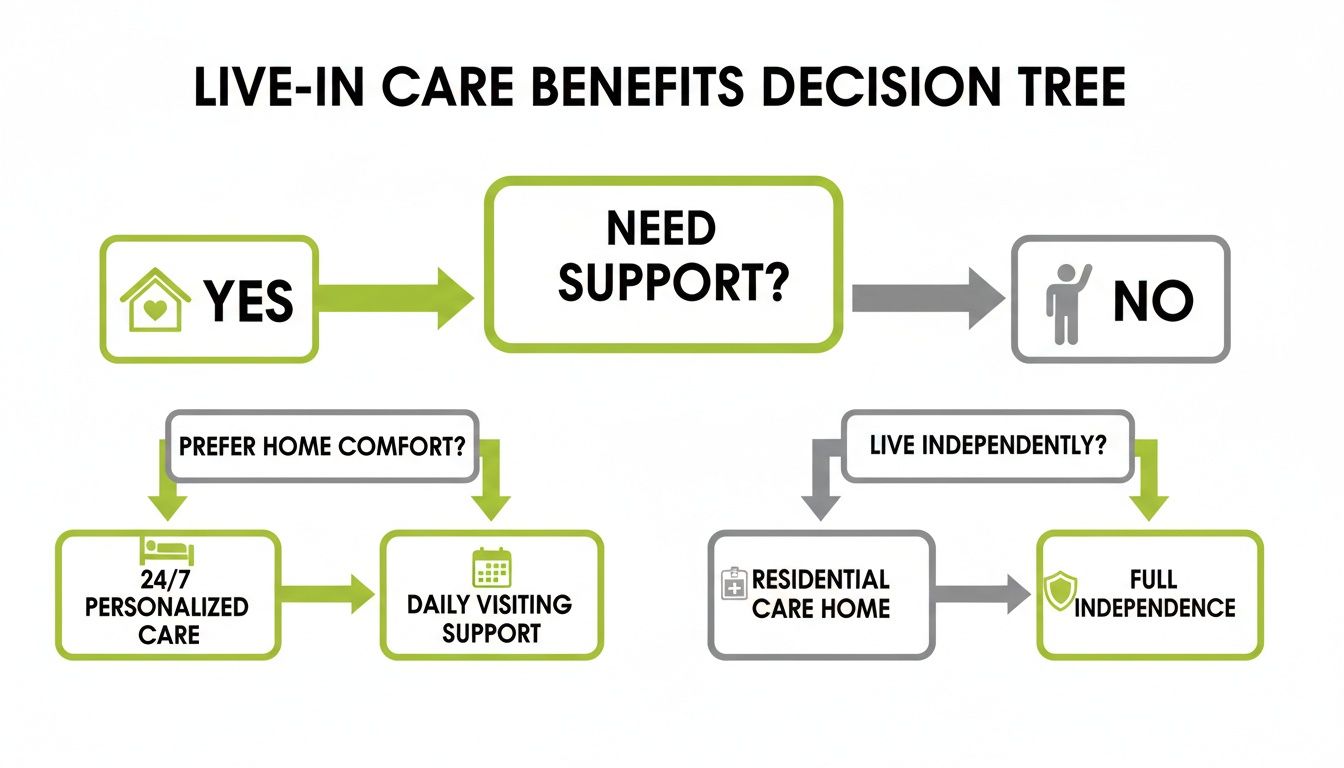
As the diagram shows, the need for round-the-clock support doesn't automatically mean leaving home. For a broader perspective on your choices, it’s helpful to understand the full landscape of general home care services for seniors.
To really get to the heart of it, let’s compare the options side-by-side.
Comparing Your Care Options At A Glance
This table breaks down the fundamental differences between the three main types of professional care. It’s designed to give you a quick, clear overview to help you weigh up what matters most for your situation.
| Feature | Live-In Care | Residential Care Home | Hourly Domiciliary Care |
|---|---|---|---|
| Personalisation | Completely Bespoke: One-to-one care is built around an individual’s life, routines, and preferences—not the other way around. | Standardised: Care follows set schedules for meals, activities, and bedtime to serve many residents at once. | Task-Focused: Support is limited to specific jobs done within a short, scheduled window of time. |
| Continuity of Care | Consistent: A dedicated carer (or a small, rotating team) builds a genuine, trusting relationship and knows you inside and out. | Variable: Staff work in shifts, so care is delivered by many different people, which can be unsettling or confusing. | Inconsistent: It's common for a different carer to attend each visit, making it hard to build rapport or a consistent routine. |
| Independence | Maximised: You stay in your own home, fully in control of your daily schedule, social life, and personal choices. | Limited: Life is structured around the home’s rules and timetables. Personal freedom is naturally reduced. | Maintained at Home: Independence is high, but the gaps between visits can leave you feeling vulnerable or unsafe. |
| Environment | Familiar Comforts: You remain surrounded by your own furniture, memories, community, and beloved pets. | Communal Setting: Requires moving to a new, unfamiliar environment and adapting to living alongside strangers. | Own Home: You stay at home, but without the reassurance of having someone there around the clock. |
Looking at this, you can start to see how each model feels very different in practice.
The Live-In Care Difference In Practice
A care home is a communal living environment. While it provides safety and social interaction, it operates on a schedule that has to work for everyone. Mealtimes are at set hours, activities are pre-planned, and even personal care can be dictated by staff rotas rather than personal preference. For someone who has spent a lifetime living by their own rules, this "one-size-fits-all" approach can be a difficult adjustment.
Live-in care, on the other hand, is built from the ground up around one person. If your mum enjoys breakfast at 10 a.m., loves watching her favourite quiz show in the afternoon, or wants to pop to the local garden centre, her carer is there to make it happen. This deep level of personalisation is about more than just comfort; it’s about preserving a person’s identity and dignity. You can read more in our guide on at-home care services and what makes them so great.
The Limits of Hourly Visits
Hourly care (often called domiciliary care) is a fantastic solution for those needing a bit of help with specific things, like making lunch or getting ready in the morning. But its very nature creates gaps. What if a fall happens in the middle of the night? Who is there to offer a calming word if someone living with dementia becomes anxious long after the carer has left?
Live-in care creates a seamless safety net. The constant presence of a professional carer means help is always there, right when it's needed. This provides 24/7 peace of mind that short, scheduled visits just can't offer, which is vital for anyone with complex needs or who feels vulnerable living alone.
It’s clear that people in England are increasingly choosing to stay in their own homes. The number of registered domiciliary care agencies has surged by 63% since 2017, rising to 13,733 in 2024. During that same period, the number of registered care homes has been in steady decline. This isn't a coincidence; it's a powerful shift towards the independence, comfort, and personalised support that only staying at home can provide.
Ultimately, the best choice always comes down to the level of support required. For those who need consistent, dedicated attention but want to hold onto their independence and the life they’ve built, live-in care stands out as a truly empowering and dignified solution.
Who Benefits Most From Live In Care?

While live in care is a powerful solution for many, it can be truly life-changing for people in certain situations. It’s often when you look at real-world scenarios that the true value of one-to-one support really clicks.
These stories show just how much dedicated, in-home support can transform someone's quality of life, letting them stay in the place they love most.
Recovering Safely After a Hospital Stay
Take Arthur, for example. After a successful hip operation, he was well enough to leave the hospital, but he certainly wasn’t strong enough to manage at home alone. The stairs suddenly felt like a mountain, and even simple things like cooking a meal were a real struggle. Naturally, his family was worried sick about him being by himself, especially at night.
For Arthur, live in care was the perfect bridge between hospital and home. A professional carer moved in, providing that constant, reassuring presence. They helped him with mobility, prepared nutritious meals to speed up his healing, and made sure he took his medication on time. That round-the-clock support meant Arthur could just focus on getting his strength back in his own bed, surrounded by his own things.
Supporting Individuals with Dementia
Now, let's think about Brenda, who is living with the early stages of dementia. Her long-term memory is still quite good, but she can get confused about the time of day and finds new places unsettling. For her and her family, the idea of a care home, with all its unfamiliar faces and routines, was a huge source of anxiety.
For someone living with dementia, the stability and familiarity of their own home is not just a comfort—it’s a vital part of their care. A consistent routine and a familiar face can significantly reduce confusion and distress.
With a live-in carer, Brenda’s world stays stable and reassuring. Her carer knows her specific needs, can offer gentle reminders, and provides companionship throughout the day. This setup keeps Brenda safe and supported while protecting the comforting routines she has known for years, which is absolutely essential for her well-being.
Keeping Couples Together at Home
One of the most profound benefits of live in care is its ability to keep couples together, even when their care needs are very different. Imagine John and Mary, married for over sixty years. When John’s health started to decline, Mary found it harder and harder to give him the physical support he needed. The strain was beginning to take a real toll on her own health, too.
Moving them into separate rooms in a care home felt unthinkable. Instead, a live-in carer gave them the solution they needed. The carer could focus entirely on John’s personal care and mobility, freeing Mary to simply be his wife again, not just his caregiver. This allowed them to carry on living together in their marital home, sharing their lives just as they always had, but with the professional back-up they both needed.
Who Else Is Suited for Live In Care?
Beyond these stories, live-in care is a fantastic option for a whole range of other situations:
- Individuals with Mobility Challenges: For anyone who uses a wheelchair or lives with a condition like multiple sclerosis or Parkinson’s, a live-in carer provides the round-the-clock physical help needed to live safely and independently at home.
- Those Seeking Companionship: Loneliness can be a huge issue for many older adults. A live-in carer offers not just practical help but also genuine friendship, conversation, and a shared presence that can completely change a person’s emotional health for the better.
- People with Palliative Needs: For those who need end-of-life care, being at home offers immense dignity and comfort. Live-in care ensures they can stay in a peaceful, familiar place, surrounded by loved ones, with a professional on hand to manage their symptoms and provide support.
How to Arrange Your Live-in Care
Thinking about arranging care can feel like a huge, complicated task, but it really doesn't have to be. With a compassionate and professional provider, the whole process is broken down into clear, manageable steps. It’s all about making the move to live-in care feel smooth, reassuring, and completely centred around you.
Think of it as a partnership from day one. We listen, we understand, and we work together to build a support system that goes beyond just practical help—it’s about making life better. Let's walk through what you can expect when you start this journey with us.
Step 1: The Initial Conversation
It all starts with a simple, friendly chat. When you first reach out, one of our care experts will take the time to listen properly to your story, understand what’s on your mind, and answer any questions you have. There's no pressure at all; this conversation is purely for you to get a clear picture and feel confident about what’s next.
You can tell us why you’re considering live-in care, whether it's for yourself or for someone you love. The main goal here is just to get a feel for your needs so we can explain how it all works and figure out the best way forward.
Step 2: The In-Depth Home Assessment
After that first chat, the next vital step is a face-to-face assessment in your home. This is so much more than a formal meeting—it’s our chance to get to know you properly, right where you feel most comfortable. A senior care manager will visit to have a detailed, friendly discussion about your life.
This assessment is a deep dive into what makes you you. We’ll talk about:
- Your Daily Routines: Everything from the time you like to get up to your favourite way to unwind in the evening.
- Your Health Needs: Any specific medical conditions, medication timings, or help you need with getting around.
- Your Personality and Interests: What you love to do, your hobbies, and the little things that bring you joy.
- Your Home Environment: We'll also take a look at the practical side of your home to make sure it’s safe and comfortable for both you and your carer.
This personal approach ensures the care plan we create is built around your whole life, not just a checklist of tasks.
Step 3: Crafting the Personalised Care Plan
Once we have a full picture of your life and preferences, we get to work designing your personalised care plan. We’ll sit down with you and your family to put together a detailed guide that covers every aspect of your support.
This isn’t a rigid rulebook; it's a flexible guide for your carer. It will map out everything from meal preferences and medication schedules to how you like your home kept and which social activities you want to keep enjoying. It's a living document, which means we can review and tweak it together whenever your needs change.
A truly effective care plan is more than a schedule; it's a blueprint for maintaining a person's identity and dignity. It ensures that the support provided is respectful, consistent, and always aligned with their personal wishes.
Step 4: Matching You with the Perfect Carer
Finding the right carer is probably the most important step of all. It’s not just about matching skills and experience—it’s about matching people. We put a huge amount of thought into selecting a carer who we genuinely believe will be a wonderful companion as well as a skilled professional.
Using everything we learned during the home assessment, we look for a carer who shares similar interests or has a personality that will be a great fit with yours. A brilliant live-in care relationship is built on trust and a real connection, so getting this match right is our absolute priority. Of course, you’ll have the final say and get to approve the carer before they start. You can learn more about how we do this in our guide to home care services in 5 simple steps.
Step 5: Starting the Service and Ongoing Support
On the first day, your dedicated Care Manager will be there to introduce your new carer and help them get settled in. They’ll go through the care plan with you and your carer to make sure everyone is comfortable and on the same page. This little bit of extra support on day one helps the transition feel seamless and positive from the get-go.
But our support doesn't end there. We stay in regular contact with you, your family, and your carer to make sure everything is going well. Our team is always just a phone call away for any questions, ongoing support, or to make adjustments to your care plan. This continuous oversight means you can be confident you’re receiving the highest standard of care, giving everyone lasting peace of mind.
Your Live-In Care Questions, Answered
Deciding on live-in care is a big step, and it’s completely normal to have a lot of questions running through your mind. We get it. To help, we’ve put together some straightforward answers to the questions we hear most often from families just like yours. Our aim is to give you all the information you need to feel confident and clear about your choices.
What Happens When The Main Carer Needs a Break?
This is one of the first things people ask, and for good reason. Your carer is a dedicated professional, but everyone needs a proper break to rest and recharge. Any good live-in care provider will have a solid plan to make sure there's never a gap in support.
When your main carer needs to take some well-deserved time off, we don’t just send in a temp. We arrange for a fully trained and vetted respite carer to seamlessly take their place.
- The Right Match: We take just as much care choosing a respite carer, looking for someone with the right skills and a personality that will be a good fit.
- A Full Handover: Before the break begins, there's a detailed handover. This means your respite carer knows your routine, what you like and don't like, and every detail of your care plan.
- Uninterrupted Support: The result is that you continue to receive the same high standard of care you’re used to. It gives everyone total peace of mind.
We work hard to make the transition feel effortless, ensuring the person receiving care always feels safe and supported by a friendly, familiar professional.
How Much Does Live-In Care Cost and Is Funding Available?
The cost of live-in care really depends on the individual's needs. For example, someone who needs complex support for a condition like advanced dementia will require a different level of care than someone who is mainly looking for companionship and a helping hand with daily tasks.
Live-in care is usually priced weekly. While it’s a significant investment, many families find it compares well with the cost of a good residential home. This is especially true for couples, who would otherwise have to fund two separate places in a care home.
It’s worth remembering that you're not just paying for a service. You’re investing in dedicated, one-to-one support, 24/7, in the place you love most—your home. That level of personal attention simply isn’t possible in a group setting.
When it comes to funding, there are a few avenues you can explore. It’s always a good idea to request a financial needs assessment from your local council to see if you qualify for support.
Certain state benefits can also help. The most common one is Attendance Allowance, which is a non-means-tested benefit for people over state pension age who need help with their personal care. It can make a real difference to the weekly cost of your care package.
What Are The Living Arrangements For The Carer?
For a live-in care arrangement to be successful, the carer needs their own private, comfortable space to rest during their downtime. This is essential for maintaining a healthy and respectful professional relationship.
The requirements are simple and practical:
- A Private Bedroom: This is non-negotiable. The carer must have their own room where they can sleep and relax when they're off duty.
- Access to Facilities: They will need reasonable use of a bathroom and the kitchen.
- Internet Access: Wi-Fi is now considered a standard requirement, as it allows carers to stay in touch with their own family and friends.
Food for the carer is usually covered by the client. This can be done through a food allowance or simply by including them in the household’s weekly shop. We discuss and agree on all these practical details right at the start, making sure everyone is clear on the setup and feels respected. It's this mutual understanding that builds a great long-term care partnership.
At Cream Home Care, we're here to walk you through every step of this journey with compassion and genuine expertise. If you're thinking about live-in care in Stoke-on-Trent or Newcastle-under-Lyme, get in touch with our friendly team today to find out how we can help.